


Wydawcy
Katalog tematyczny
- Archeologia (109)
- Ekonomia, finanse, business (13704)
- Filozofia (1445)
- Historia (3040)
- Języki i językoznawstwo (2356)
- Lifestyle, hobby i rozrywka (475)
- Medycyna (9704)
- Nauki humanistyczne (4)
- Nauki o Ziemi i środowisku (2638)
- Nauki ścisłe (20412)
- Astronomia (294)
- Biologia (5119)
- Biochemia (575)
- Biologia człowieka (14)
- Biologia komórkowa (377)
- Biologia molekularna (398)
- Biologia rozwoju (130)
- Biologia, ogólnie (1277)
- Botanika (280)
- Hydrobiologia (92)
- Mikrobiologia (363)
- Mykologia (22)
- Zoologia (303)
- Chemia (6540)
- Fizyka (3309)
- Matematyka (4574)
- Nauki ścisłe, ogólnie (503)
- Nauki społeczne (8486)
- Nauki techniczne (13450)
- Prawo (1696)
- Publikacje informacyjne i interdyscyplinarne (1288)
- Religia i wierzenia (917)
- Technika komputerowa (4067)
- Zdrowie, relacje międzyludzkie i rozwój osobisty (657)





Informacje szczegółowe o książce
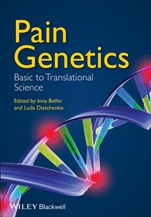
Pain Genetics: Basic to Translational Science
ISBN 9781118398845
Autor: Inna Belfer, Luda Diatchenko
Wydawca: Wiley
Dostępność: 3-6 tygodni
Cena: 735,00 zł
Przed złożeniem zamówienia prosimy o kontakt mailowy celem potwierdzenia ceny.
ISBN13: |
9781118398845 |
ISBN10: |
111839884X |
Autor: |
Inna Belfer, Luda Diatchenko |
Oprawa: |
Hardback |
Rok Wydania: |
2014-01-31 |
Ilość stron: |
204 |
Wymiary: |
246x170 |
Tematy: |
PS |
Pain, in small doses, is a valuable survival tool that alerts us to injury, illness, and danger. Chronic pain, as experienced in headache, fibromyalgia, and various other long–lasting disorders, negatively impacts life for a significant percentage of the population. Pain Genetics: Basic to Translational Science explores both the art and the science that is being applied to the study of genetic determinants of pain. The innovative research in this field has allowed for a more profound understanding of pain mechanisms and improving established treatment options. Pain Genetics: Basic to Translational Science describes the current state of pain genetic research. The opening chapters look at fundamental information on basic genetic mechanisms underlying pain perception. Coverage then progresses to look at pain phenotypes and related conditions. The final chapters look to translate our understanding of the genetic underpinning of pain to novel therapeutic approaches and point the direction forward for research in the field. Bringing together the creative and cutting–edge alongside important foundational principles, Pain Genetics: Basic to Translational Science will be an important resource for researchers, clinicians, and advanced students of genetics. Fully explores the latest advances of pain genetics Presents the art and science being applied by leading researchers in the field Discusses the identification of important pain phenotypes Translates basic findings into innovative therapeutic approaches
Authors Biography Contributors 1 How Do Pain Genes Affect Pain Experience? Marshall Devor Introduction Heritability of Pain: Historical Roots Why is Pain Genetics Interesting and Potentially Useful? What Are Pain Genes? How Do Pain Genes Affect Pain Experience? Disease Susceptibility Genes Versus Pain Susceptibility Genes Perspective Acknowledgments 2 Conservation of Pain Genes Across Evolution Thang Manh Khuong and G. Greg Neely Introduction Anatomical Organization of Nociception Apparatus in Mammals and Drosophila Acute Heat Pain in Mammals Acute Heat Nociception in Drosophila Mechanical Pain in Mammals Mechanical Nociception in Drosophila Chemical Nociception in Mammals Chemical Nociception in Drosophila Inflammatory Pain in Mammals Persistent Pain in Drosophila Neuropathic Pain in Mammals Structural Reorganizations of Nerve Fibers in Neuropathic Pain Mammalian Neuropathic Pain Genes That Are Conserved in Drosophila Long–Term Potentiation and Long–Term Depression in Neuropathic Pain in Mammals Neuropathic Pain in Drosophila Conclusions 3 Defining Human Pain Phenotypes for Genetic Association Studies Christopher Sivert Nielsen Introduction What is a Pain Phenotype? Pain Scaling Heritability Genotype–Phenotype Matching Reliability and Temporal Stability Clinical Phenotypes Designing Clinical Pain Genetic Studies The Heritability of Specific Clinical Pain Conditions Experimental Phenotypes The Heritability of Experimental Phenotypes Extended Phenotypes Practical Concerns Conclusions Conflict of Interest Statement 4 Genetic Contributions to Pain and Analgesia: Interactions with Sex and Stress Roger B. Fillingim and Jeffrey S. Mogil Introduction Brief Overview of Sex and Gender Differences in Pain and Analgesia Brief Overview of Stress and Pain/Analgesia Sex X Gene Interactions in Pain and Analgesia Summary 5 Abnormal Pain Conditions in Humans Related to Genetic Mutations Christopher Geoffrey Woods Introduction to SCN9A , NTRK1 , and NGF and the Roles They Play in Pain Introduction to SCN9A and Its Omnipotent Role in Pain Sensing Introduction to NTRK1 and Its Role in Development and Function in the Pain and Sympathetic Nervous Systems Introduction to NGF, the First Growth Factor to Be Found and Studied 6 Alternative Pre–mRNA Splicing of Mu Opioid Receptor Gene: Molecular Mechanisms Underlying the Complex Actions of Mu Opioids Ying–Xian Pan Introduction Evolution of OPRM1 Gene OPRM1 Gene: Chromosomal Location and Gene Structure Alternative Promoters Alternative Pre–mRNA Splicing of the OPRM1 Gene Expression and Function of the OPRM1 Splice Variants Conclusion 7 Discovering Multilocus Associations with Complex Pain Phenotypes Chia–Ling Kuo, Luda Diatchenko, and Dmitri Zaykin Introduction Approaches Based on Testing Individual Genetic Variants Within a Region Approaches That Combine Association Signals Across Genetic Variants Methods for Testing Joint Effects of Multiple Genetic Variants Multilocus Analysis of Mu Opioid Receptor Haplotypes Two–Stage Multilocus Association Analysis: Collapsing SNPs with Adjustment for Effect Directions Two–Stage Approach: Simulations Two–Stage Approach: Results Discussion Acknowledgments 8 Overlapping Phenotypes: Genetic Contribution to Nausea and Pain Charles C. Horn Introduction What is the Functional Role of Nausea and Vomiting? Pain Syndromes with Significant Nausea The Neuropharmacology of Nausea and Emesis Emetic and Antiemetic Action of Opioids Preclinical Studies of Nausea and Vomiting Heritability of Nausea and Vomiting Phenotypes Human Genetic Sequence Variants Associated with Nausea and Vomiting Summary and Future Directions 9 A Counterpart to Pain: Itch Adam P. Kardon and Sarah E. Ross Introduction Why Do We Scratch? The Basics of Itch So How is Itch Coded? Measuring Itch in Mice Genetic Models of Itch A Key Role for the Skin in Itch A Shift in the Balance of Pain and Itch Genetic Variation and Itch in Humans – Challenges for the Future Acknowledgments 10 Translating Genetic Knowledge into Clinical Practice for Musculoskeletal Pain Conditions Luda Diatchenko, Shad B. Smith, and William Maixner Introduction Results of Human Association Studies Gene Sequencing Development of New Therapeutics Understanding of Interactions In Summary 11 The Human Chronic Pain Phenome: Mapping Nongenetic Modifiers of the Heritable Risk Ze’ev Seltzer, Scott R. Diehl, Hance Clarke, and Joel Katz The Current Crisis in Pain Medicine The Importance of Estimating Risk of Chronic Neuropathic Pain (CNP) Modification of the Heritable Risk for CNP The Natural History of CNP Modification of Heritable Risk for CNP In Utero Modifications of the Heritable Risk for CNP Across Generations Postnatal Modifications of the Heritable Risk for CNP Modifications of the Heritable Risk for CNP by Childhood Adverse Experiences Modifications of the Heritable Risk for CNP by Prior Chronic Pain Epochs Modification of the Heritable Risk for CNP by Certain Personality Traits Modification of the Heritable Risk for CNP by Social Factors Modification of the Heritable Risk for CNP by Diet, Medications, Smoking, and Alcohol Intake Consumed Preoperatively Modification of the Heritable Risk for CNP by Climate Modification of the Heritable Risk for CNP by Lifestyle Modifications of the Heritable Risk for Chronic Pain by Other Diseases Modifications of the Heritable Risk for CNP by Nongenetic Factors Occurring Just Prior and During the Inciting Event Summary Appendix Index
Inna Belfer , MD, PhD, is an Associate Professor of Anesthesiology and Human Genetics and Director of the Molecular Epidemiology of Pain Program at the Department of Anesthesiology, School of Medicine, University of Pittsburgh. Luda Diatchenko , MD, PhD, is a Canada Excellence Research Chair in Human Pain Genetics, Professor, Faculty of Medicine, Department of Anesthesia, and Faculty of Dentistry at McGill University, Alan Edwards Centre for Research on Pain.
Koszyk
Książek w koszyku: 0 szt.
Wartość zakupów: 0,00 zł
Informacje


Kontakt
Gambit
Centrum Oprogramowania
i Szkoleń Sp. z o.o.
Al. Pokoju 29b/22-24
31-564 Kraków
Siedziba Księgarni
ul. Kordylewskiego 1
31-542 Kraków
+48 12 410 5991
+48 12 410 5987
+48 12 410 5989
Subskrypcje
Administratorem danych osobowych jest firma Gambit COiS Sp. z o.o. Na podany adres będzie wysyłany wyłącznie biuletyn informacyjny.
Autoryzacja płatności

Informacje na temat autoryzacji płatności poprzez PayU.

© Copyright 2012: GAMBIT COiS Sp. z o.o. Wszelkie prawa zastrzeżone.
Projekt i wykonanie: Alchemia Studio Reklamy