


Wydawcy
Katalog tematyczny
- Archeologia (109)
- Ekonomia, finanse, business (13704)
- Filozofia (1445)
- Historia (3040)
- Języki i językoznawstwo (2356)
- Lifestyle, hobby i rozrywka (475)
- Medycyna (9704)
- Nauki humanistyczne (4)
- Nauki o Ziemi i środowisku (2638)
- Nauki ścisłe (20412)
- Nauki społeczne (8486)
- Nauki techniczne (13450)
- Prawo (1696)
- Publikacje informacyjne i interdyscyplinarne (1288)
- Religia i wierzenia (917)
- Technika komputerowa (4067)
- Zdrowie, relacje międzyludzkie i rozwój osobisty (657)





Informacje szczegółowe o książce
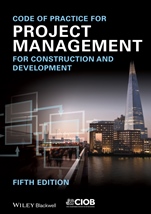
Code of Practice for Project Management for Construction and Development
ISBN 9781118378083
Autor: CIOB (The Chartered Institute of Building)
Wydawca: Wiley
Dostępność: 3-6 tygodni
Cena: 372,75 zł
Przed złożeniem zamówienia prosimy o kontakt mailowy celem potwierdzenia ceny.
ISBN13: |
9781118378083 |
ISBN10: |
1118378083 |
Autor: |
CIOB (The Chartered Institute of Building) |
Oprawa: |
Paperback |
Rok Wydania: |
2014-09-05 |
Numer Wydania: |
5th Edition |
Ilość stron: |
360 |
Wymiary: |
295x212 |
Tematy: |
KM |
The first edition of the Code of Practice for Project Management for Construction and Development , published in 1992, was groundbreaking in many ways. Now in its fifth edition, prepared by a multi–institute task force coordinated by the CIOB and including representatives from RICS, RIBA, ICE, APM and CIC, it continues to be the authoritative guide and reference to the principles and practice of project management in construction and development. Good project management in construction relies on balancing the key constraints of time, quality and cost in the context of building functionality and the requirements for sustainability within the built environment. Thoroughly updated and restructured to reflect the challenges that the industry faces today, this edition continues to drive forward the practice of construction project management. The principles of strategic planning, detailed programming and monitoring, resource allocation and effective risk management, widely used on projects of all sizes and complexity, are all fully covered. The integration of Building Information Modelling at each stage of the project life is a feature of this edition. In addition, the impact of trends and developments such as the internationalisation of construction projects and the drive for sustainability are discussed in context. The Code of Practice will be of particular value to clients, project management professionals and students of construction, as well as to the wider construction and development industries. Much of the information will also be relevant to project management professionals operating in other commercial spheres. Also Available Guide to Good Practice in the Management of Time in Complex Projects Chartered Institute of Building Paperback, 978 1 4443 3493 7 The Design Manager’s Handbook John Eynon Paperback, 978 0 4706 7402 4 International Construction Contracts: A Handbook William Godwin Paperback, 978 0 470 65572 6
Acknowledgements Working Group for the Revision of the Code of Practice for Project Management Past Working Groups of Code of Practice for Project Management Chapter 0 Introduction Project management Definitions Project management Characteristics of construction projects Characteristics of construction project management Adding value Scope of project management Project lifecycle Chapter 1 Inception Stage checklist Stage processes and outcomes The client Client obligations and responsibilities Client project objectives Client engagement: internal team Project Manager Project manager’s objectives Project manager’s duties Project manager’s appointment Project mandate Environmental mandate BIM mandate Briefing Notes BN 1.01 Leadership in project management BN 1.02 Typical terms of engagement: Project manager BN 1.03 Typical project mandate outline BN 1.04 Project handbook BN 1.05 Government Soft Landings (GLS) Chapter 2 Feasibility Stage checklist Stage processes and outcomes Client’s objectives Outline project brief Feasibility studies Energy in a building environment Life–cycle costing and sustainability Sustainability in the built environment Towards sustainable development Responsible sustainable development Achieving sustainable development Potential for government carbon controls Achieving sustainable development Site selection and acquisition Project brief Design brief Funding and investment appraisal Development planning and control Stakeholder identification Business case Approval to proceed BIM brief Briefing Notes BN 2.01 Key sustainability issues BN 2.02 Environmental sustainability assessment methods BN 2.03 Guidance on environmental impact assessment BN 2.04 Site investigation BN 2.05 Business case development Chapter 3 Strategy Stage checklist Stage processes and outcomes Client’s objectives Project governance Strategy outline and development Project organisation and control Project team structure Selecting the project team Project management procedures and systems Information and communication technology Project planning Cost planning and controls Cost control Design management process (managing the design delivery) Risk identification and management Environmental management and controls Environmental statements Contractor’s environmental management systems Stakeholder management Quality management Commissioning strategy Selection and appointment of project team consultants Collaborative arrangements Framework arrangements Private public partnership/private finance initiative Procurement strategy Traditional Design and build Management contracting Construction management Hybrid procurement approaches Characteristics of procurement options Procuring the supply chain Responsible sourcing Tender procedure Procurement under EU directives e–Procurement Employer’s requirement document Facility management strategy/considerations Project execution plan Checklist for PEP Essential contents Approval to PEP BIM strategy Briefing Notes BN 3.01 Health and safety including CDM guidance BN 3.02 Guidance on value management BN 3.03 Project risk assessment BN 3.04 Information and communication technology BN 3.05 Building information modelling BN 3.06 Project planning BN 3.07 Characteristics of different procurement options BN 3.08 Framework agreements BN 3.09 Procedure for the selection and appointment of consultants BN 3.10 Selection and appointment of contractors BN 3.11 Guidance on EU procurement rules BN 3.12 Project governance BN 3.13 Change management BN 3.14 Strategic collaborative working BN 3.15 PPP/PFI arrangements BN 3.16 Guidance on eProcurement BN 3.17 Design management process Chapter 4 Pre–construction Stage checklist Stage processes and outcomes Design process Managing the design delivery Project coordination and progress meetings Design team meetings Managing design team activities Statutory consents Planning approval Planning consultants Legislation Planning permission Timing Negotiations Presentations Refusal Appeal Enforcement powers Other statutory consents Building regulations Disability Discrimination Act Impact of utilities on project planning/scheduling Technical design and production information Value management Contract award Pre–start meeting Agenda items at pre–start meeting Introduction Contract Contractor’s matters Resident engineer/clerk of work’s matters Consultant’s matters Quantity surveyor’s matters Communications and procedures Meetings Contractual arrangements Establish site Control and monitoring systems Contractor’s working schedule Value engineering (related to construction methods) Management of the supply chain Risk management Payments Benchmarking Change and variation control Dispute resolution BIM strategy Briefing Notes BN 4.01 Regular report to client BN 4.02 Dispute resolution methods BN 4.03 Implications of Housing Grants, Construction and Regeneration Act 1996, Amended 2011 BN 4.04 Typical meetings and their objectives Chapter 5 Construction Stage checklist Stage processes and outcomes Project team duties and responsibilities Client Project manager Design team Quantity surveyor Contractor Construction manager Management contractor Subcontractor and suppliers Other parties Performance monitoring Health, safety and welfare systems Environmental statements Contractor’s environmental management systems Compliance with site waste management plan regulations 2008 Monitoring the works Reporting Public liaison and profile Quality management systems Commissioning and production of operation and maintenance manuals Commissioning Operation and maintenance manuals BIM strategy Briefing Notes BN 5.01 Performance management plan Chapter 6 Testing and commissioning Stage checklists Stage processes and outcomes Project manager’s duties and responsibilities Commissioning generally Procurement of commissioning services Smaller projects Larger projects Role of the commissioning contractor The testing and commissioning process and its programming Differences between testing and commissioning Testing Commissioning Performance testing Main tasks to be undertaken Pre–construction Construction and post–construction Seasonal commissioning Commissioning documentation O & M manual (building owner’s manual) As–built documentation Health and safety file Occupier’s handbook BIM Strategy Briefing Notes BN 6.02 Contents of the health and safety file BN 6.02 Contents of building owner’s manual BN 6.03 Contents of occupier’s hand book Chapter 7 Completion, handover and operation Stage checklists Stage processes and outcomes Planning and scheduling handover Procedures Client commissioning and occupation Operational commissioning Main tasks Client occupation Structure for implementation Scope and objectives Methodology Organisation and control Soft landings BIM strategy Briefing Notes BN 7.01 Client commissioning checklist BN 7.02 Introduction to facilities management BN 7.03 Engineering services commissioning checklist BN 7.04 Engineering services commissioning documents BN 7.05 Handover checklist BN 7.06 Practical completion checklist Chapter 8 Post–completion review and in use Stage checklist Stage processes and outcomes Post–occupancy evaluation Project audit Cost and time study Human resources aspects Performance study Project feedback Close–out report Benefits realisation Occupation/in–use strategy Client′s BIM strategy Briefing Notes BN 8.01 Post occupancy evaluation process chart Glossary Bibliography Index
The Chartered Institute of Building is at the heart of a management career in construction. It is the world′s largest and most influential professional body for construction management and leadership, with a Royal Charter to promote the science and practice of building and construction for the benefit of society. With over 48,000 members worldwide, the CIOB is the international voice of the building professional.
Koszyk
Książek w koszyku: 0 szt.
Wartość zakupów: 0,00 zł
Informacje


Kontakt
Gambit
Centrum Oprogramowania
i Szkoleń Sp. z o.o.
Al. Pokoju 29b/22-24
31-564 Kraków
Siedziba Księgarni
ul. Kordylewskiego 1
31-542 Kraków
+48 12 410 5991
+48 12 410 5987
+48 12 410 5989
Subskrypcje
Administratorem danych osobowych jest firma Gambit COiS Sp. z o.o. Na podany adres będzie wysyłany wyłącznie biuletyn informacyjny.
Autoryzacja płatności

Informacje na temat autoryzacji płatności poprzez PayU.

© Copyright 2012: GAMBIT COiS Sp. z o.o. Wszelkie prawa zastrzeżone.
Projekt i wykonanie: Alchemia Studio Reklamy