


Wydawcy
Katalog tematyczny
- Archeologia (109)
- Ekonomia, finanse, business (13704)
- Filozofia (1445)
- Historia (3040)
- Języki i językoznawstwo (2356)
- Lifestyle, hobby i rozrywka (475)
- Medycyna (9704)
- Nauki humanistyczne (4)
- Nauki o Ziemi i środowisku (2638)
- Nauki ścisłe (20412)
- Nauki społeczne (8486)
- Nauki techniczne (13450)
- Prawo (1696)
- Publikacje informacyjne i interdyscyplinarne (1288)
- Religia i wierzenia (917)
- Technika komputerowa (4067)
- Zdrowie, relacje międzyludzkie i rozwój osobisty (657)





Informacje szczegółowe o książce
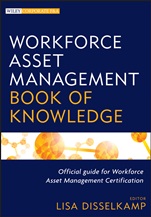
Workforce Asset Management Book of Knowledge
ISBN 9781118367575
Autor: Lisa Disselkamp
Wydawca: Wiley
Dostępność: 3-6 tygodni
Cena: 449,40 zł
Przed złożeniem zamówienia prosimy o kontakt mailowy celem potwierdzenia ceny.
ISBN13: |
9781118367575 |
ISBN10: |
111836757X |
Autor: |
Lisa Disselkamp |
Oprawa: |
Hardback |
Rok Wydania: |
2013-05-10 |
Ilość stron: |
656 |
Wymiary: |
261x185 |
Tematy: |
KM |
Praise for Workforce Asset Management Book of Knowledge
"Rising labor costs around the world are the biggest threat to any business today. Workforce Asset Management Book of Knowledge delivers a tremendous amount of knowledge on this topic so I can make the right strategic decisions to improve margins. After reading the Workforce Asset Management Book of Knowledge, I have a much better understanding of how to leverage the best tools and processes to grow the P&L."
Baron Concors, CIO, YUM! Restaurants International
"Disselkamp and contributors pull the cover off neglected but costly employer challenges from payroll leakage to work–life balance. This deep dive into using technology with intent to fix the causes of leakage and reduce the risk of over–optimization is long overdue. The WAM certification is exactly what this economy needs to boost the bottom line and sustain high employment and engaged workers."
Sue Nuss, PMP, The Nuss Group, Inc.
"In today′s highly regulated and litigious environment, it is critical to understand risk. Many organizations mistakenly think technology alone is sufficient. Design and administration of defensible workforce management systems and practice are ongoing processes. Reading and learning from the Workforce Asset Management Book of Knowledge will lower your company′s exposure."
Thomas P. Gies, Partner, Crowell and Moring LLP
"An extremely ambitious endeavor, but Disselkamp pulls it off. Because of the diverse range of expected and unexpected WFM subject matter by numerous topic experts, the Workforce Asset Management Book of Knowledge is a text that every human resources function should have and refer to constantly."
Jac Fitz–enz, author of The New HR Analytics and Human Capital Analytics
"For years, I have been a proponent of workplace flexibility. With the Workforce Asset Management Book of Knowledge and the WAM certification, the specialized and impactful role of time and labor management technology professionals is defined, empowered, and positioned to successfully implement workplace flexibility and other solutions that work."
Richard Luecking, President, TransCen, Inc.
"If you are serious about managing all aspects of your workforce, the Workforce Asset Management Book of Knowledge will teach you how to establish a strategic WAM program as an integral part of your business. The information provided on the value of data analytics alone will provide a return on your educational investment many times over."
William Stafford, Vice President, United Benefit Advisors, LLC
"Solving people management challenges requires an integrated knowledge of operations, human resources, finance, and information technology, as well as competency in workforce analytics. Holding a certificate in Workforce Asset Management will equip professionals with the essential cross–disciplinary expertise to enable them to add value in today′s fast–paced, customer–centric market."
Wendy Bennison, Vice President, Operations, Mark′s Work Wearhouse
"From production and planning to risks and system configuration, the Workforce Asset Management Book of Knowledge engages readers and provokes them to apply new methods for time and labor management systems."
Don Wehbey, National Association of State Workforce Agencies
Foreword xi
Preface xiii
Acknowledgments xvii
Introduction 1
UNIT I: GROUNDWORK FOR WORKFORCE ASSET MANAGEMENT
Chapter 1: Introduction and Background 7
1.1 Workforce Asset Management: A Cross–Disciplinary Specialty 8
1.2 Increasing Business Need for Workforce Management Technology 12
1.3 Evolution of Workforce Asset Management Technology 18
Notes 24
Chapter 2: Principles of Workforce Asset Management 25
2.1 The A.C.T.I.V.E. Principles 26
2.2 Sustaining the WAM Strategic Vision 31
2.3 A New Model: Workforce Management Office 32
UNIT II: THE FRAMEWORK FOR THE ORGANIZATION
Chapter 3: Changing the Organization 39
3.1 Developing the Business Case 40
3.2 Financial Planning and Return on Investment 46
3.3 Financing Workforce Asset Management Technology 68
3.4 Negotiation 72
Notes 75
Chapter 4: Impact of Organizational Readiness, Maturity, and Integrity on WFM Systems 77
4.1 Organizational Readiness and Keeping People Engaged 78
4.2 Workforce Management Maturity Curve 81
4.3 Benchmarking and Baselining Data 84
4.4 The Relevance of Workplace Integrity in System Operability 89
Notes 94
UNIT III: TIMEKEEPING
Chapter 5: Workforce Management Devices and Functionality 97
5.1 Timecard Functionality 98
5.2 Accrual Rules 104
5.3 Automated Workfl ow and Employee Self–Service 106
5.4 Data Collection: Who, Where, and When 110
5.5 Biometrics: Features and Functionality 118
5.6 Mobile Resource Management: Features and Functionality 126
Notes 129
Chapter 6: Federal Regulation 131
6.1 Fair Labor Standards Act 132
6.2 Defining the Legal Workweek 136
6.3 Changing the Workweek 143
6.4 Handling Multiple Rates of Pay for Hourly Workers 148
6.5 Definition of Hours Worked 149
6.6 Tracking Hours Worked 158
Notes 162
Chapter 7: State Regulation 163
7.1 State Wage and Hour Guidelines 164
7.2 Wage Orders 164
7.3 Definition of Overtime 166
7.4 Definition of Workweek and Workday 170
7.5 Frequency of Wage Payments 170
7.6 Meal Periods 176
7.7 Rest Period 182
7.8 Definition of Hours Worked 182
7.9 Tracking Hours Worked 184
Notes 186
Chapter 8: Compliance, Controls, Reporting, and Payroll Leakage 187
8.1 Designing Legally Defensible Systems and Policies 188
8.2 Managing Roles within Workforce Management Systems 193
8.3 Unique Aspects of Timekeeping Security and Control Confi guration 199
8.4 Record–Keeping Regulations 204
8.5 Legal and Statistical Issues 205
8.6 SSAE 16, SOC2, ISO, and SOX 215
8.7 Integration with Reporting Structures and Business Systems 218
8.8 Fraud, Abuse, and Payroll Leakage 222
Notes 226
Chapter 9: Industry–Specific Workforce Management Business Needs 229
9.1 Regulations and Recommended Practices on Fitness for Duty and Fatigue Risk Mitigation 230
9.2 Healthcare Pay Practices 234
9.3 Retail and Restaurant Industry 237
9.4 Government Contracting 238
9.5 K 12 Education Industry 242
9.6 Managing a Global Workforce 246
Notes 252
UNIT IV: SCHEDULING AND LABOR MANAGEMENT
Chapter 10: Scheduling Drivers and Design 257
10.1 Workload 259
10.2 Rules and Constraints 268
10.3 Workforce 273
10.4 Scheduling Process 276
10.5 Scheduling Software 288
10.6 Industry Specifics 290
Chapter 11: Scheduling, Attendance, and Leave Categories and Configurations 293
11.1 Types of Employees 294
11.2 Three Types of Absences 296
11.3 Leave Management Policy 299
11.4 Human Resources Attendance Policy Fundamentals 302
11.5 Configuring Attendance Policy in Timekeeping and Scheduling 305
Notes 308
Chapter 12: New Scheduling Models for the Workforce 309
12.1 New Models for Scheduling Greater Work–Life Fit 310
12.2 Demand–Driven Labor Scheduling 320
12.3 Schedule Optimization: Positioning Time as a Resource at the Local Level 329
12.4 Workplace Flexibility Related to People with Complex Employment Situations 335
12.5 Scheduling as a Form of Compensation and Retention 337
Notes 339
Chapter 13: Scheduling in Highly Complex Industries and Areas 345
13.1 Managing Overtime: A Common Challenge in the
Workplace, Especially in Healthcare 346
13.2 Manufacturing, Mining, and Energy 352
13.3 Education 354
13.4 Corrections and Law Enforcement 355
Notes 361
UNIT V: ANALYTICS, DATA, AND INTEGRATION
Chapter 14: Workforce Analytics 367
14.1 Setting the Stage for Analytics 369
14.2 Fundamentals of Data Analysis 371
14.3 Formal Modeling Approaches 385
14.4 Key Performance Indicators Used by WFM Systems 389
Notes 391
Chapter 15: Data Integration and Interfaces 393
15.1 Getting Data In and Out 394
15.2 General Practices 396
15.3 Interface Project Flow: Milestones 397
15.4 Primary Interfaces for Workforce Management Systems 398
15.5 Interface Timing 406
15.6 Obtaining, Transferring, and Delivering Data 411
15.7 Working Environments and Raw Data Archiving 418
15.8 Automation/Unattended Operation 421
Notes 424
Chapter 16: Data and Systems Management 425
16.1 Data Governance 426
16.2 Privacy and Security 428
16.3 Where Data Should Originate and What Data Should Be Shared 434
16.4 Environmental Issues: Architecture, Scalability, Performance, Portals, Disaster Planning, Virtual Machines, Cloud Computing, Hosted versus In–House 440
16.5 Managing Performance of a Growing Database 446
16.6 Data Migration Management 448
16.7 Guidelines for Data Storage/Retrieval: Archiving, Deleting, Backing Up, and Restoring 455
16.8 Resource Considerations for Data and System Management 458
Further Reading 462
Notes 462
UNIT VI: PROJECT IMPLEMENTATION AND SUPPORT
Chapter 17: Project Management for Workforce Asset Management Implementation 467
17.1 Introduction to Project Management 468
17.2 Definition of a Project 469
17.3 Roles and Functions of a WAM Project Manager 470
17.4 Focus of Project Management: Time, Costs, Quality, and the Balance among the Three 472
17.5 Applied Methodology 473
Notes 478
Chapter 18: Requirements Gathering and Analysis for Workforce Asset Management 479
18.1 Business Analyst 480
18.2 Systems Analyst 480
18.3 What Can the Business Analyst Teach the WAM?]Pro? 481
18.4 Documents of the Business Analyst 482
18.5 Business Analysis Processes for WFM Requirements and Solution Selection 482
18.6 Key Points 492
Notes 493
Chapter 19: Vendor and System Selection for Workforce Asset Management Systems 495
19.1 Review of the Overall Vendor Selection Process 496
19.2 Some Dos and Don ts for Vendor Selection 505
Chapter 20: Design Reviews for New Methodology, Technology, and Processes 509
20.1 Design Review Models 510
20.2 System Mission Hierarchy 511
20.3 Types of Design Review 513
20.4 Role of the Design Workbook in Design Reviews 515
Chapter 21: Implementation of the Workforce Management System 519
21.1 Elements of Implementation 520
21.2 System Construction Subphase 521
21.3 Systems Delivery Subphase 524
21.4 Pitfalls of Implementation 525
21.5 Setting Up and Operating a Technology Help Desk 531
Chapter 22: Testing and Quality Assurance for Workforce Management Systems 539
22.1 Testing and Quality Assurance on WFM Systems before Release to Operations 540
Chapter 23: Sustaining the Desired Future State and Training for Successful Workforce Asset Management 557
23.1 Managing System Usability 558
23.2 Workforce Management Technology Training 561
Glossary 571
About the Editor 601
About the Contributors 603
Index 619
LISA DISSELKAMP is a Director at Deloitte Consulting LLP. She is a leading authority on timekeeping, compensation, scheduling, and labor analytics systems and has led assessments and multimillion–dollar projects impacting up to 350,000 employees.
Koszyk
Książek w koszyku: 0 szt.
Wartość zakupów: 0,00 zł
Informacje


Kontakt
Gambit
Centrum Oprogramowania
i Szkoleń Sp. z o.o.
Al. Pokoju 29b/22-24
31-564 Kraków
Siedziba Księgarni
ul. Kordylewskiego 1
31-542 Kraków
+48 12 410 5991
+48 12 410 5987
+48 12 410 5989
Subskrypcje
Administratorem danych osobowych jest firma Gambit COiS Sp. z o.o. Na podany adres będzie wysyłany wyłącznie biuletyn informacyjny.
Autoryzacja płatności

Informacje na temat autoryzacji płatności poprzez PayU.

© Copyright 2012: GAMBIT COiS Sp. z o.o. Wszelkie prawa zastrzeżone.
Projekt i wykonanie: Alchemia Studio Reklamy