


Wydawcy
Katalog tematyczny
- Archeologia (109)
- Ekonomia, finanse, business (13704)
- Filozofia (1445)
- Historia (3040)
- Języki i językoznawstwo (2356)
- Lifestyle, hobby i rozrywka (475)
- Medycyna (9704)
- Chirurgia (272)
- Inne gałęzie medycyny (1871)
- Medycyna kliniczna (4187)
- Medycyna niekonwencjonalna (14)
- Medycyna przedkliniczna (269)
- Medycyna, ogólnie (1740)
- Medyczne służby pomocnicze (745)
- Studia medyczne (16)
- Weterynaria (548)
- Nauki humanistyczne (4)
- Nauki o Ziemi i środowisku (2638)
- Nauki ścisłe (20412)
- Nauki społeczne (8486)
- Nauki techniczne (13450)
- Prawo (1696)
- Publikacje informacyjne i interdyscyplinarne (1288)
- Religia i wierzenia (917)
- Technika komputerowa (4067)
- Zdrowie, relacje międzyludzkie i rozwój osobisty (657)





Informacje szczegółowe o książce
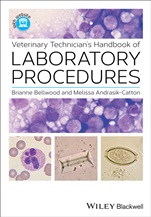
Veterinary Technicians Handbook of Laboratory Procedures
ISBN 9781118341933
Autor: Brianne Bellwood, Melissa Andrasik–Catton
Wydawca: Wiley
Dostępność: 3-6 tygodni
Cena: 268,80 zł
Przed złożeniem zamówienia prosimy o kontakt mailowy celem potwierdzenia ceny.
ISBN13: |
9781118341933 |
ISBN10: |
1118341937 |
Autor: |
Brianne Bellwood, Melissa Andrasik–Catton |
Oprawa: |
Paperback |
Rok Wydania: |
2013-11-19 |
Ilość stron: |
208 |
Wymiary: |
243x170 |
Tematy: |
MZ |
Veterinary Technician’s Handbook of Laboratory Procedures is a quick–reference guide to conducting common laboratory tests. Carefully designed for fast access, the book covers common laboratory equipment, quality control, blood analysis, urinalysis, parasitology, and cytology. Important information is clearly and succinctly outlined for frequently used lab tests, providing step–by–step procedures, discussions of common errors, and tips and tricks, with more than 200 color images to aid in identification. A companion website offers additional images not found in the book and study tools. Veterinary Technician’s Handbook of Laboratory Procedures is an invaluable tool for finding essential information on performing a wide range of laboratory tests. Key features Provides a practical bench–top reference to essential information on conducting laboratory tests in veterinary practice Puts all the information needed at your fingertips Covers equipment, blood analysis, urinalysis, parasitology, and cytology Designed for quick reference in the clinic or school setting Presents more than 200 color images as a tool for identifying unfamiliar structures Includes access to a companion website offering additional images not found in the book and study tools
Preface xi Acknowledgments xiii About the Companion Website xv 1 Laboratory Equipment 3 Laboratory equipment 3 Microscope 3 Centrifuge 9 Refractometer 11 Chemistry analyzers 13 Hematology analyzers 13 Coagulation analyzers 14 Quality control of all laboratory equipment 14 2 Blood Analysis 17 Hematology 17 Proper blood collection and handling techniques 17 Blood collection tubes 17 Peripheral blood smears 18 Staining 22 Packed cell volume (PCV) 23 Red blood cell count 26 Red blood cell indices 28 Reticulocyte count 29 Corrected reticulocyte percentage 30 Reticulocyte production index (RPI) 31 White blood cell count 31 White blood cell differential 33 Calculations 34 White blood cell estimate 35 Corrected white blood cell count 36 Platelet count 37 Platelet estimate 38 Normal species variation of leukocytes 40 Neutrophil maturation 44 Abnormal morphological changes in leukocytes 45 Erythrocyte morphologies 46 Evaluating a blood film to complement automated analyzers 51 Clinical chemistries 52 Coagulation testing 53 Activated clotting time 54 Buccal mucosal bleeding time 54 Automated clotting tests 55 3 Urinalysis 57 Sample collection 57 Free catch (voided sample) 57 Bladder expression 57 Catheterization 58 Cystocentesis 59 Sample preservation 59 In vitro changes occurring in unpreserved urine 60 Refrigeration 60 Freezing 61 Toluene 61 Formalin (40%) 61 Boric acid (0.8%) 61 Commercial preservation tablets 61 Physical examination of urine 62 Volume 62 Color 62 Turbidity 62 Odor 63 Specific gravity (SG) 64 Chemical examination 65 Glucose 66 Bilirubin 66 Ketones 67 Blood 67 pH 67 Protein 67 Urobilinogen 67 Nitrite 68 Leukocytes 68 Sediment examination 68 Materials required 68 Sediment stain 68 Procedure for microscopic examination of urine 69 Reporting of fi ndings 70 Microscopic elements of urine sediment 70 4 Parasitology 77 Collection 77 Pooled samples 77 Gross examination 78 Consistency 78 Color 78 Blood 78 Mucous 78 Gross parasites 78 Microscopic examination 79 Direct fecal smear 79 Simple fecal fl otation 80 Centrifugation technique 81 Baermann technique 83 Common parasites of domestic species 83 Canine and feline 83 Ruminants 106 Equine 113 5 Cytology 121 Sample collection 121 Swabs 121 Fine needle biopsy 123 Tissue biopsy 125 Imprints 127 Centesis 128 Scrapings 129 Smear preparation 130 Feather smear method 130 Line smear method 131 Compression (or squash) method 131 Modified squash method 133 Starfish method 133 Staining 135 Romanowsky stains (Wright’s and Diff–Quick) 135 New methylene blue 135 Microscopic evaluation of cytology slides 136 Pyknosis and karyorrhexis 136 Karyolysis 138 Classifying cell types 138 Inflammation 138 Other cell types 140 Neoplasia 140 Reporting your fi ndings 144 Laboratory submissions 144 Ear cytology 144 Slide preparation and staining 145 Microscopic findings 145 Vaginal cytology 145 Collection methods 147 Cell types seen 148 Stages of estrous 152 Semen evaluation 154 Slide preparation 154 Live/dead sperm ratio 155 Sperm morphology 155 Appendix 159 Temperature conversions 159 Metric conversions 159 Length 159 Weight 160 Volume 160 Metric system 160 Glossary 161 Bibliography 169 Index 171
Brianne Bellwood , RAHT, is a full time instructor and the Program Coordinator for the Animal Health Technology program at Lakeland College in Vermilion, Alberta, Canada. She covers both the practical and theoretical components of several laboratory subjects for Animal Health Technology students. She is also the Program Coordinator for the Animal Health Technology program at Lakeland College. Melissa Andrasik–Catton , RVT, BS, was a full time instructor for 10 years and is now an adjunct instructor for Maple Woods Community College Veterinary Technology Program. She is also a Clinical Trials Manager for Product Development and Regulatory Affairs at Dechra, Development, LLC. She frequently lectures on the subject of Clinical Pathology at local, state and regional veterinary conferences.
Koszyk
Książek w koszyku: 0 szt.
Wartość zakupów: 0,00 zł
Informacje


Kontakt
Gambit
Centrum Oprogramowania
i Szkoleń Sp. z o.o.
Al. Pokoju 29b/22-24
31-564 Kraków
Siedziba Księgarni
ul. Kordylewskiego 1
31-542 Kraków
+48 12 410 5991
+48 12 410 5987
+48 12 410 5989
Subskrypcje
Administratorem danych osobowych jest firma Gambit COiS Sp. z o.o. Na podany adres będzie wysyłany wyłącznie biuletyn informacyjny.
Autoryzacja płatności

Informacje na temat autoryzacji płatności poprzez PayU.

© Copyright 2012: GAMBIT COiS Sp. z o.o. Wszelkie prawa zastrzeżone.
Projekt i wykonanie: Alchemia Studio Reklamy