


Wydawcy
Katalog tematyczny
- Archeologia (109)
- Ekonomia, finanse, business (13704)
- Filozofia (1445)
- Historia (3040)
- Języki i językoznawstwo (2356)
- Lifestyle, hobby i rozrywka (475)
- Medycyna (9704)
- Nauki humanistyczne (4)
- Nauki o Ziemi i środowisku (2638)
- Nauki ścisłe (20412)
- Nauki społeczne (8486)
- Nauki techniczne (13450)
- Prawo (1696)
- Publikacje informacyjne i interdyscyplinarne (1288)
- Religia i wierzenia (917)
- Technika komputerowa (4067)
- Zdrowie, relacje międzyludzkie i rozwój osobisty (657)





Informacje szczegółowe o książce
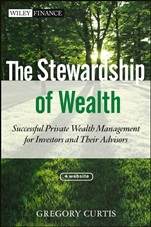
The Stewardship of Wealth: Successful Private Wealth Management for Investors and Their Advisors + Website
ISBN 9781118321867
Autor: Gregory Curtis
Wydawca: Wiley
Dostępność: 3-6 tygodni
Cena: 313,95 zł
Przed złożeniem zamówienia prosimy o kontakt mailowy celem potwierdzenia ceny.
ISBN13: |
9781118321867 |
ISBN10: |
1118321863 |
Autor: |
Gregory Curtis |
Oprawa: |
Hardback |
Rok Wydania: |
2012-12-07 |
Ilość stron: |
464 |
Wymiary: |
229x165 |
Tematy: |
KF |
Praise for The Stewardship of Wealth "Greg Curtis is a philosopher. In The Stewardship of Wealth, he offers an encyclopedic view of what is true, what is good, and what is beautiful in the art of dynamically preserving a family and its fortune for many generations. Hats off to one of the great stewards of wealth of this time and of all time." James E. Hughes Jr., author of Family WealthKeeping It in the Family and Family: The Compact Among Generations "When you purchase a book like Greg Curtis's latest The Stewardship of Wealth , you place on your bookshelf a reference tool you will refer to thousands of times. You will loan it to your son-in-law, the meddler, suggesting he read Chapter 6 on investment decision making. Give a copy to your daughter, fresh from graduate school, to read Chapter 17 on working with money managers. If you see it on the shelf of your financial advisor, be impressed! The Stewardship of Wealth is a rich treasure trove of clear definitions, excellent templates, and practical how-tos. Buy one copy for yourself and one for your family; keep it handy and profit from it!" Charlotte B. Beyer, Founder, Institute for Private Investors, Investor Education Collaborative "The Stewardship of Wealth is a masterpiececovering everything the wealth owner needs to considerthe purpose, the principles, and the process, plus a guidebook on how to evaluate each asset class when building a family wealth strategy. Greg Curtis will join the ranks of Buffett, Ellis, and Graham as a leading educator in the private wealth fieldproviding a definitive resource for future family leaders. And along the way, he makes the journey enjoyable for the reader." Sara Hamilton, CEO, Family Office Exchange " The Stewardship of Wealth is an important and uniquely valuable guide for wealthy families and their advisors seeking to understand, preserve, and enhance family wealth. Greg Curtis has skillfully brought to bear his deep investment knowledge, long experience advising very wealthy families, and, most importantly, his profound wisdom and judgment to produce this first-rate volume." David C. Oxman, Senior Counsel, Davis Polk & Wardwell "The stewardship of wealth is akin to farming, as both are long-term endeavors but fraught with short-term challenges. Myriad external forces are like the weather, influencing key decisions without knowing what the future will bring. The investor must steer clear of conflicts, while the grower manages around unproductive ground. Curtis gives us a brilliant and comprehensive guide that makes us all more aware and responsible stewards of family wealth." Thomas R. Livergood, CEO, The Family Wealth Alliance
Preface xix Acknowledgments xxxi PART ONE The Importance of Private Capital CHAPTER 1 Wealth in America: The Indispensable Rich 3 Democracy and Capitalism 6 Capitalism and Its Contradictions 7 Providential Societies 10 Risk and Strength 12 America and Decline 13 On China 15 Addressing the Declinists 17 Conclusion: American Distinctiveness and Private Wealth 19 Notes 21 CHAPTER 2 Creative Capital 25 A (Brief) Moral History of Capitalism 26 The Ancients 27 Moral Arguments for Capitalism 28 Voltaire 28 Adam Smith 30 Hegel 31 Contemporary Discussions 32 The Moral Basis of Private Capital 33 Creative Capital in America 34 Higher Education: The Case of St. John’s College 37 Politics: The Conservative Resurgence 38 New Business Ideas: Venture Capital in America 39 Creative Capital and Vibrant Societies 42 Why Do Creative Capitalists Persist? 43 The Indispensable Nation 43 Conclusion: Underdogs and Bullies 45 Notes 47 PART TWO The Stewardship of Wealth CHAPTER 3 Are We Living in a Permanent Financial Crisis? 53 The End of History (Again) 54 A Permanent Financial Crisis? 54 The Cause of the Crisis Matters 55 The Industrial Revolution and Its Aftermath 56 The Great (and Strange) Experiment 57 Seize the Means of Production! 59 The Power to Tax Is the Power to Destroy—Societies 60 ‘‘Borrowing . . . the Disease Is Incurable’’ 61 Now What? 63 But, First, a Note about Germany 66 Investing Capital in a (Very) Uncertain World 67 Conclusion: A World At Risk 68 Notes 68 CHAPTER 4 Risk 73 Families and Investment Risk 73 ‘‘Low’’–Risk Investments 74 ‘‘High’’–Risk Investments 75 ‘‘Reasonable’’–Risk Investments: Marketable Securities 76 The Law of Supply and Demand (Again) 76 Idiosyncratic Ideas about Risk 77 Real Risks: Those Embedded in the Process of Investing 78 Individual Stock Risk versus Broad Market Risk 78 Price Volatility 79 Wildness in the Tails 81 Investor Behavior 82 Making a Truly Terrible Decision 83 Variance Drain 83 Dick and Jane and Variance Drain 84 Later, at Le Cirque 85 Variance Drain Scenarios 86 Behavioral Finance: Are We Hard–Wired for Failure? 87 Professor Odean on Behavioral–Inspired Wealth Transfer 88 What Can We Do about It? 89 Edith and the Headwinds She Faces 90 The First Thing Edith Forgot: Variance Drain 91 The Second Thing Edith Forgot: Inflation 92 The Third Thing Edith Forgot: Investment Costs 92 The Fourth Thing Edith Forgot: Taxes 92 The Fifth Thing Edith Forgot: Spending 93 What Should Edith Do? 93 Conclusion: Preserving Wealth Is Hard Slogging 96 Notes 97 CHAPTER 5 The Collapse of Ethical Behavior 101 What Caused the Crisis? 101 An Unsavory Rehash of the Ethical Failures 102 Ethical Failures in Subprime Lending 102 Ethical Failures among the Subprime Lending Banks 103 Ethical Failures in Auction Rate Securities 104 Ethical Failures among the GSEs 105 The Contemptible Public Disclosures of Financial Firms 107 Shorting the Securities You Are Selling to Your Clients 107 Paulson Bernanke & Co. and the Conspiracy of Silence 108 How Scandal Became Crisis 109 Trust 109 Customers 110 Why Such an Ethical Swamp? 111 Hedge Fund Wannabees 111 ‘‘When the Music Plays You Have to Dance’’ 112 Compensation Follies 113 Conflicts upon Conflicts 114 Where Do We Go from Here? 115 Conclusion: Fixing the Industry 116 Notes 117 CHAPTER 6 Finding the Right Advisor 119 Open Architecture as a Disruptive Business Model in the Advisory World 120 What Is Open Architecture and Why Is It So Important? 120 Open Architecture in the Financial Industry 121 The Impact on Investors 123 The Outsourced CIO Model 124 The Evolution of the Traditional, Nondiscretionary Model 125 Documenting the Trend toward the Outsourced CIO Model 126 What’s Driving the Trend toward the Outsourced CIO Model? 126 The Outsourced CIO Model Today 127 Advantages and Disadvantages of the Outsourced CIO Model 129 Is the Outsourced CIO Model Right for Your Family? 132 How to Select a Good Outsourced CIO Advisor 133 Finding the Right Advisor for Your Family 135 Dimensions of the Problem to Focus On 135 The Schulberg Family 136 Gathering Names 139 The RFP Process 139 Where Is the Sample RFP? 143 Final Diligence 144 Where Does Diligence Leave Off and Psychodrama Begin? 145 Conclusion: Focusing On a Few Key Variables 146 Notes 147 CHAPTER 7 Making Family Investment Decisions 149 The Family Investment Committee Today 150 The Origin of the Investment Committee 150 Committee Dynamics 151 Making an Impact 152 Attempts to Deal with the Problem 152 Asset Allocation Guidelines and Investment Policy Statements 152 Using Outside Experts to Populate the Investment Committee 153 The Separate Investment Management Corporation 153 The Family Investment Committee, Tomorrow 153 The Investment Committee Operating Manual 154 Opportunity Costs: Prudence versus Returns 155 Prudence versus Returns for Trustees 155 Prudence versus Returns for Families 157 Striving for Prudence and Returns 159 Conclusion: Focusing On What Families Do Best 161 Notes 161 CHAPTER 8 Trusts 163 Open–Architecture Trusts 163 A Brief, Unconventional (but Wickedly Accurate) History of the Common–Law Trust from the Client’s Perspective 164 Professional Management 165 Deep Pockets 165 Perpetual Life 166 Sound Exercise of Discretion 166 Down with the Bundled Trust! Up with the Open–Architecture Trust! 166 Activities Required to Operate a Trust 167 The Nitty–Gritty of Establishing Open–Architecture Trusts 169 The Rise of Beneficiary Rights 170 If I Was a Big Trust Institution 171 Semi–Open Architecture Trusts 172 Private Trust Companies 173 Total Return Trusts 174 The Uniform Principal and Income Act 174 Unitrust Legislation 175 The IRS View 175 Total Return Trusts in States without Total Return Legislation 175 Conclusion: Let’s Get Revolutionary 176 Notes 176 PART THREE The Rich Get Richer CHAPTER 9 Designing Taxable Investment Portfolios 183 The Markowitz Revolution 184 Problems with Mean Variance Optimization 185 Computational Power 185 Garbage In, Garbage Out 186 The Challenge of Developing Thoughtful Data Inputs 187 Multivariate Modeling 187 Taking Taxes into Account 188 Monte Carlo Simulations 189 The Problem of Fat Tails 190 Best Practices in Designing Investment Portfolios for Families 192 What Are the Objectives for the Portfolio? 192 Current Claims versus Growth Claims on a Portfolio 193 Matching Portfolio Assets to Each Type of Risk 194 Traditional Asset Allocation Modeling 195 Modern Asset Allocation Modeling 196 Satisfying Portfolio Claims Prudently 197 Conclusion: Art versus Science 198 Notes 198 CHAPTER 10 Adding Value to Family Investment Portfolios 203 Moving from the Current Strategy to the New Strategy 203 Adding Value through Manager Selection 205 Adding Value by Tactically Repositioning the Portfolio 206 Adding Value through Opportunistic Investments 207 Adding Value through Monitoring and Rebalancing 209 Conclusion: We Need All The Value–Add We Can Get 210 Notes 210 CHAPTER 11 Investing in U.S. and Non–U.S. Equities 211 U.S. Large– and Mid–Capitalization Stocks 212 U.S. Small–Capitalization Stocks 214 International Developed Country Stocks 216 International Diversification Is Unnecessary 217 Just When You Need It, Diversification Doesn’t Work 218 It’s Easier and Safer to Gain International Exposure by Investing in ADRs 219 The Bottom Line 219 Emerging and Frontier Markets 220 Emerging Markets 220 Frontier Markets 221 Conclusion: Equity Securities Are At the Core of Most Portfolios 223 Notes 223 CHAPTER 12 Investing Globally 225 Why Go Global? 226 Why Stay Home? 228 Global Investing in the Real World (or, Maybe, Real Investing in a Global World) 229 Is ‘‘Global Equities’’ an Asset Class? 229 Is It Possible to Succeed as a Global Equity Manager? 230 Can a Global Manager Outperform in the U.S. Portion of its Portfolio? 231 Do the BRICs Really Matter as Much as We Think? 231 What about Investing in Multinationals? 233 The Challenge of Stock–Picking in ‘‘Non–Nonsynchronous’’ Markets 233 Thinking Nonmonolithically 233 Conclusion: Think Globally, Act Locally 234 Notes 237 CHAPTER 13 Investing in Real Assets 239 Real Estate 239 Leverage 240 Why Invest in Real Estate? 240 How to Invest in Real Estate 241 Oil and Gas 243 Value Creation Mechanisms 244 Hedging to Protect Value 245 Investing Strategies 246 Recommendations 248 Commodities 249 Sources of Return from Commodities Investing 250 The Commodities Indexes 251 Historical Risk, Return, and Sharpe Ratios 251 Historical Correlations 252 Some Thoughts about Historical and Prospective Commodity Returns 252 The Role of Commodities in a Diversified Portfolio 253 Effects of Rebalancing 254 The Impact of Extreme Events 254 Summary 255 Conclusion: The Use and Misuse of Real Asset Exposure 255 Notes 256 CHAPTER 14 Investing in Fixed Income 259 Mistakes Bond Investors Make 259 Employing Managers Who ‘‘Cheat’’ 259 Paying Too Much for Bond Management 262 Employing Best Practices in Building Bond Portfolios 262 Building Laddered Bond Portfolios 263 Owning Only High–Grade, Noncallable, Long–Term Bonds 264 Actively Managing Municipal Bonds 264 Actively Managing Corporate Bonds 267 High–Yield Bonds 267 Managing Cash 269 Conclusion: Fixed Income Is Underappreciated 270 Notes 271 CHAPTER 15 Investing in Hedge Funds 273 What Is a Hedge Fund? 274 Types of Hedge Funds 275 Challenges for Hedge Fund Investors 277 Building a First–Rate Hedge Fund Portfolio 285 Conclusion: Should Anyone but Yale Invest in Hedge Funds? 288 Notes 290 CHAPTER 16 Investing in Private Equity 293 Why Invest in PE? 294 Persistence of Returns 294 The Importance of Diversification 295 Private Equity Returns 296 The Return Characteristics of PE Investments 296 Gaining Exposure to Private Equity 297 PE Funds of Funds 298 A Global Asset Class 298 Illiquidity and the J–Curve Effect 299 Ramping Up to Your Target Allocation 300 Waterfall Analysis 300 Secondary PE Investing 302 The Evolution of Secondary Investing 302 Secondary Investing Strategies 303 Identifying High–Quality Secondary Funds 304 Conclusion: The Ultimate Aspirational Asset 304 Notes 305 CHAPTER 17 Working with Money Managers 307 The Business of Money Management 308 Hapless Asset Management 308 Survivorship Bias 311 Fees and Costs 311 Traditional Managers 313 The Main Problem: Recent Good Performance Is Almost Irrelevant 314 Characteristics of Best–in–Class Managers 317 Objectionable Characteristics 320 Finding Best–in–Class Managers 320 Monitoring Best–in–Class Managers 323 Active, Indexed, Fundamental, and Structured Products 324 Alternative Managers 326 Working with Hedge Funds 326 Working with Private Equity Funds 328 Conclusion: At Least Managers Are Interesting 329 Notes 330 CHAPTER 18 Managing Investment–Related Taxes 331 Designing Portfolios from an After–Tax Perspective 332 Asset Location 332 Asset Class Strategies 333 Tax–Aware Managers 333 Identifying Tax–Aware Managers 335 Harvesting Losses 337 Conclusion: You Can’t Eat Gross Returns 338 Notes 338 CHAPTER 19 Asset Location and Implementation 341 Asset Location Issues 341 Examples of Asset Locations and the Associated Investment Implications 342 Implementation Issues 347 Macro Considerations 348 Micro Considerations 351 Implementing in PE and Hedge 353 Conclusion: It’s Not Just a Technical Issue 353 Notes 353 CHAPTER 20 Monitoring and Rebalancing Taxable Portfolios 355 Performance Monitoring 356 Money Manager Reports 356 Bank Custody Reports 357 Investment Consultant Reports 357 Conflicts between Reports 358 Interpreting Performance Reports 359 Monitoring Manager Performance 360 Rebalancing Taxable Portfolios 362 Setting Strategic Ranges 363 Rebalance Back to What? 363 How Often to Rebalance? 364 Conclusion: Monitoring and Rebalancing Are Stewardship Issues 365 Notes 366 CHAPTER 21 Investment Policy Statements 367 The Investment Policy Statement 367 Spending Policy Statements 369 Cash Guidelines 369 Manager Guidelines 369 The Investment Committee Policy Manual 370 Letters to the Family 370 Conclusion: Don’t Skimp on Documenting Your Decisionmaking 370 CHAPTER 22 Miscellaneous Challenges for Private Investors 371 Asset Custody 371 What Services Does a Custodian Offer? 372 Evaluating Custodians 373 Custody Pricing 374 Custody for Taxable Accounts 375 Securities Lending 376 Brokers as Custodians 377 Concentrated Security Positions 378 Dealing with the Emotional Impact of a Concentrated Position 381 Strategies for Diversifying Concentrated Positions 382 Establishing a Family Office 384 Why a Family Office? 384 What Is the Minimum Size for a Family Office? 384 What Responsibilities Are Carried Out by a Family Office? 384 Where to Begin? 386 Are There Alternatives to the Stand–Alone Family Office? 387 Family Investment Partnerships 387 Philanthropy 389 Conclusion: There Are Challenges Everywhere We Look 392 Notes 392 Afterword: On Happiness 395 Stereotypes of the Rich 396 The Rich and the ‘‘Faux Rich’’ 396 The Real Way the Rich Are Different 398 Children and the Wealthy 400 Marriage and the Wealthy 400 Work and the Wealthy 401 Failed Stewardship and Family Unhappiness 403 Wealth and Happiness 405 Notes 405 About the Companion Website 407 About the Author 409 Index 411
GREGORY CURTIS is the Chairman and founder of Greycourt & Co., Inc., a wealth advisory firm serving substantial families and select endowments on a global basis. Prior to founding Greycourt, Curtis served for many years as president of a family office for the Mellon family and as president of the Laurel Foundation. He currently serves on the investment committees for Carnegie Mellon University, The Pittsburgh Foundation, St. John's College, United Educators Insurance, and Winchester Thurston School, among others. Curtis is also a founder or cofounder of three investment firms, Greycourt & Co., Inc., The Investment Fund for Foundations, and Moneybags LLC.
Here comes a book that is a must–read, an instant classic. With a sure hand and an authoritative voice, it explains why private capital is essential to American democracy—and why it is in danger. The book is called The Stewardship of Wealth: Successful Private Wealth Management for Investors and Their Advisors , by Gregory D. Curtis, the founder of Greycourt & Co., the first open–architecture investment manager. Curtis convincingly argues that firms such as his will be the only ones standing in the not–so–distant future. Forget broker–dealers, salespeople, product pushers and all the others that sell rather than advise. They are dead meat. The investment climate going forward doesn′t look so rosy, he says. "The West has reached the end of its own socioeconomic evolution and is now faced with the gargantuan task of reinventing itself," Curtis writes. That means remaking governments, creating new cultures and governing mechanisms, as well as new theories for how government can support itself. "Needless to say," he continues, "the investment implications of this are large and complex." So is his book, so much so that I plan to break this discussion into two columns. The first thing that struck me is that Curtis offers support to the much–maligned 1% of Americans who are the target of Occupy Wall Street. In part that might be because this is whom he works with. Curtis is sometimes called the "super wealth manager for high rollers." Before founding Greycourt, this Harvard Law School grad served for many years as president of a family office for the Mellon family and president of the Laurel Foundation. Curtis says that the super wealthy and their use of creative capital offer the essential ingredient that makes America America. "The production of private wealth is a crucial aspect of the singular success of the American experiment," he writes. "Private capital is the most important capital in the world, and without it on a grand scale, it would be impossible to imagine America." Curtis believes that private capital is the "continuing vigor" that drives the country. The competitive spirit, he says, "animates" the society and allows people to become rich to do things useful to the public at large. "If that spirit were to become constrained by political or cultural mechanisms, America would rather quickly come to resemble its European cousins," he says. And to make the lure of wealth meaningful, "we must be willing to accept and tolerate the consequences of competition." Curtis argues that great wealth has not created a selfish society. He gives numerous examples of how wealthy people with passion and purpose have built brilliant things, using ideas for art and education and politics to build "works of art" such as colleges, churches and charities that wouldn′t otherwise be possible. "The American system of private philanthropy could not persist without the creative capital of the wealthy," he writes. Curtis estimates that almost 10% of all charitable giving comes from just 500 families. In Part I of the book, Curtis speculates about why America, more than any of the older free–market democracies, has managed to preserve its vigor. "It is crucial to manage the private capital properly in order for the society to continue to function," he writes. And that’s where financial advisors come in. If private capital is the most important capital in the world, he posits, and if the owners of that capital depend on financial advisors for success, that would make financial advising one of the most crucial jobs in America. That′s why, he says, his book is "directed to both wealthy families and their advisors." Curtis then moves on to Part II. Chapter 5, which I found particularly meaty, examines the complex and disappointing world of finance as a business. "I come down hard on my colleagues for the conflicts of interest that pervade the financial world, for the self–interest and utter lack of concern for clients, and for the corruption that has had global consequences," Curtis writes. The only legitimate reason for a firm to exist is a sense of responsibility to its customers. "Once the customer walks—and they are walking away from the financial industry in gigantic numbers—the industry is doomed." Curtis spends a good deal of time discussing financial advisors who act as "outsourced CIOs," a rapidly growing model first adopted by pension funds and other institutional investors and then more recently by family offices and multifamily offices. The crisis of 2008 has hastened the growth of this model, Curtis says, because it′s hard for advisors to make crucial investment decisions without having discretion over investments. Without discretion, advisors face a time–consuming approval process, an unacceptable option when markets are moving rapidly. What had been a steady trend toward discretionary advice "became a virtual torrent following the catastrophic market environment of mid–2007 to early 2009." In Chapter 8, he looks at the world of private trusts. "Trusts are a prominent feature of every wealthy family," Curtis writes, "but organizing and managing trusts in sensible ways has become an increasing challenge as consolidation in the banking industry has eliminated most of the local trust banks." By far the longest part of the book is Part III, entitled "The Rich Get Richer: The Nuts and Bolts of Successful Investing," which is a description of the best investment practices for private investors. It′s meant to appeal more to financial advisors than investors. I′ll review that section of the book in my September column. Mary Rowland can be reached at rowlandnyc@aol.com. She has been a business and personal finance journalist for 30 years and has written two books for financial advisors: Best Practices and In Search of the Perfect Model. ( Financial Advisor Magazine , October 2012) “In a legendary exchange between two great American authors, F. Scott Fitzgerald reportedly said: "Let me tell you about the very rich. The rich are different from you and me." Ernest Hemingway famously replied: "Yes, they have more money." While that assessment may have been oversimplified, both men were essentially correct. But wealth manager Gregory Curtis has made a far more comprehensive evaluation in his book, "The Stewardship of Wealth: Successful Private Wealth Management for Investors and Their Advisors," which he wrote based on more than 30 years of handling the financial affairs of billionaire clients such as the Mellon family. "To be sure, the challenges facing wealthy families who aspire to happiness –– that is all wealthy families –– are different from those of other families in the same way the challenges facing welfare families are different from those facing middle class families," wrote Curtis, chairman and founder of Greycourt & Co. Inc. in Pittsburgh. The stakes are much higher for the super wealthy in many ways, according to Curtis. Even if they get the investment stuff right, the money they have amassed could be at risk if they fail in other important areas. For instance, if rich parents don′t raise their children right, the children will probably blow all the money, ruining their lives and others′ in the process. "Use your money to make the world a better place and devote your personal time to it because that′s the most precious resource you have. Money, you have plenty of it. But getting your own hands dirty, rolling up your sleeves, and going out and doing something –– that′s going to make you happy." "So really 80 percent to 90 percent of American wealth disappears in about three generations. And that′s pretty much true all over the world," he said.” —Tim Grant, distributed by Scripps Howard News Service, shns.com
Koszyk
Książek w koszyku: 0 szt.
Wartość zakupów: 0,00 zł
Informacje


Kontakt
Gambit
Centrum Oprogramowania
i Szkoleń Sp. z o.o.
Al. Pokoju 29b/22-24
31-564 Kraków
Siedziba Księgarni
ul. Kordylewskiego 1
31-542 Kraków
+48 12 410 5991
+48 12 410 5987
+48 12 410 5989
Subskrypcje
Administratorem danych osobowych jest firma Gambit COiS Sp. z o.o. Na podany adres będzie wysyłany wyłącznie biuletyn informacyjny.
Autoryzacja płatności

Informacje na temat autoryzacji płatności poprzez PayU.

© Copyright 2012: GAMBIT COiS Sp. z o.o. Wszelkie prawa zastrzeżone.
Projekt i wykonanie: Alchemia Studio Reklamy