


Wydawcy
Katalog tematyczny
- Archeologia (109)
- Ekonomia, finanse, business (13704)
- Filozofia (1445)
- Historia (3040)
- Języki i językoznawstwo (2356)
- Lifestyle, hobby i rozrywka (475)
- Medycyna (9704)
- Nauki humanistyczne (4)
- Nauki o Ziemi i środowisku (2638)
- Nauki ścisłe (20412)
- Astronomia (294)
- Biologia (5119)
- Biochemia (575)
- Biologia człowieka (14)
- Biologia komórkowa (377)
- Biologia molekularna (398)
- Biologia rozwoju (130)
- Biologia, ogólnie (1277)
- Botanika (280)
- Hydrobiologia (92)
- Mikrobiologia (363)
- Mykologia (22)
- Zoologia (303)
- Chemia (6540)
- Fizyka (3309)
- Matematyka (4574)
- Nauki ścisłe, ogólnie (503)
- Nauki społeczne (8486)
- Nauki techniczne (13450)
- Prawo (1696)
- Publikacje informacyjne i interdyscyplinarne (1288)
- Religia i wierzenia (917)
- Technika komputerowa (4067)
- Zdrowie, relacje międzyludzkie i rozwój osobisty (657)





Informacje szczegółowe o książce
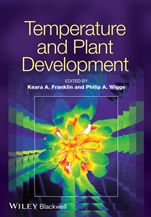
Temperature and Plant Development
ISBN 9781118308202
Autor: Keara Franklin, Philip Wigge
Wydawca: Wiley
Dostępność: 3-6 tygodni
Cena: 952,35 zł
Przed złożeniem zamówienia prosimy o kontakt mailowy celem potwierdzenia ceny.
ISBN13: |
9781118308202 |
ISBN10: |
1118308204 |
Autor: |
Keara Franklin, Philip Wigge |
Oprawa: |
Hardback |
Rok Wydania: |
2014-02-11 |
Ilość stron: |
240 |
Wymiary: |
242x176 |
Tematy: |
PS |
Plants are incredibly sensitive to changes in temperature. Changes of a single degree or two in ambient temperature can impact plant architecture, developmental processes, immune response, and plant reproduction. Temperature and Plant Development thoroughly explores plant molecular responses to changes in temperature with aim to understanding how plants perceive, integrate, and respond to temperature signals. Temperature and Plant Development explores the diverse molecular responses that plants exhibit as they face changing temperatures. Temperature–related changes and adaptations to essential developmental processes, such as germination, flowering, and reproduction, are explored in detail. Chapters also explore the impact of temperature on plant immune responses and the impact of rising temperatures on global food security. A timely and important book, Temperature and Plant Development will be a valuable resource for plant biologists, crop scientists, and advanced students. • Up–to–date and comprehensive coverage of the role of temperature on plant development. • Looks at changes and adaptations to plant developmental processes made in response to changing temperatures. • Explores the role of temperature on plant immune response and pathogen defense • Provides a timely look at the impact of changing temperatures on global food security
Contributors xi Preface xiii 1 Temperature sensing in plants 1 Steven Penfield and Dana MacGregor 1.1 Introduction 1 1.2 Passive and active temperature responses in plants 1 1.3 Temperature sensing during transcriptional regulation 3 1.4 Sensing cold: A role for plasma membrane calcium channels in plants 8 1.5 A role for membrane fluidity as an upstream temperature sensor? 11 1.6 Temperature sensing by proteins 12 1.7 Summary 14 2 Plant acclimation and adaptation to cold environments 19 Bob Baxter 2.1 Introduction 19 2.2 Chilling and freezing injury 20 2.3 Freezing avoidance and tolerance at the structural and physiological level 21 2.4 Freezing tolerance 26 2.5 Cold deacclimation (dehardening) and reacclimation (rehardening) 32 2.6 Spatial and temporal considerations of plant responses to low temperature 34 2.7 The survival of cold and freezing stress in a changing climate 38 2.8 Plant cold acclimation and adaptation in an agricultural context 42 2.9 Summary 42 3 Plant acclimation and adaptation to warm environments 49 Martijn van Zanten, Ralph Bours, Thijs L. Pons, and Marcel C.G. Proveniers 3.1 Introduction 49 3.2 Implications of high temperature for agriculture and natural ecosystems 51 3.3 Temperature perception and signaling pathways 52 3.4 Photosynthesis 53 3.5 Respiration and carbon balance 57 3.6 Growth and allocation of biomass 58 3.7 Architectural changes in response to high temperature 58 3.8 Hormonal regulation of thermotolerance 62 3.9 Functional implications of plant architectural changes to high temperature 63 3.10 Interactions between drought and high temperature 64 3.11 Carbohydrate status control of plant acclimation to high temperature 65 3.12 Thermoperiodic effects on plant growth and architecture 66 3.13 High–temperature effects on the floral transition 68 4 Vernalization: Competence to flower provided by winter 79 Dong–Hwan Kim and Sibum Sung 4.1 Introduction 79 4.2 Vernalization requirement in Arabidopsis 80 4.3 The molecular mechanism of vernalization 84 4.4 Resetting of FLC repression during meiosis 88 4.5 Vernalization in other plant species 89 4.6 Concluding remarks 91 5 Temperature and light signal integration 97 Harriet G. McWatters, Gabriela Toledo–Ortiz, and Karen J. Halliday 5.1 Introduction 97 5.2 Convergence points for light and temperature sensing 101 5.3 Phytochrome–Interacting Factors as signal integrators 102 5.4 ELONGATED HYPOCOTYL 5 (HY5): A cool operator 105 5.5 Light and temperature converge at the circadian oscillator 107 5.6 Photoperiodic and thermal control of flowering 113 5.7 Light–dependent circadian gating of cold–acclimation responses 115 5.8 Temperature and light regulation of cell membrane fatty acid composition 117 5.9 Concluding thoughts: Implications for a changing future 118 6 Temperature and the circadian clock 131 Kathleen Greenham and C. Robertson McClung 6.1 Introduction 131 6.2 Temperature compensation 136 6.3 Temperature entrainment 142 6.4 Cold tolerance 146 6.5 Splicing 150 6.6 Concluding remarks 151 7 Temperature and plant immunity 163 Jian Hua 7.1 Introduction 163 7.2 Plant immunity 164 7.3 Temperature effects on plant disease resistance 167 7.4 The molecular basis for temperature sensitivity in plant immunity 170 7.5 Evolution of the temperature sensitivity of immunity 174 7.6 Concluding remarks 176 8 Temperature, climate change, and global food security 181 Robert J. Redden, Jerry L. Hatfield, P.V. Vara Prasad, Andreas W. Ebert, Shyam S. Yadav, and Garry J. O’Leary 8.1 Introduction 181 8.2 Climate change on a global basis 181 8.3 The impact of temperature on crop water relations 183 8.4 The influence of high temperature on crop physiology and yield processes 186 8.5 The interaction of climate change factors on crop development 188 8.6 The impact of global climate change on food quality and plant nutrient demand 190 8.7 Breeding high–temperature stress tolerance using crop wild relatives 190 8.8 Global food production and food security 191 8.9 Crop nutritional content 194 8.10 Discussion 196 8.11 Conclusions 197 Index 203 Color plate section is located between pages 130 and 131.
The Editors Keara A. Franklin is a Royal Society Research Fellow and Lecturer at the University of Bristol. Philip A. Wigge is a Research Group Leader at the Sainsbury Laboratory at the University of Cambridge
Koszyk
Książek w koszyku: 0 szt.
Wartość zakupów: 0,00 zł
Informacje


Kontakt
Gambit
Centrum Oprogramowania
i Szkoleń Sp. z o.o.
Al. Pokoju 29b/22-24
31-564 Kraków
Siedziba Księgarni
ul. Kordylewskiego 1
31-542 Kraków
+48 12 410 5991
+48 12 410 5987
+48 12 410 5989
Subskrypcje
Administratorem danych osobowych jest firma Gambit COiS Sp. z o.o. Na podany adres będzie wysyłany wyłącznie biuletyn informacyjny.
Autoryzacja płatności

Informacje na temat autoryzacji płatności poprzez PayU.

© Copyright 2012: GAMBIT COiS Sp. z o.o. Wszelkie prawa zastrzeżone.
Projekt i wykonanie: Alchemia Studio Reklamy