


Wydawcy
Katalog tematyczny
- Archeologia (109)
- Ekonomia, finanse, business (13704)
- Filozofia (1445)
- Historia (3040)
- Języki i językoznawstwo (2356)
- Lifestyle, hobby i rozrywka (475)
- Medycyna (9704)
- Nauki humanistyczne (4)
- Nauki o Ziemi i środowisku (2638)
- Nauki ścisłe (20412)
- Nauki społeczne (8486)
- Nauki techniczne (13450)
- Prawo (1696)
- Publikacje informacyjne i interdyscyplinarne (1288)
- Religia i wierzenia (917)
- Technika komputerowa (4067)
- Zdrowie, relacje międzyludzkie i rozwój osobisty (657)





Informacje szczegółowe o książce
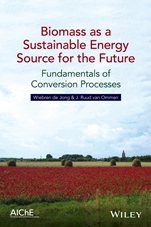
Biomass as a Sustainable Energy Source for the Future: Fundamentals of Conversion Processes
ISBN 9781118304914
Autor: Wiebren de Jong, J. Ruud van Ommen
Wydawca: Wiley
Dostępność: 3-6 tygodni
Cena: 595,35 zł
Przed złożeniem zamówienia prosimy o kontakt mailowy celem potwierdzenia ceny.
ISBN13: |
9781118304914 |
ISBN10: |
1118304918 |
Autor: |
Wiebren de Jong, J. Ruud van Ommen |
Oprawa: |
Hardback |
Rok Wydania: |
2014-12-23 |
Ilość stron: |
600 |
Wymiary: |
243x157 |
Tematy: |
RN |
Focuses on the conversion of biomass into gas or liquid fuels covering physical pre–treatment technologies, thermal, chemical and biochemical conversion technologies Most biomass energy is currently obtained by burning the biomaterial directly. Some of the common biomaterials used this way are wood, charcoal, sawdust, garbage etc. Biomass as a Sustainable Energy Source for the Future is not mainly concerned in using biomass directly, but rather converting it into gas, liquid or solid fuels in such a way that it is sustainable and non–polluting. Biomass as a Sustainable Energy Source for the Future scope is not limited to one class of conversion technologies, as regularly seen in other books, but covers the current development and research of the key areas in biomass conversion such as: physical pre–treatment technologies, thermal, chemical and biochemical conversion technologies. Through contributions from leading experts in diverse fields, Biomass as a Sustainable Energy Source for the Future features: • The latest biomass characterization techniques • Diochemical and thermochemical conversion processes • The development of integrated biorefineries covering such topics as reactor configurations and downstream processing • How to mitigate the environmental risks when using biomass as fuel • Includes many problems, small projects, sample calculations and industrial application examples In addition this book discusses the development of integrated biorefineries, which are similar to petroleum refineries in concept, covering such topics as reactor configurations and downstream processing. The main difference between a petroleum refinery and a biorefinery is that the biorefinery uses biological matter as opposed to petroleum or other fossil sources to produce transportation fuels, chemicals, heat and power. Wiebren de Jong is an associate professor at Delft University of Technology working in the Process & Energy department. He is involved as senior researcher in several EU and national projects concerning biomass pretreatment, combustion, gasification and biorefinery processes. He is co–author of more than 65 journal papers concerning thermal and chemical conversion of biomass. J. Ruud van Ommen is an associate professor at Delft University of Technology working in the Chemical Engineering department. His current research focuses on Scaling up of nanotechnology processes, and monitoring and structuring of catalytic multiphase reactors, especially for energy related processes. He is co–author of more than 80 journal papers, of which about 25 concerning energy technology.
Part I Social context and structural basis of biomass as a renewable energy sources 1. Introduction: Socio–economic aspects of biomass conversion 1.1 Energy supply – economic and environmental considerations 1.2 Ways to mitigate threats to a sustainable energy supply 1.3 What is sustainable supply of biomass? 1.4 Resources and sustainable potential of biomass 1.5 A brief introduction to multi–product biomass conversion techniques Chapter summary and Study Guide Key concepts Short–answer questions Problems Projects Internet References Bibliography 2. Biomass composition, properties and characterization 2.1 Physico–chemical properties 2.2 Main structural organic constituents 2.3 Minor organic constituents 2.4 Inorganic compounds 2.5 Proximate and Ultimate analysis 2.6 Heating values 2.7 Ash characterization techniques Chapter summary and Study Guide Key concepts Short–answer questions Problems Projects Internet References Bibliography Part II Chemical engineering principles of biomass processing 3. Conservation: Mass, momentum and energy balances 3.1 General conservation equation 3.2 Conservation of mass 3.3 Conservation of energy 3.4 Conservation of momentum Chapter summary and Study Guide Key concepts Short–answer questions Problems Projects Internet References Bibliography 4. Transfer: Basics of mass and heat transfer 4.1 Introduction 4.2 Transport terms in the governing equations 4.3 Radiative heat transfer 4.4 Convective heat and mass transfer 4.5 Transfer of heat and mass with phase change Chapter summary and Study Guide Key concepts Short–answer questions Problems Projects Bibliography 5. Reactions: Thermodynamic aspects, kinetics and catalysis 5.1 Reaction kinetics 5.2 Chemical equilibrium 5.3 Catalysis Chapter summary and Study Guide Key concepts Short–answer questions Problems Projects Bibliography 6. Reactors: Idealized chemical reactors 6.1 Preliminary concepts 6.2 Batch Reactors 6.3 Steady State Continuous Stirred Tank Reactors (CSTRs) 6.4 Steady State Plug Flow Reactors (PFRs) 6.5 Residence time and Space Time for Flow Reactors 6.6 Deviations from plug flow and perfect mixing Chapter summary and Study Guide Key concepts Short–answer questions Problems Projects Bibliography 7. Processes: Basics of process design 7.1 Scope 7.2 Characterization of biomass processing 7.3 Analyzing the outside of a process 7.4 Analyzing the inside of a process 7.5 A design procedure for biomass conversion processes 7.6 Interface with supply chain: input–output diagram 7.7 Division in sub–processes 7.8 Process design: functional block diagram 7.9 Example of analysis and evaluation in process design 7.10 Integrating proces units into the functional network 7.11 Application potential Chapter summary and Study Guide Key concepts Short–answer questions Problems Projects Internet References Bibliography Part III Biomass conversion technologies 8. Physical pretreatment of biomass 8.1 Introduction 8.2 Harvesting and transport 8.3 Storage 8.4 Washing 8.5 Size reduction 8.6 Particle size characterization 8.7 Screening and classification 8.8 Methods of moisture reduction 8.9 Compaction technologies 8.10 Sequencing the pretreatment steps Chapter summary and Study Guide Key concepts Short–answer questions Problems Projects Internet References Bibliography 9. Thermochemical conversion: Direct combustion 9.1 Introduction 9.2 Fundamental conversion processes 9.3 Particle conversion modes 9.4 Combustion systems 9.5 Emissions Chapter summary and Study Guide Key concepts Short–answer questions Problems Projects Internet References Bibliography 10. Thermochemical conversion: (Co–)gasification and hydrothermal gasification 10.1 What is gasification? A Chemical and Engineering background 10.2 A short history of gasification 10.3 (Co–)Gasification technologies for dry biomass 10.4 Gasification in an aqueous environment – hydrothermal biomass conversion 10.5 Gas cleaning for biomass gasification processes Chapter summary and Study Guide Key concepts Short–answer questions Problems Projects Internet References Bibliography 11. Thermochemical conversion: An introduction to fast pyrolysis 11.1 Introduction 11.2 A first look at a liquefaction process 11.3 A first look at fast pyrolysis oil 11.4 Chemistry and Kinetics of pyrolysis 11.5 Processes at the particle level 11.6 A closer look at pyrolysis oil 11.7 Fast pyrolysis processes 11.8 Catalytic pyrolysis 11.9 Oil applications 11.10 Outlook Appendix 11.1: Single–particle model Chapter summary and Study Guide Key concepts Short–answer questions Problems Projects Internet References Bibliography 12. Thermochemical conversion: Torrefaction 12.1 Introduction 12.2 Fundamentals of Torrefaction 12.3 Advantages of Torrefaction 12.4 Torrefaction technology 12.5 Torrefaction: An enabling technology 12.6 The future of torrefaction Chapter summary and Study Guide Key concepts Short–answer questions Problems Projects Bibliography 13. Biochemical conversion: Industrial fermentation 13.1 Introduction 13.2 First–generation bioethanol processes 13.3 Second–generation bioethanol processes 13.4 Butanol 13.5 Diesel–like products 13.6 Stoichiometric and thermodynamic comparison of fermentative biofuels 13.7 Outlook Chapter summary and Study Guide Key concepts Short–answer questions Problems Projects Bibliography 14. Biochemical conversion: Anaerobic digestion 14.1 Introduction 14.2 Biochemical Fundamentals 14.3 Thermodynamic Fundamentals 14.4 Process Engineering 14.5 Outlook and discussion Chapter summary and Study Guide Key concepts Short–answer questions Problems Projects Bibliography 15. Biorefineries: Integration of different technologies 15.1 What is a biorefinery and what is the difference with an oil refinery? 15.2 Types of biorefineries 15.3 Economic considerations evaluating biorefinery concepts – basic methods for assessing investments and cost prices 15.4 Outlook to the future of biorefineries Chapter summary and Study Guide Key concepts Short–answer questions Problems Projects Internet References Bibliography Part IV End uses 16. High–efficiency energy systems with biomass gasifiers and solid oxide fuel cells 16.1 Introduction 16.2 Solid oxide fuel cells 16.3 Biomass gasifier–SOFC combination 16.4 Concluding remarks Chapter summary and Study Guide Key concepts Short–answer questions Problems Projects Internet References Bibliography 17. Synthesis gas utilization for transportation fuel production 17.1 Introduction 17.2 Fischer–Tropsch Synthesis 17.3 Synthetic natural gas synthesis 17.4 Methanol synthesis 17.5 Comparison of the different options Chapter summary and Study Guide Key concepts Short–answer questions Problems Projects Internet References Bibliography 18. Chemistry of biofuels and biofuel additives from biomass 18.1 Introduction 18.2 Bioethanol and Biodiesel 18.3 Conversion of Sugars to hydrocarbon fuels 18.4 Greenness of the conversion of platform molecules into bio–based fuel additives 18.5 Direct aqueous reforming of sugars leading to a range of alkanes 18.6 Future generations of biofuel Chapter summary and Study Guide Key concepts Short–answer questions Problems Projects Internet References Bibliography
Wiebren de Jong is an associate professor at Delft University of Technology working in the Process & Energy department. He is involved as senior researcher in several EU and national projects concerning biomass pretreatment, combustion, gasification and biorefinery processes. He is co–author of more than 65 journal papers concerning thermal and chemical conversion of biomass. J. Ruud van Ommen is an associate professor at Delft University of Technology working in the Chemical Engineering department. His current research focuses on Scaling up of nanotechnology processes, and monitoring and structuring of catalytic multiphase reactors, especially for energy related processes. He is co–author of more than 80 journal papers, of which about 25 concerning energy technology.
Koszyk
Książek w koszyku: 0 szt.
Wartość zakupów: 0,00 zł
Informacje


Kontakt
Gambit
Centrum Oprogramowania
i Szkoleń Sp. z o.o.
Al. Pokoju 29b/22-24
31-564 Kraków
Siedziba Księgarni
ul. Kordylewskiego 1
31-542 Kraków
+48 12 410 5991
+48 12 410 5987
+48 12 410 5989
Subskrypcje
Administratorem danych osobowych jest firma Gambit COiS Sp. z o.o. Na podany adres będzie wysyłany wyłącznie biuletyn informacyjny.
Autoryzacja płatności

Informacje na temat autoryzacji płatności poprzez PayU.

© Copyright 2012: GAMBIT COiS Sp. z o.o. Wszelkie prawa zastrzeżone.
Projekt i wykonanie: Alchemia Studio Reklamy