


Wydawcy
Katalog tematyczny
- Archeologia (109)
- Ekonomia, finanse, business (13704)
- Filozofia (1445)
- Historia (3040)
- Języki i językoznawstwo (2356)
- Lifestyle, hobby i rozrywka (475)
- Medycyna (9704)
- Nauki humanistyczne (4)
- Nauki o Ziemi i środowisku (2638)
- Nauki ścisłe (20412)
- Nauki społeczne (8486)
- Edukacja (229)
- Kryminologia, opieka spełeczna (284)
- Obronność (10)
- Polityka (1389)
- Psychologia (777)
- Socjologia (410)
- Społeczeństwo i kultura (187)
- Nauki techniczne (13450)
- Prawo (1696)
- Publikacje informacyjne i interdyscyplinarne (1288)
- Religia i wierzenia (917)
- Technika komputerowa (4067)
- Zdrowie, relacje międzyludzkie i rozwój osobisty (657)





Informacje szczegółowe o książce
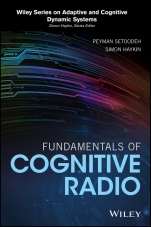
Fundamentals of Cognitive Radio
ISBN 9781118302965
Autor: Peyman Setoodeh, Simon Haykin
Wydawca: Wiley
Dostępność: 3-6 tygodni
Cena: 554,40 zł
Przed złożeniem zamówienia prosimy o kontakt mailowy celem potwierdzenia ceny.
ISBN13: |
9781118302965 |
ISBN10: |
1118302966 |
Autor: |
Peyman Setoodeh, Simon Haykin |
Oprawa: |
Hardback |
Rok Wydania: |
2017-12-12 |
Ilość stron: |
240 |
Wymiary: |
235x152 |
Tematy: |
JC |
A comprehensive treatment of cognitive radio networks and the specialized techniques used to improve wireless communications
The human brain, as exemplified by cognitive radar, cognitive radio, and cognitive computing, inspires the field of Cognitive Dynamic Systems. In particular, cognitive radio is growing at an exponential rate. Fundamentals of Cognitive Radio details different aspects of the human brain and provides examples of how it can be mimicked by cognitive dynamic systems. The text offers a communication–theoretic background, including information on resource allocation in wireless networks and the concept of robustness.
The authors provide a thorough mathematical background on game theory, variational inequalities, and projected dynamic systems. They then delve more deeply into resource allocation in cognitive radio networks. The text investigates the dynamics of cognitive radio networks from the perspectives of information theory, optimization, and control theory. It also provides a vision for the new world of wireless communications by integration of cellular and cognitive radio networks. This groundbreaking book:
Shows how wireless communication systems increasingly use cognition to enhance their networks Explores how cognitive radio networks can be viewed as spectrum supply chain networks Derives analytic models for two complementary regimes of spectrum sharing (open–access and market–driven) to study both equilibrium and disequilibrium behaviors of networks Studies cognitive heterogeneous networks with emphasis on economic provisioning for resource sharing Introduces a framework that addresses the issue of spectrum sharing across licensed and unlicensed bands aimed at Pareto optimalityWritten for students of cognition, communication engineers, telecommunications professionals, and others, Fundamentals of Cognitive Radio offers a new generation of ideas and provides a fresh way of thinking about cognitive techniques in order to improve radio networks.
List of Figures xv
List of Tables xxiii
Preface xxv
Acknowledgments xxvii
Acronyms xxix
1 Introduction 1
1.1 The Fourth Industrial Revolution 1
1.2 Cognitive Radio 4
1.3 The Spectrum–Underutilization Problem 7
1.4 Countrywide Measurements of Spectrum Utilization 8
1.5 Why be Interested in Cognitive Radio Networks? 9
1.6 Directed Information Flow 11
1.7 Cognitive Radio Networks 14
1.8 Mathematical Toolbox 17
1.8.1 Game Theory 17
1.8.2 Control Theory 18
1.8.3 Optimization under Uncertainty 19
1.9 Dominant Sources of Uncertainty in Cognitive Radio Networks 20
1.10 Issue of Trustworthiness 22
1.11 Vision for the Book 22
2 GameTheory 25
2.1 Game Theory Terminology 25
2.1.1 Noncooperative Games versus Cooperative Games 26
2.1.2 Static Games versus Dynamic Games 26
2.1.3 One–Shot Games versus Repeated Games 26
2.1.4 Games with Complete Information versus Games with Incomplete Information 26
2.1.5 Games with Perfect Information versus Games with Imperfect Information 26
2.2 Noncooperative Games 27
2.2.1 Nash Equilibrium 28
2.2.2 Variational Inequalities 28
2.3 Cooperative Games 28
2.3.1 Nash Bargaining 29
2.4 Minority Games 29
2.5 Concluding Remarks 30
3 Cognitive Radio Transceiver 31
3.1 Spectrum Sensing 32
3.1.1 Attributes of Reliable Spectrum Sensing 33
3.1.2 The Multitaper Method 33
3.1.3 Space–Time Processing 38
3.1.4 Time–Frequency Analysis 41
3.1.5 Cyclostationarity: Fourier Perspective 50
3.1.6 Rayleigh Fading Channels 54
3.1.7 Remarks on Nonparametric Spectrum Sensing 55
3.1.8 Filter–Bank Implementation of the Multitaper Method 57
3.1.9 Cooperative Spectrum Sensing 57
3.2 Dynamic Spectrum Management 58
3.2.1 The Tsigankov Koulakov Model 60
3.2.2 Self–Organizing Dynamic Spectrum Management 61
3.2.3 Dynamic Spectrum Management Based on Minority Games 68
3.2.4 Self–Organized Maps versus Minority Games 70
3.3 Transmit–Power Control 71
3.3.1 Waterfilling Interpretation of Information Capacity Theorem 75
3.3.2 Iterative Waterfilling Algorithm (IWFA) 77
3.3.3 IWFA as a Multistage Optimization Problem in Light of System Uncertainties 80
3.3.4 Robust IWFA 80
3.3.5 The Price of Robustness 81
3.3.6 Robust IWFA versus Classic IWFA 82
3.4 Information Value 91
3.5 Concluding Remarks 93
4 Cognitive Radio Networks 94
4.1 Cognitive Radio Networks Viewed as Spectrum–Supply Chain Networks 94
4.2 Open–access Cognitive Radio Networks 99
4.2.1 Network Dynamics 102
4.2.2 Cognitive Radio Network Viewed as a Hybrid Dynamic System 109
4.2.3 Network Stability in the Presence of Uncertainty and Time Delay 111
4.2.4 Double–layer Dynamics of Cognitive Radio Networks 115
4.3 Market–driven Cognitive Radio Networks 121
4.3.1 Legacy Owners 124
4.3.2 Spectrum Brokers 125
4.3.3 Secondary Users 126
4.3.4 Equilibrium of the Spectrum–Supply Chain Network 127
4.3.5 Network Dynamics 129
4.3.6 Network Stability 129
4.3.7 The Transportation Network Representation of the Spectrum–Supply Chain Network 129
4.4 Supply Chain Efficiency 131
4.5 Concluding Remarks 133
4.5.1 Two Regimes of Cognitive Radio Networks 133
4.5.2 Supply Chain Networks 135
4.5.3 Cognitive Radio Commercialization 136
4.5.4 The Role of Cognition in Cognitive Radio Networks 137
5 Sustainability of the Spectrum–Supply Chain Network 140
5.1 Unlicensed Bands as Public Goods 140
5.2 The Spectrum–Supply Chain Network as an Artificial Economy 142
5.3 Aiming for Lindahl Equilibria 144
5.4 Concluding Remarks 147
6 Cognitive Heterogeneous Networks 148
6.1 Heterogeneous Networks 148
6.2 Horizontal Mergers of Spectrum–Supply Chain Networks 151
6.2.1 Premerger Status 151
6.2.2 Spectrum Sharing 154
6.2.3 Infrastructure Sharing 155
6.2.4 Spectrum and Infrastructure Sharing 155
6.3 Synergy Measure for Horizontal Mergers 155
6.4 Concluding Remarks 156
Appendix A Mathematical Model for Open–Access Cognitive
Radio Networks 157
Appendix B Proof of Theorems 167
References
PEYMAN SETOODEH is a Professor at the School of Electrical and Computer Engineering at Shiraz University, Shiraz, Iran.
SIMON HAYKIN is a Distinguished University Professor at McMaster University, Hamilton, Ontario, Canada.
Koszyk
Książek w koszyku: 0 szt.
Wartość zakupów: 0,00 zł
Informacje


Kontakt
Gambit
Centrum Oprogramowania
i Szkoleń Sp. z o.o.
Al. Pokoju 29b/22-24
31-564 Kraków
Siedziba Księgarni
ul. Kordylewskiego 1
31-542 Kraków
+48 12 410 5991
+48 12 410 5987
+48 12 410 5989
Subskrypcje
Administratorem danych osobowych jest firma Gambit COiS Sp. z o.o. Na podany adres będzie wysyłany wyłącznie biuletyn informacyjny.
Autoryzacja płatności

Informacje na temat autoryzacji płatności poprzez PayU.

© Copyright 2012: GAMBIT COiS Sp. z o.o. Wszelkie prawa zastrzeżone.
Projekt i wykonanie: Alchemia Studio Reklamy