


Wydawcy
Katalog tematyczny
- Archeologia (109)
- Ekonomia, finanse, business (13704)
- Filozofia (1445)
- Historia (3040)
- Języki i językoznawstwo (2356)
- Lifestyle, hobby i rozrywka (475)
- Medycyna (9704)
- Nauki humanistyczne (4)
- Nauki o Ziemi i środowisku (2638)
- Nauki ścisłe (20412)
- Nauki społeczne (8486)
- Edukacja (229)
- Kryminologia, opieka spełeczna (284)
- Obronność (10)
- Polityka (1389)
- Psychologia (777)
- Socjologia (410)
- Społeczeństwo i kultura (187)
- Nauki techniczne (13450)
- Prawo (1696)
- Publikacje informacyjne i interdyscyplinarne (1288)
- Religia i wierzenia (917)
- Technika komputerowa (4067)
- Zdrowie, relacje międzyludzkie i rozwój osobisty (657)





Informacje szczegółowe o książce
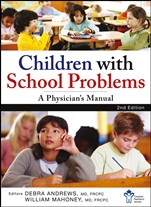
Children With School Problems: A Physicians Manual
ISBN 9781118302514
Autor: The Canadian Paediatric Society, Debra Andrews, William J. Mahoney
Wydawca: Wiley
Dostępność: 3-6 tygodni
Cena: 233,10 zł
Przed złożeniem zamówienia prosimy o kontakt mailowy celem potwierdzenia ceny.
ISBN13: |
9781118302514 |
ISBN10: |
1118302516 |
Autor: |
The Canadian Paediatric Society, Debra Andrews, William J. Mahoney |
Oprawa: |
Paperback |
Rok Wydania: |
2012-11-20 |
Ilość stron: |
228 |
Wymiary: |
274x203 |
Tematy: |
JDGS |
An essential tool for all physicians who work with children Physicians want to know more about children with learning problems, and parents want paediatricians and family physicians to provide more help when their kids struggle in school. Children with School Problems: A Physician′s Manual gives community–based physicians more precise information and tools to help them assess and manage children with learning disabilities and other challenges in school. The second edition contains updated and expanded content about intellectual disability, developmental coordination disorder, oppositional defiant disorder, and more, with many new references and web–based resources. This comprehensive reference contains five sections: Foundations: Presents pertinent background information for physicians seeing children with learning problems. Diagnostics: Provides tools and approaches to obtain the necessary information to develop a diagnostic formulation and begin to synthesize a plan. A number of materials can be copied for clinical use, including questionnaires for parents and teachers, graded reading passages, and a specific teacher′s questionnaire for the preschool age group. Management: Provides information about the educational, behavioural, and medical management of children′s learning problems. Trajectories: Follows students through the teen years and into adulthood to help clinicians understand prognosis so that they can counsel families about these conditions, both initially and over the longer term. Resources: Includes a series of illustrative cases, a worksheet to help physicians put together their own referral teams using local resources, and a detailed glossary. Written and edited by Canada′s leading experts in developmental and behavioural paediatrics, Children with School Problems is an invaluable resource.
About the Canadian Paediatric Society xi Acknowledgements xiii Introduction xvii Part I: Foundations 1 Chapter 1: Overview of Children with Learning Problems, Schools, and Approaches to Helping 1 Prevalence of learning problems 1 Types of learning disabilities 4 Response to intervention 5 Etiology/mechanisms of LDs 5 Natural history 7 Treatment/management 9 Chapter 2: Understanding and Working with Schools 12 Educational legislation and school organization 12 Terms used by the education system 13 Controversies in education 15 Chapter 3: Early Development of the Nervous System and School Performance 18 Brain development in utero 18 Brain development and the origin of learning difficulties 18 Disruptions in CNS development—critical periods in utero 19 The newborn period 21 Acquired biologic childhood factors 21 Childhood social factors 23 Chapter 4: Development and School Entry 27 School readiness 27 Age of entry 27 Typical preschool learning and skills present at the time of school entry 28 Other predictors of success at the time of school entry 30 Chapter 5: Provincial/Territorial Special Education Legislation 32 British Columbia 33 Alberta 34 Saskatchewan 35 Manitoba 36 Ontario 36 Quebec 38 Prince Edward Island 38 Nova Scotia 39 New Brunswick 40 Newfoundland and Labrador 41 Northwest Territories 42 Nunavut 42 Yukon Territory 43 Part II: Diagnostics 44 Chapter 6: Data Gathering 44 Reviewing previous reports 44 Interpreting psycho–educational assessments 44 Anatomy of a psycho–educational assessment 45 The history 47 Setting the stage 47 Interviewing parents 48 Interviewing children 49 Introducing the idea of counselling 53 Chapter 7: Questionnaires 55 Collection of Information from Parents and Teachers 55 Consent to Release Information from School 58 Parent Questionnaire 59 Preschool/Kindergarten Questionnaire 66 School Questionnaire (6–18 Years) 71 Chapter 8: The Physical Examination of the Child with Learning Problems 77 Rule out physical disease 77 Evaluate co–morbid medical conditions 78 Look for minor physical anomalies 79 Describe neurological fi ndings 79 Rule out contraindications and establish a baseline for medication use 80 Chapter 9: Medical Investigations of Children with Learning Problems 82 Medical conditions 82 Medical investigations 82 Chapter 10: Developmental and Academic Skills: Screening, Sampling, and Assessment 86 Levels of assessment by physicians 86 Screening, sampling, and assessment 87 Chapter 11: Differential Diagnosis of the Child Who Is Not Doing Well in School 137 The differential diagnosis of poor academic achievement 137 The differential diagnosis of noncompliance and oppositional behaviour 144 The differential diagnosis of motor incoordination 144 The differential diagnosis of social interaction problems 145 Part III: Management 148 Chapter 12: Sharing the Formulation: Feedback to Parents and School 148 Formulation 148 Feedback to parents 149 Feedback to the school 149 Sample formulation 150 Chapter 13: Educational Interventions 152 Demystification 152 Classroom placement 153 Out–of–school instruction 154 Specific remediation 155 Role of physicians’ advice to students 160 Organization, studying, and homework 161 Chapter 14: Behavioural Management 164 Underlying factors affecting behaviour: Cognitive abilities 164 Underlying factors affecting behaviour: Regulation 164 Strategies for helping with regulatory problems 165 Evidence–based approaches to behaviour: Programs, resources, and general principles 166 Self–esteem and the child with school problems 172 Relationships with peers 175 Chapter 15: Medical Management 177 The role of medications in managing children with school problems 177 Use of medication for ADHD 177 Treating associated medical conditions 190 Chapter 16: Complementary and Alternative Therapies for Learning and Attentional Disorders 193 Evaluating research on CAM 193 Discussing CAM with parents 194 Part IV: Trajectories 197 Chapter 17: Supporting the Adolescent with Learning Problems 197 The challenges of transition: Junior high and high school 197 Working with teens who have learning problems 198 Strategies and supports for home and school 199 Evaluating teens with learning problems 199 Management issues when following adolescents 200 Chapter 18: Learning Problems from Adolescence into Adulthood 202 Factors contributing to quality of outcome 202 Adults with learning disabilities 204 ADHD in adult life 205 Adults with intellectual disability 205 Delinquency and learning problems 206 Learning problems and adult psychiatric disorders 207 Indicators of learning problems in adults 207 Resources for adults with learning problems 208 Part V: Resources 211 Chapter 19: Encouraging Reading 211 What can physicians do? 211 What can parents do? 212 Choosing books for children 216 Chapter 20: Illustrative Cases 217 Case I: Derek: Attention weakness and academic delay 217 Case II: Parminder: Reading diffi culties and English as a second language (ESL) 220 Case III: Jewel: Academic delay, behavioural concerns in the context of prenatal alcohol exposure 223 Case IV: Tristan: Gross motor and fine motor skill clumsiness, poor attention, and impulsivity 229 Chapter 21: A Resource Worksheet for Physicians Who Work with Students with Learning Problems 234 Glossary 243 Index 247 List of Tables 3–1 Early Risks for Learning Diffi culties 21 3–2 Childhood Risks for Learning Diffi culties 24 6–1 IQ Classifi cations in Current Use 46 8–1 Common Minor Physical Anomalies 79 8–2 Testing for “Soft” Neurological Signs 80 8–3 Details of the Physical Examination for School Learning Problems 81 15–1 Medical Treatment for Uncomplicated ADHD in Children 183 15–2 Medical Treatment for Uncomplicated ADHD in Adolescents 185 List of Figures 1–1 Executive Functions Impaired in ADHD 4 6–1 Normal Standard Distribution and Standard Scores 46 16–1 Evaluation Framework for Complementary and Alternative Therapies 195 20–1 Canadian Norms (Mean and SD) for Girls Aged 6 to 16 Years 226 20–2 Canadian Norms (Mean and SD) for Boys Aged 6 to 16 Years 227 20–3 The Palpebral Fissure Length Being Measured with a Small Plastic Ruler 227 20–4 The Three Diagnostic Facial Features of FAS 228 List of Tools 10–1 Complex Sentences (Ages 4 to 6 Years) 92 10–2 Complex Sentences (Ages 6 to 8 Years, 11 Months) 93 10–3 Story Comprehension (Ages 6 Years to 7 Years, 11 Months) 94 10–4 Verbal Instructions 95 10–5 Auditory Comprehension and Recall (Ages 9 Years to 12 Years, 11 Months) 97 10–6 Yes, No, Maybe: Higher–Level Language Function 99 10–7 Development of Oral Language Skills (Ages 5 to 12 Years) 100 10–8 Human Figure Drawings 106 10–9 Visual Matching Exercises (Ages 4 to 6 Years) 108 10–10 Visual Whole: Part Analysis (Ages 6 to 8 Years, 11 Months) 109 10–11 Lock–and–Key Designs (Ages 9 to 14 Years, 11 Months) 110 10–12 The Gesell Copy Forms 111 10–13 Reading Tests 112 10–14 Assessment of Handwriting Speed (Ages 6 to 9 Years) 118 10–15 Evaluation of Written Stories Using BASIS 119 10–16 Reading and Writing Skills in School–aged Children 131 10–17 Sample Spelling Battery 133 10–18 Sample Mathematics Tests 134 10–19 Assessment of Auditory Memory from Repetition of Digits 135
The Canadian Paediatric Society is a national professional association, representing more than 3,000 paediatricians, paediatric subspecialists, paediatric residents, and other health professionals who work with and care for children and youth. The CPS is active in professional education, public policy advocacy, surveillance and research, and education for parents and caregivers. Dr. Debra Andrews is associate professor of paediatrics and divisional director for developmental paediatrics at the University of Alberta. She is medical director of two tertiary interdisciplinary programs at the Glenrose Rehabilitation Hospital that provide assessment and intervention for school-aged children with complex learning and behavioural problems. Dr. William Mahoney is a clinical associate professor of paediatrics, Faculty of Health Sciences, McMaster University, and has worked with children with school problems for over thirty years. He is the former medical director of the developmental paediatric, rehabilitation, and autism programs of McMaster Children's Hospital.
Koszyk
Książek w koszyku: 0 szt.
Wartość zakupów: 0,00 zł
Informacje


Kontakt
Gambit
Centrum Oprogramowania
i Szkoleń Sp. z o.o.
Al. Pokoju 29b/22-24
31-564 Kraków
Siedziba Księgarni
ul. Kordylewskiego 1
31-542 Kraków
+48 12 410 5991
+48 12 410 5987
+48 12 410 5989
Subskrypcje
Administratorem danych osobowych jest firma Gambit COiS Sp. z o.o. Na podany adres będzie wysyłany wyłącznie biuletyn informacyjny.
Autoryzacja płatności

Informacje na temat autoryzacji płatności poprzez PayU.

© Copyright 2012: GAMBIT COiS Sp. z o.o. Wszelkie prawa zastrzeżone.
Projekt i wykonanie: Alchemia Studio Reklamy