


Wydawcy
Katalog tematyczny
- Archeologia (109)
- Ekonomia, finanse, business (13704)
- Filozofia (1445)
- Historia (3040)
- Języki i językoznawstwo (2356)
- Lifestyle, hobby i rozrywka (475)
- Medycyna (9704)
- Nauki humanistyczne (4)
- Nauki o Ziemi i środowisku (2638)
- Nauki ścisłe (20412)
- Nauki społeczne (8486)
- Nauki techniczne (13450)
- Prawo (1696)
- Publikacje informacyjne i interdyscyplinarne (1288)
- Religia i wierzenia (917)
- Technika komputerowa (4067)
- Zdrowie, relacje międzyludzkie i rozwój osobisty (657)





Informacje szczegółowe o książce
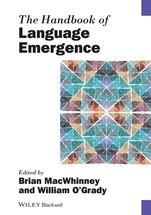
The Handbook of Language Emergence
ISBN 9781118301753
Autor: Brian MacWhinney, William OGrady
Wydawca: Wiley
Dostępność: 3-6 tygodni
Cena: 910,35 zł
Przed złożeniem zamówienia prosimy o kontakt mailowy celem potwierdzenia ceny.
ISBN13: |
9781118301753 |
ISBN10: |
1118301757 |
Autor: |
Brian MacWhinney, William OGrady |
Oprawa: |
Hardback |
Rok Wydania: |
2015-02-17 |
Ilość stron: |
656 |
Wymiary: |
251x171 |
Tematy: |
CF |
This comprehensive exposition of the emergentist paradigm reflects the shifting landscape of linguistic theory, and provides advanced students and researchers with the most up–to–date research in our understanding of language emergence. Emergentism focuses on the ways in which the learning, processing, and structure of language emerge from a competing set of cognitive, communicative, and biological constraints, operating across widely divergent time scales. This handbook is the most in–depth and inclusive attempt yet made to bring together studies from the most prominent advocates of emergentism. Phenomena ranging from syntax and typology to language learning, and processing, to sociolinguistics and computational modeling are explored with reference to the competing forces that shape the emergence of language across nano and intergenerational timescales. The contributors each address key theoretical, empirical, and methodological issues, making this volume the most rigorous examination of emergentist linguistic theory ever published.
Notes on Contributors Introduction I. Basic Language Structures: 1. The Emergence of Phonological Representation Patricia Donegan 2. Capturing Gradience, Continuous Change, and Quasi–Regularity in Sound, Word, Phrase, and Meaning Jay McClelland 3. The Emergence of Language Comprehension Maryellen McDonald 4. Anaphora and the Case for Emergentism William O′Grady 5. Morphological Emergence Péter Racz, Janet Pierre–Humbert, Jennifer Hay, & Viktoria Papp 6. Metaphor and Emergentism Zoltán Kövecses 7. Usage–based Language Learning Nick Ellis, Matthew O′Donnell, & Ute Römer II. Language Change and Typology 8. Emergence at the Crosslinguistic Level: Attractor Dynamics in Language Change Joan Bybee and Clayton Beckner 9. The Diachronic Genesis of Synchronic Syntax Tom Givón 10. Typological Variation and Efficient Processing John Hawkins 11. Word meanings across languages support efficient communication Terry Regier, Charles Kemp, and Paul Kay III. Interactional Structures 12. Linguistic Emergence on the Ground – a Variationist Paradigm Shana Poplack and Rena Torres Cacoullos 13. The Emergence of Sociophonetic Structure Paul Foulkes and Jennifer Hay 14. An Emergentist Approach to Grammar Paul Hopper 15. Common Ground Eve Clark 16. The Role of Culture in the Emergence of Language Dan Everett IV. Language Learning 17. Learnability Alexander Clark 18. Perceptual Development and Statistical Learning Erik Thiessen and Lucy Erickson 19. Language Emergence in Development – A Computational Perspective Stewart McCauley, Padraic Monaghan, & Morten Christiansen 20. Perception and Production in Phonological Development Marilyn Vihman 21. The Emergence of Gestures Jordan Zlatev 22. A Constructivist Account of Child Language Acquisition Ben Ambridge & Elena Lieven 23. Bilingualism as a Dynamic Process Ping Li 24. Dynamic Systems and Language Development Paul van Geert and Marjolijn Verspoor V. Language and the Brain 25. Models of Language Production in Aphasia Gary Dell & Nathaniel Anderson 26. Formulaic Language in an Emergentist Framework Diana Van Lanckner Sidtis 27. Language Evolution – An Emergentist Perspective Michael Arbib
Brian MacWhinney is Professor of Psychology, Computational Linguistics, and Modern Languages at Carnegie Mellon University. He has published extensively over many decades, and developed the Competition Model of first– and second–language acquisition, processing, and disorders, which shows how language learning emerges from forces operating on lexically–based patterns across divergent timeframes. He is the author of The CHILDES project: Tools for Analyzing Talk, 3 rd Edition (2000 and editor of Mechanisms of Language Acquisition (1987) and The Emergence of Language (1999). William O’Grady is Professor of Linguistics at the University of Hawaii. He has undertaken extensive research in syntax and language acquisition, focusing more recently on the importance of processing for an understanding of how language works and how it is acquired. He is the author of numerous volumes including Principles of Grammar and Learning (1987), Syntactic Development (1997), and How Children Learn Language (2005). His book, Syntactic Carpentry (2005), sets out his ideas on the centrality of the processor in language acquisition.
Koszyk
Książek w koszyku: 0 szt.
Wartość zakupów: 0,00 zł
Informacje


Kontakt
Gambit
Centrum Oprogramowania
i Szkoleń Sp. z o.o.
Al. Pokoju 29b/22-24
31-564 Kraków
Siedziba Księgarni
ul. Kordylewskiego 1
31-542 Kraków
+48 12 410 5991
+48 12 410 5987
+48 12 410 5989
Subskrypcje
Administratorem danych osobowych jest firma Gambit COiS Sp. z o.o. Na podany adres będzie wysyłany wyłącznie biuletyn informacyjny.
Autoryzacja płatności

Informacje na temat autoryzacji płatności poprzez PayU.

© Copyright 2012: GAMBIT COiS Sp. z o.o. Wszelkie prawa zastrzeżone.
Projekt i wykonanie: Alchemia Studio Reklamy