


Wydawcy
Katalog tematyczny
- Archeologia (109)
- Ekonomia, finanse, business (13704)
- Filozofia (1445)
- Historia (3040)
- Języki i językoznawstwo (2356)
- Lifestyle, hobby i rozrywka (475)
- Medycyna (9704)
- Nauki humanistyczne (4)
- Nauki o Ziemi i środowisku (2638)
- Nauki ścisłe (20412)
- Astronomia (294)
- Biologia (5119)
- Chemia (6540)
- Chemia analityczna (361)
- Chemia fizyczna (346)
- Chemia nieorganiczna (137)
- Chemia organiczna (535)
- Krystalografia (27)
- Minerologia (46)
- Fizyka (3309)
- Matematyka (4574)
- Nauki ścisłe, ogólnie (503)
- Nauki społeczne (8486)
- Nauki techniczne (13450)
- Prawo (1696)
- Publikacje informacyjne i interdyscyplinarne (1288)
- Religia i wierzenia (917)
- Technika komputerowa (4067)
- Zdrowie, relacje międzyludzkie i rozwój osobisty (657)





Informacje szczegółowe o książce
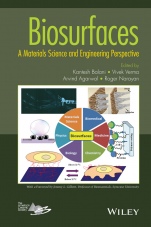
Biosurfaces: A Materials Science and Engineering Perspective
ISBN 9781118299975
Autor: Kantesh Balani, Vivek Verma, Arvind Agarwal, Roger Narayan
Wydawca: Wiley
Dostępność: 3-6 tygodni
Cena: 708,75 zł
Przed złożeniem zamówienia prosimy o kontakt mailowy celem potwierdzenia ceny.
ISBN13: |
9781118299975 |
ISBN10: |
1118299973 |
Autor: |
Kantesh Balani, Vivek Verma, Arvind Agarwal, Roger Narayan |
Oprawa: |
Hardback |
Rok Wydania: |
2015-03-20 |
Ilość stron: |
392 |
Wymiary: |
243x159 |
Tematy: |
PN |
A multidisciplinary approach that elucidates contrasting requirements of materials in their interfaces with the biological environment Biomaterials can generally be produced either in nature or synthesized in the laboratory using a variety of chemical approaches utilizing metallic components or ceramics. They are used every day in dental applications, surgery, and drug delivery in which they perform, augment, or replace a natural function. Taking into account the complex interactions that occur at the interface when a synthetic material is inserted into a living system, Biosurfaces: A Materials Science and Engineering Perspective aims to gear students, scientists, researchers and other experts in the field with the tools to design effective biomaterials. Building upon the real–life applications, Biosurfaces: A Materials Science and Engineering Perspective features: +A bird’s eye overview of the critical requirements of materials, followed by a description of the fundamental mechanisms of protein adsorption, platelet and cell–adhesion +Case studies on mechanical properties and laser engineering of surfaces that fulfill the critical requirements in constructing successful implants are included +Discussion of the concept of non–wetting, required especially for anti–biofouling surfaces, via super–hydrophobicity +Views on the social, ethical, and future issues associated with biomaterials design and implementation Ideal as a graduate textbook, this monograph provides a multidisciplinary approach to the paradigm of biosurfaces and biomaterials through experts working in the arena of interfacing materials with bio–engineering. It is also an invaluable tool for the fields of biomedical engineering, biology, mechanical device design, and medical sciences. Kantesh Balani, PhD, is an Associate Professor, in the Department of Materials Science & Engineering, Indian Institute of Technology (IIT) Kanpur. He has presented over 50 lectures in the international conferences and has over 65 publications in the peer–reviewed international journals. His accolades include the 2013 P.K. Kelkar Research Fellowship . Arvind Agarwal, PhD, is Professor of Materials Science and Engineering in the Department of Mechanical and Materials Engineering at the Florida International University (FIU), Miami, Florida, USA. He has authored more than 200 publications, edited 7 books, and co–authored 1 book in the area of coatings and nano–biomaterials. His accolades include Fellowship of ASM International. Vivek Verma, PhD, is an Assistant Professor in the Department of Materials Science and Engineering at Indian Institute of Technology (IIT) Kanpur. He is a recipient of the prestigious American Academy of Mechanics Founder’s prize and grant for the year 2005–06 and Shri Ram Arora Award 2011. Roger Narayan, PhD, is Professor in the Joint Department of Biomedical Engineering at the University of North Carolina (UNC) and North Carolina State University (NCSU). He is an author of over 100 publications as well as several book chapters related to biomedical materials. His accolades include the UNC Jefferson–Pilot Fellowship in Academic Medicine.
Chapter 1. Introduction to Biomaterials 1.1 Introduction 1.2 Summary Chapter 2. Tissue Interaction with Biomaterials 2.1 Introduction 2.2 Protein adsorption and Cell adhesion 2.3 Cell Migration 2.4 Controlled Cell Deposition 2.5 Extracellular Matrix 2.6 Biomineralization Chapter 3. Host Response of Implanted Biomaterials 3.1 Immune Response to Implanted Biomaterials 3.2 Transplant Immunology 3.3 Biocomaptibility Chapter 4. Fundamentals of Surface Modification 4.1 Introduction 4.2 Surface Properties of Biomaterials 4.3 Surface modifications 4.4 Applications Chapter 5. Multi Length Scale Hierarchy in Natural Materials 5.1 Introduction 5.2 Multi Length–scale Hierarchy 5.3 Human Bone 5.4 Turtle shell 5.5 Wood 5.6 Silk 5.7 Nacre 5.8 Gecko–feet 5.9 Lotus Leaf Chapter 6. Superhydrophobic Surfaces 6.1 Introduction 6.2 Surfaces and superhydrophobicity in nature 6.3 Classification of surfaces 6.4 Mechanics and nature of wetting 6.5 Fabrication of artificial superhydrophobic surfaces 6.6 Preparation of metallic superhydrophobic surfaces 6.7 Controlled wettability surfaces (CWS) 6.8 Conclusions Chapter 7. Surface Engineering and Modification for Biomedical Applications 7.1 Corrosion of Biomaterials and Need for Surface Coating for Biomedical Applications 7.2 Surface Reactivity and Body Cell Response 7.3 Key Requirements of Surface Coating 7.4 Key Biomaterial Substrates 7.5 Surface Preparation and Cleaning Techniques 7.6 Surface Engineering and Coating Techniques 7.7 Coatings for Biomedical Applications 7.8. Biosurface Characterization Chapter 8. Laser Engineering of Surface Structures 8.1 Introduction 8.2 Laser processing of biomaterials 8.3 Laser–based prototyping methods 8.4 Ultrafast laser pulses 8.5 Neural implants 8.6 Ophthalmic implants 8.7 Laser fabrication of cardiovascular devices 8.8 Laser–fabricated nanoscale materials 8.9 Two photon polymerization 8.10 Microneedle fabrication 8.11 Conclusions Chapter 9. Processing and Nanomechanical Properties of Hydroxyapatite–Nanotube Biocomposite 9.1 Introduction 9.2 Processing of HA–Carbon Nanotube Composites 9.3 Fracture Toughness and Tribological Properties of HA–Carbon Nanotube Composites 9.4 Adhesion of Bone Forming Cells on HA–CNT Surface 9.5 Biomechanical Compatibility at Bone/Coated Implant Interface 9.6 HA–Boron Nitride Nano Tube (BNNT) Composites 9.7 HA–TiO 2 Nanotube Composites 9.8 Summary Chapter 10. Applications of Biomaterials 10.1 Multi–scale hierarchy in natural Bone 10.2 Coronary Stents 10.3 Medical Devices 10.4 Drug Delivery Chapter 11. Nanosafety, Nanosocietal and Nanoethical Issues 11.1 Governmental Environment and Health Safety Organization Protocols 11.2 Related Safety Hazards 11.3 Approach to Developing Safety Protocol for Laboratory Environment 11.4 Tendency of Nanoparticles 11.5 Current Capability of Nanoparticle Filters
Kantesh Balani , PhD, is an Associate Professor, in the Department of Materials Science & Engineering, Indian Institute of Technology (IIT) Kanpur. He has presented over 50 lectures in the international conferences and has over 65 publications in the peer–reviewed international journals. His accolades include the 2013 P.K. Kelkar Research Fellowship . Arvind Agarwal , PhD, is Professor of Materials Science and Engineering in the Department of Mechanical and Materials Engineering at the Florida International University (FIU), Miami, Florida, USA. He has authored more than 200 publications, edited 7 books, and co–authored 1 book in the area of coatings and nano–biomaterials. His accolades include Fellowship of ASM International. Vivek Verma , PhD, is an Assistant Professor in the Department of Materials Science and Engineering at Indian Institute of Technology (IIT) Kanpur. He is a recipient of the prestigious American Academy of Mechanics Founder’s prize and grant for the year 2005–06 and Shri Ram Arora Award 2011. Roger Narayan , PhD, is Professor in the Joint Department of Biomedical Engineering at the University of North Carolina (UNC) and North Carolina State University (NCSU). He is an author of over 100 publications as well as several book chapters related to biomedical materials. His accolades include the UNC Jefferson–Pilot Fellowship in Academic Medicine.
Koszyk
Książek w koszyku: 0 szt.
Wartość zakupów: 0,00 zł
Informacje


Kontakt
Gambit
Centrum Oprogramowania
i Szkoleń Sp. z o.o.
Al. Pokoju 29b/22-24
31-564 Kraków
Siedziba Księgarni
ul. Kordylewskiego 1
31-542 Kraków
+48 12 410 5991
+48 12 410 5987
+48 12 410 5989
Subskrypcje
Administratorem danych osobowych jest firma Gambit COiS Sp. z o.o. Na podany adres będzie wysyłany wyłącznie biuletyn informacyjny.
Autoryzacja płatności

Informacje na temat autoryzacji płatności poprzez PayU.

© Copyright 2012: GAMBIT COiS Sp. z o.o. Wszelkie prawa zastrzeżone.
Projekt i wykonanie: Alchemia Studio Reklamy