


Wydawcy
Katalog tematyczny
- Archeologia (109)
- Ekonomia, finanse, business (13704)
- Filozofia (1445)
- Historia (3040)
- Języki i językoznawstwo (2356)
- Lifestyle, hobby i rozrywka (475)
- Medycyna (9704)
- Nauki humanistyczne (4)
- Nauki o Ziemi i środowisku (2638)
- Nauki ścisłe (20412)
- Astronomia (294)
- Biologia (5119)
- Chemia (6540)
- Chemia analityczna (361)
- Chemia fizyczna (346)
- Chemia nieorganiczna (137)
- Chemia organiczna (535)
- Krystalografia (27)
- Minerologia (46)
- Fizyka (3309)
- Matematyka (4574)
- Nauki ścisłe, ogólnie (503)
- Nauki społeczne (8486)
- Nauki techniczne (13450)
- Prawo (1696)
- Publikacje informacyjne i interdyscyplinarne (1288)
- Religia i wierzenia (917)
- Technika komputerowa (4067)
- Zdrowie, relacje międzyludzkie i rozwój osobisty (657)





Informacje szczegółowe o książce
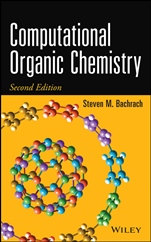
Computational Organic Chemistry
ISBN 9781118291924
Autor: Steven M. Bachrach
Wydawca: Wiley
Dostępność: 3-6 tygodni
Cena: 595,35 zł
Przed złożeniem zamówienia prosimy o kontakt mailowy celem potwierdzenia ceny.
ISBN13: |
9781118291924 |
ISBN10: |
1118291921 |
Autor: |
Steven M. Bachrach |
Oprawa: |
Hardback |
Rok Wydania: |
2014-05-09 |
Numer Wydania: |
2nd Edition |
Ilość stron: |
632 |
Wymiary: |
243x165 |
Tematy: |
PN |
The Second Edition demonstrates how computational chemistry continues to shed new light on organic chemistry The Second Edition of author Steven Bachrachs highly acclaimed Computational Organic Chemistry reflects the tremendous advances in computational methods since the publication of the First Edition , explaining how these advances have shaped our current understanding of organic chemistry. Readers familiar with the First Edition will discover new and revised material in all chapters, including new case studies and examples. Theres also a new chapter dedicated to computational enzymology that demonstrates how principles of quantum mechanics applied to organic reactions can be extended to biological systems. Computational Organic Chemistry covers a broad range of problems and challenges in organic chemistry where computational chemistry has played a significant role in developing new theories or where it has provided additional evidence to support experimentally derived insights. Readers do not have to be experts in quantum mechanics. The first chapter of the book introduces all of the major theoretical concepts and definitions of quantum mechanics followed by a chapter dedicated to computed spectral properties and structure identification. Next, the book covers: Fundamentals of organic chemistry Pericyclic reactions Diradicals and carbenes Organic reactions of anions Solution–phase organic chemistry Organic reaction dynamics The final chapter offers new computational approaches to understand enzymes. The book features interviews with preeminent computational chemists, underscoring the role of collaboration in developing new science. Three of these interviews are new to this edition. Readers interested in exploring individual topics in greater depth should turn to the books ancillary website www.comporgchem.com, which offers updates and supporting information. Plus, every cited article that is available in electronic form is listed with a link to the article.
Acknowledgements Preface Preface to the First Edition 1. Quantum Mechanics for Organic Chemistry 1.1 Approximations to the Schrödinger Equation – the Hartree Fock Method 1.2 Electron Correlation – Post–Hartree–Fock Methods 1.3 Density Functional Theory (DFT) 1.4 Computational Approaches to Solvation 1.5 Hybrid QM/MM methods 1.6 Potential Energy Surfaces 1.7 Population Analysis 1.8. Interview: Stefan Grimme 1.9 References 2. Computed Spectral Properties and Structure Identification 2.1 Computed Bond Lengths and Angles 2.2 IR spectroscopy 2.3 Nuclear Magnetic Resonance 2.4 Optical Rotation, Optical Rotatory Dispersion, Electronic Circular Dichroism and Vibrational Circular Dichroism 2.5 Interview: Jonathan Goodman 2.6 References 3. Fundamentals of Organic Chemistry 3.1 Bond Dissociation Enthalpy 3.2 Acidity 3.3 Isomerism and Problems with DFT 3.4 Ring Strain Energy 3.5 Aromaticity 3.6 Interview: Professor Paul von Ragué Schleyer 3.7 References 4. Pericyclic Reactions 4.1 The Diels–Alder Reaction 4.2 The Cope Rearrangement 4.3 The Bergman Cyclization 4.4 Bispericyclic Reactions 4.5 Pseudopericyclic Reactions 4.6 Torquoselectivity 4.7 Interview: Professor Weston Thatcher Borden 4.8 References 5. Diradicals and Carbenes 5.1 Methylene 5.2 Phenylnitrene and Phenylcarbene 5.3 Tetramethyleneethane 5.4 Oxyallyl diradical 5.5 Benzynes 5.6 Tunneling of Carbenes 5.7 Interview: Professor Henry “Fritz” Schaefer 5.8 Interview: Professor Peter R. Schreiner 5.9 References 6. Organic Reactions of Anions 6.1 Substitution Reactions 6.2 Asymmetric Induction via 1,2–Addition to Carbonyl Compounds 6.3 Asymmetric Organocatalysis of Aldol Reactions 6.4 Interview – Professor Kendall N. Houk 6.5 References 7. Solution–Phase Organic Chemistry 7.2 Glucose 7.3 Nucleic Acids 7.4 Amino Acids 7.5 Interview: Professor Christopher J. Cramer 7.6 References 8. Organic Reaction Dynamics 8.1 A Brief Introduction to Molecular Dynamics Trajectory Computations 8.2 Statistical Kinetic Theories 8.3 Examples of Organic Reactions with Non–statistical Dynamics 8.4 Conclusions 8.5 Interview: Professor Daniel Singleton 8.6 References 9. Computational Approaches to Understanding Enzymes 9.1 Models for enzymatic activity 9.2 Strategy for computational enzymology 9.3 De Novo Design of Enzymes 9.4 References
STEVEN M. BACHRACH is the Dr. D. R. Semmes Distinguished Professor of Chemistry at Trinity University. Dr. Bachrach has published some 125 articles. With the support of the National Science Foundation and the Welch Foundation, he researches computational approaches to build our understanding of nucleophilic substitution reactions and the role of solvents.
Koszyk
Książek w koszyku: 0 szt.
Wartość zakupów: 0,00 zł
Informacje


Kontakt
Gambit
Centrum Oprogramowania
i Szkoleń Sp. z o.o.
Al. Pokoju 29b/22-24
31-564 Kraków
Siedziba Księgarni
ul. Kordylewskiego 1
31-542 Kraków
+48 12 410 5991
+48 12 410 5987
+48 12 410 5989
Subskrypcje
Administratorem danych osobowych jest firma Gambit COiS Sp. z o.o. Na podany adres będzie wysyłany wyłącznie biuletyn informacyjny.
Autoryzacja płatności

Informacje na temat autoryzacji płatności poprzez PayU.

© Copyright 2012: GAMBIT COiS Sp. z o.o. Wszelkie prawa zastrzeżone.
Projekt i wykonanie: Alchemia Studio Reklamy