


Wydawcy
Katalog tematyczny
- Archeologia (109)
- Ekonomia, finanse, business (13704)
- Filozofia (1445)
- Historia (3040)
- Języki i językoznawstwo (2356)
- Lifestyle, hobby i rozrywka (475)
- Medycyna (9704)
- Nauki humanistyczne (4)
- Nauki o Ziemi i środowisku (2638)
- Nauki ścisłe (20412)
- Astronomia (294)
- Biologia (5119)
- Chemia (6540)
- Chemia analityczna (361)
- Chemia fizyczna (346)
- Chemia nieorganiczna (137)
- Chemia organiczna (535)
- Krystalografia (27)
- Minerologia (46)
- Fizyka (3309)
- Matematyka (4574)
- Nauki ścisłe, ogólnie (503)
- Nauki społeczne (8486)
- Nauki techniczne (13450)
- Prawo (1696)
- Publikacje informacyjne i interdyscyplinarne (1288)
- Religia i wierzenia (917)
- Technika komputerowa (4067)
- Zdrowie, relacje międzyludzkie i rozwój osobisty (657)





Informacje szczegółowe o książce
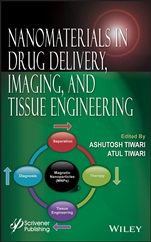
Nanomaterials in Drug Delivery, Imaging, and Tissue Engineering
ISBN 9781118290323
Autor: Ashutosh Tiwari, Atul Tiwari
Wydawca: Wiley
Dostępność: 3-6 tygodni
Cena: 1 043,70 zł
Przed złożeniem zamówienia prosimy o kontakt mailowy celem potwierdzenia ceny.
ISBN13: |
9781118290323 |
ISBN10: |
1118290321 |
Autor: |
Ashutosh Tiwari, Atul Tiwari |
Oprawa: |
Hardback |
Rok Wydania: |
2013-03-19 |
Ilość stron: |
576 |
Wymiary: |
235x156 |
Tematy: |
PN |
This comprehensive volume provides the reader valuable insight into the major areas of biomedical nanomaterials, advanced nanomedicine, nanotheragnostics, and cutting-edge nanoscaffolds. The ability to control the structure of materials allows scientists to accomplish what once appeared impossible before the advent of nanotechnology. It is now possible to generate nanoscopic self-assembled and self-destructive robots for effective utilization in therapeutics, diagnostics, and biomedical implants. Nanoscopic therapeutic systems incorporate therapeutic agents, molecular targeting, and diagnostic imaging capabilities and they have emerged as the next generation of multifarious nanomedicine to improve the therapeutic outcome including chemo and translational therapy. Nanomaterials in Drug Delivery, Imaging, and Tissue Engineering comprises fifteen chapters authored by senior scientists, and is one of the first books to cover nanotheragnostics, which is the new developmental edge of nanomedicine combining both diagnostic and therapeutic elements at the nano level. This large multidisciplinary reference work has four main parts: biomedical nanomaterials; advanced nanomedicine; nanotheragnostics; and nanoscaffolds technology. This groundbreaking volume also covers: Multifunctional polymeric nanostructures for therapy and diagnosis Metalla-assemblies acting as drug carriers Nanomaterials for management of lung disorders and drug delivery Responsive polymer-inorganic hybrid nanogels for optical sensing, imaging, and drug delivery Core/shell nanoparticles for drug delivery and diagnosis Theranostic nanoparticles for cancer imaging and therapy Magnetic nanoparticles in tissue regeneration Core-sheath fibers for regenerative medicine Readership This book is written for a wide readership including researchers and university students from diverse backgrounds such as chemistry, materials science, physics, pharmacy, biological sciences, biomedical engineering, biotechnology, and nanotechnology, and can be used both as a textbook for graduate students as well a reference work for researchers.
Preface xv Part I: Biomedical nanomaterials 1 Nanoemulsions: Preparation, Stability and Application in Biosciences 1 Thomas Delmas, Nicolas Atrux–Tallau, Mathieu Goutayer, SangHoon Han, Jin Woong Kim, and Jérôme Bibette 1.1 Introduction 2 1.2 Nanoemulsion:A Thermodynamic Definition and Its Practical Implications 5 1.2.1 Generalities on Emulsions 5 1.2.2 Nanoemulsion vs. Microemulsion, a Thermodynamic Definition 6 1.3 Stable Nanoemulsion Formulation 9 1.3.1 Nanoemulsion Production 9 1.3.2 Nanoemulsion Stability Rules 11 1.3.3 Nanoemulsion Formulation Domain 16 1.3.4 Conclusion on the Formulation of Stable Nanoemulsions 21 1.4 Nanoencapsulation in Lipid Nanoparticles 21 1.4.1 Aim ofActive Encapsulation 21 1.4.2 Lipid Complexity and Influence of Their Physical State 23 1.4.3 Amorphous Lipids for a Large Range of Encapsulated Molecules 27 1.4.4 Lipids Viscosity and Release 31 1.4.5 Conclusion on the Use ofAmorphous Lipid Matrices for Control OverActive Encapsulation and Release 34 1.5 Interactions between Nanoemulsions and the Biological Medium: Applications in Biosciences 35 1.5.1 Nanoemulsion Biocompatibility 35 1.5.2 Classical TargetingApproach by Chemical Grafting – Example of Tumor Cell Targeting by Crgd Peptide for Cancer Diagnosis and Therapy 38 1.5.3 New ‘No Synthesis Chemistry’Approach – Example of Pal–KTTKS andAsiaticoside Targeting for CosmeticActives Delivery 41 1.5.4 Conclusion on Nanoemulsions Application in Biosciences 46 1.6 General Conclusion 47 References 48 2 Multifunctional Polymeric Nanostructures for Therapy and Diagnosis 57 Angel Contreras–García and Emilio Bucio 2.1 Introduction 58 2.2 Polymeric–based Core–shell Colloid 61 2.3 Proteins and Peptides 64 2.4 Drug Conjugates and Complexes with Synthetic Polymers 65 2.5 Dendrimers, Vesicles, and Micelles 67 2.5.1 Dendrimers 67 2.5.2 Vesicles 68 2.5.3 Micelles 70 2.6 Smart Nanopolymers 71 2.6.1 Temperature and pH Stimuli–responsive Nanopolymers 72 2.6.2 Hydrogels 72 2.6.3 Stimuli Responsive Biomaterials 73 2.6.4 Interpenetrating Polymer Networks 74 2.7 Stimuli Responsive Polymer–metal Nanocomposites 75 2.8 Enzyme–responsive Nanoparticles 78 Acknowledgements 83 References 83 3 Carbon Nanotubes: Nanotoxicity Testing and Bioapplications 97 R. Sharma and S. Kwon 3.1 Introduction 98 3.1.1 What is Nanotoxicity of Nanomaterials? 98 3.2 Historical Review of Carbon Nanotube 99 3.3 Carbon Nanotubes (CNTs) and Other Carbon Nanomaterials 100 3.3.1 Physical Principles of Carbon Nanotube Surface Science 102 3.4 Motivation – Combining Nanotechnology and Surface Science with Growing Bioapplications 104 3.5 Cytotoxicity Measurement and Mechanisms of CNT Toxicity 111 3.1.6 In Vivo Studies on CNT Toxicity 113 3.1.7 Inflammatory Mechanism of CNT Cytoxicity 114 3.1.8 Characterization and Toxicity of SWCNT and MWCNT Carbon Nanotubes 116 3.6 MSCs Differentiation and Proliferation on Different Types of Scaffolds 120 3.6.1 An In Vivo Model CNT–Induced Inflammatory Response in Alveolar Co–culture System 122 3.6.2 Static Model: 3–Dimensional Tissue Engineered Lung 124 3.6.3 Dynamic Model: Integration of 3D Engineered Tissues into Cyclic Mechanical Strain Device 126 3.6.4 In Vivo MR Microimaging Technique of Rat Skin Exposed to CNT 127 3.7 New Lessons on CNT Nanocomposites 130 3.8 Conclusions 135 Part II: Advanced nanomedicine 4 Discrete Metalla–Assemblies as Drug Delivery Vectors 149 Bruno Therrien 4.1 Introduction 149 4.2 Complex–in–a–Complex Systems 150 4.3 Encapsulation of Pyrenyl–functionalized Derivatives 155 4.4 Exploiting the Enhanced Permeability and Retention Effect 159 4.5 Incorporation of Photosensitizers in Metalla–assemblies 162 4.6 Conclusion 165 Acknowledgments 165 References 166 5 Nanomaterials for Management of Lung Disorders and Drug Delivery 169 Jyothi U. Menon, Aniket S. Wadajkar, Zhiwe iXie, and Kytai T. Nguyen 5.1 Lung Structure and Physiology 170 5.2 Common Lung DiseasesAnd Treatment Methods 171 5.2.1 Lung Cancer 171 5.2.2 PulmonaryArterial Hypertension 172 5.2.3 Obstructive Lung Diseases 173 5.3 Types of Nanoparticles (NPs) 173 5.3.1 Liposomes 174 5.3.2 Micelles 176 5.3.3 Dendrimers 177 5.3.4 Polymeric Micro/Nanoparticles 177 5.4 Methods for Pulmonary Delivery 179 5.4.1 Nebulization 179 5.4.2 Metered Dose Inhalation (MDI) 182 5.4.3 Dry Powder Inhalation (DPI) 183 5.4.4 IntratrachealAdministration 183 5.5 Targeting Mechanisms 184 5.5.1 Passive Targeting 184 5.5.2 Active Targeting 185 5.5.3 Cellular Uptake Mechanisms 188 5.6 TherapeuticAgents Used for Delivery 188 5.6.1 ChemotherapeuticAgents 188 5.6.2 Bioactive Molecules 190 5.6.3 Combinational Therapy 190 5.7 Applications 191 5.7.1 Imaging/DiagnosticApplications 191 5.7.2 TherapeuticApplications 193 5.7.3 Lung Remodeling and Regeneration 194 5.8 Design Considerations of NPs 195 5.8.1 Half–life of NPs 195 5.8.2 Drug Release Mechanisms 195 5.8.3 Clearance Mechanisms in the Lung 196 5.9 Current Challenges and Future Outlook 197 6 Nano–Sized Calcium Phosphate (CaP) Carriers for Non–Viral Gene/Drug Delivery 199 Donghyun Lee, Geunseon Ahn and Prashant N. Kumta 6.1 Introduction 200 6.2 Vectors for Gene Delivery 202 6.2.1 Viral Vectors 203 6.2.2 Non–viral Vectors 203 6.2.3 Calcium Phosphate Vectors 205 6.3 Modulation of Protection and Release Characteristics of Calcium Phosphate Vector 213 6.4 Calcium Phosphate Carriers for Drug Delivery Systems 219 6.4.1 Antibiotics Delivery 219 6.4.2 Growth Factor Delivery 221 6.5 Variants of Nano–calcium Phosphates: Future Trends of the CaPDelivery Systems 221 Acknowledgements 223 References 223 7 Organics ModifiedMesoporous Silica for Controlled Drug Delivery Systems 233 Jingke Fu, Yang Zhao, Yingchun Zhu and Fang Chen 7.1 Introduction 233 7.2 Controlled Drug Delivery Systems Based on Organics Modified 7.2.1 MSNs–based Drug Delivery Systems Controlled by Physical Stimuli 238 7.2.2 MSNs–based Drug Delivery Systems Controlled by Chemical Stimuli 246 7.3 Conclusions 258 References 259 Part III: Nanotheragnostics 8 Responsive Polymer–Inorganic Hybrid Nanogels for Optical Sensing, Imaging, and Drug Delivery 263 Weitai Wu and Shuiqin Zhou 8.1 Introduction 264 8.2 Mechanisms of Response 268 8.2.1 Reception of an External Signal 268 8.2.2 Volume Phase Transition of the Hybrid Nanogels 275 8.2.4 Regulated Drug Delivery 282 8.3 Synthesis of Responsive Polymer–inorganic Hybrid Nanogels 285 8.3.1 Synthesis of the Hybrid Nanogels from Pre–synthesized Polymer Nanogels 285 8.3.2 Synthesis of the Hybrid Nanogels from Pre–synthesized Inorganic NPs 289 8.3.3 Synthesis of the Hybrid Nanogels by a Heterogeneous Polymerization Method 292 8.4 Applications 293 8.4.1 Responsive Polymer–inorganic Hybrid Nanogels in Optical Sensing 293 8.4.2 Responsive Polymer–inorganic Hybrid Nanogels in Diagnostic Imaging 299 8.4.3 Responsive Polymer–inorganic Hybrid Nanogels in Drug Delivery 301 References 306 9 Core/Shell Nanoparticles for Drug Delivery and Diagnosis 315 Hwanbum Lee, Jae Yeon Kim, Eun Hee Lee, Young In Park, Keun Sang Oh, Kwangmeyung Kim, Ick Chan Kwonand Soon Hong Yuk 9.2 Core/Shell NPs from Polymeric Micelles 319 9.2.1 Polymeric Micelles with Physical Drug Entrapment 319 9.2.2 Polymeric Micelles with Drug Conjugation 321 9.2.3 Polymeric Micelles Formed by Temperature–Induced Phase Transition 323 9.3 Phospholipid–based Core/Shell Nanoparticles 325 9.4 Layer–by–Layer–Assembled Core/Shell Nanoparticles 329 9.5 Core/Shell NPs for Diagnosis 330 9.4 Conclusions 331 Acknowledgments 331 References 331 10 Dendrimer Nanoparticles and Their Applications in Biomedicine 339 Arghya Paul, Wei Shao, Tom J. Burdon, Dominique Shum–Tim and Satya Prakash 10.1 Introduction 340 10.2 Dendrimers and Their Characteristics 341 10.3 Biomolecular Interactions of Dendrimer Nanocomplexes 343 10.3.1 Genes (siRNA/ANS/DNA) 344 10.3.2 Drugs and Pharmaceutics 345 10.4 PotentialApplications of Dendrimer in Nanomedicine 347 10.4.1 Delivery of Chemotherapeutics 347 10.4.2 Delivery of Biomolecules 348 10.4.3 Imaging 350 10.5 Conclusion 353 Acknowledgements 355 Indexing words 355 References 355 11 Theranostic Nanoparticles for Cancer Imaging and Therapy 363 Mami Murakami, Mark J. Ernsting and Shyh–Dar Li 11.1 Introduction 363 11.2 Multifunctional Nanoparticles for Noninvasive 11.2.1 Radiolabeled Nanoparticles 366 11.2.2 Fluorescence Imaging of Biodistribution 367 11.2.3 Multimodal Radiolabel and Fluorescence Imaging of Biodistribution 368 11.2.4 MRI Imaging of Biodistribution 369 11.2.5 Multimodal MRI and Fluorescence Imaging of Biodistribution 371 11.2.6 Multimodal Optical and CT Imaging of Biodistribution 372 11.2.7 Pharmacokinetics and Pharmacodynamics of Theranostics vs Diagnostics 373 11.3 Multifunctional Nanoparticles for Monitoring Drug Release 375 11.3.1 MRI imaging of Drug Release 375 11.3.2 Fluorescent Imaging of Drug Release 379 11.4 Theranostics to Image Therapeutic Response 380 11.5 Conclusion and Future Directions 382 Acknowledgement 383 References 383 Part IV: Nanoscaffolds technology 12 Nanostructure Polymers in Function Generating Substitute and Organ Transplants 389 S.K. Shukla 12.1 Introduction 389 12.2 Important Nanopolymers 391 12.2.1 Hydrogels 393 12.2.2 Bioceramics 394 12.2.3 Bioelastomers 395 12.2.4 Chitosan and Derivatives 396 12.2.5 Gelatine 396 12.3 MedicalApplications 397 12.3.1 Tissue Engineering for Function Generating 398 12.3.2 Tissue Engineering inArtificial Heart 400 12.3.3 Tissue Engineering in Nervous System 401 12.3.4 Bone Transplants 404 12.3.5 Kidney and Membrane Transplants 406 12.3.6 Miscellaneous 409 Acknowledgement 411 References 411 13 Electrospun Nanofiberfor Three Dimensional Cell Culture 417 Yashpal Sharma, Ashutosh Tiwari and Hisatoshi Kobayashi 13.1 Introduction 417 13.2 Nanofiber Scaffolds Fabrication Techniques 419 13.2.1 Self–Assembly 419 13.2.2 Phase Separation 421 13.2.3 Electrospinning 422 13.3 Parameters of Electrospinning Process 424 13.3.1 Viscosity or Concentration of the Polymeric Solution 424 13.3.2 Conductivity and the Charge Density 425 13.3.3 Molecular Weight of Polymer 425 13.3.4 Flow Rate 425 13.3.5 Distance from Tip to Collector 425 13.3.6 VoltageApplied 426 13.3.7 Environmental Factors 426 13.4 Electrospun Nanofibers for Three–dimensional Cell Culture 426 13.5 Conclusions 429 References 431 14 Magnetic Nanoparticles in Tissue Regeneration 435 Anuj Tripathi, Jose Savio Melo and Stanislaus Francis D’Souza 14.1 Introduction 435 14.2 Magnetic Nanoparticles: Physical Properties 438 14.3 Synthesis of Magnetic Nanoparticles 440 14.4 Design and Structure of Magnetic Nanoparticles 443 14.5 Stability and Functionalization of Magnetic Nanoparticles 445 14.6 Cellular Toxicity of Magnetic Nanoparticles 450 14.7 Tissue EngineeringApplications of Magnetic Nanoparticles 453 14.7.1 Magnetofection 455 14.7.2 Cell–patterning 458 14.7.3 Magnetic Force–induced Tissue Fabrication 461 14.8 Challenges and Future Prospects 473 Acknowledgement 474 References 474 15 Core–sheath Fibersfor Regenerative Medicine 485 Rajesh Vasita and Fabrizio Gelain 15.1 Introduction 486 15.1.1 Tissue Engineering 487 15.1.2 Scaffold Fabrication Technology 488 15.2 Core–sheath Nanofiber Technology 489 15.2.1 Co–axial Electrospinning 491 15.2.2 Emulsion Electrospinning 501 15.2.3 Melt Co–axial Electrospinning 503 15.3Application of Core–sheath Nanofibers 504 15.3.1 Delivery of Bioactive Molecules 504 15.3.2 Tissue Engineering 513 15.4 Conclusions 519 References 519
Ashutosh Tiwari is an assistant professor of nanobioelectronics at the Biosensors and Bioelectronics Centre, IFM-Linköping University, Editor-in-Chief of Advanced Materials Letters, and a materials chemist. He graduated from the University of Allahabad, India. He has published more than 125 articles and patents as well as authored/edited in the field of materials science and technology. Dr.Tiwari received the 2011 "Innovation in Materials Science Award and Medal" during the International Conference on Chemistry for Mankind: Innovative Ideas in Life Sciences. Atul Tiwari is an associate researcher at the Department of Mechanical Engineering in the University of Hawaii, USA. He received his PhD in Polymer Science and earned the Chartered Chemist and Chartered Scientist status from the Royal Society of Chemistry, UK. His areas of research interest include the development of silicones and graphene materials for various industrial applications. Dr. Tiwari has invented several international patents pending technologies that have been transferred to industries. He has been actively engaged in various fields of polymer science, engineering, and technology and has published more than fifty peer-reviewed journal papers, book chapters, and books related to material science.
“The volume was written by many scientists working in the new area of nanotechnology. Each chapter has an extensive reference list and there is a short index at the end.” ( Optics & Photonics News , 22 November 2013)
Koszyk
Książek w koszyku: 0 szt.
Wartość zakupów: 0,00 zł
Informacje


Kontakt
Gambit
Centrum Oprogramowania
i Szkoleń Sp. z o.o.
Al. Pokoju 29b/22-24
31-564 Kraków
Siedziba Księgarni
ul. Kordylewskiego 1
31-542 Kraków
+48 12 410 5991
+48 12 410 5987
+48 12 410 5989
Subskrypcje
Administratorem danych osobowych jest firma Gambit COiS Sp. z o.o. Na podany adres będzie wysyłany wyłącznie biuletyn informacyjny.
Autoryzacja płatności

Informacje na temat autoryzacji płatności poprzez PayU.

© Copyright 2012: GAMBIT COiS Sp. z o.o. Wszelkie prawa zastrzeżone.
Projekt i wykonanie: Alchemia Studio Reklamy