


Wydawcy
Katalog tematyczny
- Archeologia (109)
- Ekonomia, finanse, business (13704)
- Filozofia (1445)
- Historia (3040)
- Języki i językoznawstwo (2356)
- Lifestyle, hobby i rozrywka (475)
- Medycyna (9704)
- Nauki humanistyczne (4)
- Nauki o Ziemi i środowisku (2638)
- Nauki ścisłe (20412)
- Astronomia (294)
- Biologia (5119)
- Chemia (6540)
- Fizyka (3309)
- Elektryczność i magnetyzm (90)
- Fizyka atomowa i molekularna (110)
- Fizyka cząstek elementarnych (36)
- Fizyka jądra atomowego (36)
- Fizyka kwantowa (210)
- Fizyka matematyczna (121)
- Fizyka relatywistyczna (36)
- Fizyka statystyczna (51)
- Fizyka stosowana (498)
- Mechanika klasyczna (186)
- Optyka i światło (133)
- Stany materii (202)
- Matematyka (4574)
- Nauki ścisłe, ogólnie (503)
- Nauki społeczne (8486)
- Nauki techniczne (13450)
- Prawo (1696)
- Publikacje informacyjne i interdyscyplinarne (1288)
- Religia i wierzenia (917)
- Technika komputerowa (4067)
- Zdrowie, relacje międzyludzkie i rozwój osobisty (657)





Informacje szczegółowe o książce
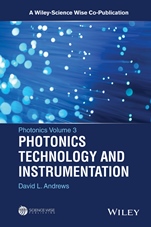
Photonics, Volume 3: Photonics Technology and Instrumentation
ISBN 9781118225547
Autor: David L. Andrews
Wydawca: Wiley
Dostępność: 3-6 tygodni
Cena: 675,15 zł
Przed złożeniem zamówienia prosimy o kontakt mailowy celem potwierdzenia ceny.
ISBN13: |
9781118225547 |
ISBN10: |
1118225546 |
Autor: |
David L. Andrews |
Oprawa: |
Hardback |
Rok Wydania: |
2015-04-24 |
Ilość stron: |
544 |
Wymiary: |
246x164 |
Tematy: |
PH |
Discusses the basic physical principles underlying the technology instrumentation of photonics
This volume discusses photonics technology and instrumentation. The topics discussed in this volume are: Communication Networks; Data Buffers; Defense and Security Applications; Detectors; Fiber Optics and Amplifiers; Green Photonics; Instrumentation and Metrology; Interferometers; Light–Harvesting Materials; Logic Devices; Optical Communications; Remote Sensing; Solar Energy; Solid–State Lighting; Wavelength ConversionComprehensive and accessible coverage of the whole of modern photonics Emphasizes processes and applications that specifically exploit photon attributes of light Deals with the rapidly advancing area of modern optics Chapters are written by top scientists in their field
Written for the graduate level student in physical sciences; Industrial and academic researchers in photonics, graduate students in the area; College lecturers, educators, policymakers, consultants, Scientific and technical libraries, government laboratories, NIH.
David L. Andrews leads research on fundamental molecular photonics and energy transport, optomechanical forces and nonlinear optical phenomena. He has over 160 research papers and also eight books to his name – including the widely adopted textbook Lasers in Chemistry. The current focus of his research group is on novel mechanisms for optical nanomanipulation and switching, and light–harvesting in nanostructured molecular systems. The group enjoys strong international links, particularly with groups in Canada, Lithuania, New Zealand and the United States. Andrews is a Fellow of the Royal Society of Chemistry, and a Fellow of the Institute of Physics, and he is the inaugural Chair of the SPIE Nanotechnology Technical Group.
1 Solid–State Lighting
Jeffrey Tsao
1.1 A Brief History of SSL
1.2 Beyond the State–of–the–Art: Smart and Ultra–Efficient SSL
1.3 Ultra–Efficient SSL Lighting: Towards Multi–Color Semiconductor Electroluminescence
1.4 Smart Solid–State Lighting: Towards Control of Flux and Spectra in Time and Space
1.5 Summary and Conclusions
2 Integrated Optics Using High Contrast Gratings
Connie Chang–Hasnain and Weijian Yang
2.1 Introduction
2.2 Physics of Near–Wavelength Grating
2.3 Applications of High–Contrast Gratings
2.4 Summary
Acknowledgements
References
3 Plasmonic crystals: controlling light with periodically structured metal films
Wayne Dickson, Gregory Wyurtz, and Anatoly Zayats
3.1 Introduction
3.2 Surface plasmon polaritons
3.3 Basics of Surface Plasmon Polaritonic Crystals
3.4 Polarization and wavelength management with plasmonic crystals
3.5 Chirped plasmonic crystals: Broadband and broadangle optical antennas
3.6 Active control of light with plasmonic crystals
Acknowledgements
References
4. Optical Holography
Raymond Kostuk
4.1 Introduction
4.2 Basic Concepts in Holography
4.3 Hologram Analysis
4.4 Hologram Geometries
4.5 Holographic Recording Materials
4.6 Digital Holography
References
5. Transformation Optics and Cloaking
Martin McCall
5.1 Introduction
5.2 Theoretical Underpinning
5.3 The Carpet Cloak
5.4 Conformal Cloaking
5.5 Spacetime Cloaking
5.6 Conclusion and outlook: beyond optics
5.7 Appendices
References
6. Photonic Data Buffers
S.J. Ben Yoo
6.1 Introduction
6.2 Applications of photonic buffers
6.3 Limitations of electronics
6.4 Photonic buffer technologies
6.5 Integration efforts
6.6 Summary
References
7. Optical Forces, Trapping and Manipulation
A. Bui, T.A. Nieminen, D. Preece, Halina Rubinsztein–Dunlop, A.B. Stilgoe
7.1 Introduction
7.2 Theory of optical forces
7.3 Theory of optical torques
7.4 Measurement of forces and torques
7.5 Calculation of forces and torques
7.6 Conclusion
References
8. Optofluidics
H. Matthew Chen, Yeshaiahu Fainman, Lindsay M. Freeman, and Lin Pang
8.1 Introduction
8.2 Photonics with fluid manipulation
8.3 Fluidic sensing
8.4 Fluidic enabled imaging
8.5 Fluid assisted nanopatterning
8.6 Conclusions and outlook
Acknowledgements
References
9. Nanoplasmonic Sensing for Nanomaterials Science
Christoph Langhammer, Elin M. Larsson–Langhammer, and Svetlana Syrenova
9.1 Introduction
9.2 Nanoplasmonic Sensing and Readout
9.3 Inherent Limitations of Nanoplasmonic Sensors
9.4 Direct Nanoplasmonic Sensing
9.5 Indirect Nanoplasmonic Sensing
9.6 Overview on Different Examples
9.7 Discussion and Outlook
References
10. Laser Fabrication and Nanostructuring
Cemal Esen and Andreas Ostendorf
10.1 Introduction
10.2 Laser systems for nanostructuring
10.3 Surface structuring by laser ablation
10.4 Generation of thin films by laser ablation in vacuum
10.5 Generation of nanoparticles by laser ablation in liquids
10.6 Laser induced volume structures
10.7 Direct writing of polymer components via Two photon polymerization
10.8 Conclusion
References
11. Free Electron Lasers
George Neil and Gwyn P. Williams
11.1 Introduction
11.2 Physical Principles
11.3 Worldwide status and ambitions
11.4 Applications
11.5 Summary and conclusions
References
David L. Andrews leads research on fundamental molecular photonics and energy transport, optomechanical forces and nonlinear optical phenomena. He has over 160 research papers and also eight books to his name – including the widely adopted textbook Lasers in Chemistry. The current focus of his research group is on novel mechanisms for optical nanomanipulation and switching, and light–harvesting in nanostructured molecular systems. The group enjoys strong international links, particularly with groups in Canada, Lithuania, New Zealand and the United States. Andrews is a Fellow of the Royal Society of Chemistry, and a Fellow of the Institute of Physics, and he is the inaugural Chair of the SPIE Nanotechnology Technical Group.
Koszyk
Książek w koszyku: 0 szt.
Wartość zakupów: 0,00 zł
Informacje


Kontakt
Gambit
Centrum Oprogramowania
i Szkoleń Sp. z o.o.
Al. Pokoju 29b/22-24
31-564 Kraków
Siedziba Księgarni
ul. Kordylewskiego 1
31-542 Kraków
+48 12 410 5991
+48 12 410 5987
+48 12 410 5989
Subskrypcje
Administratorem danych osobowych jest firma Gambit COiS Sp. z o.o. Na podany adres będzie wysyłany wyłącznie biuletyn informacyjny.
Autoryzacja płatności

Informacje na temat autoryzacji płatności poprzez PayU.

© Copyright 2012: GAMBIT COiS Sp. z o.o. Wszelkie prawa zastrzeżone.
Projekt i wykonanie: Alchemia Studio Reklamy