


Wydawcy
Katalog tematyczny
- Archeologia (109)
- Ekonomia, finanse, business (13704)
- Filozofia (1445)
- Historia (3040)
- Języki i językoznawstwo (2356)
- Lifestyle, hobby i rozrywka (475)
- Medycyna (9704)
- Nauki humanistyczne (4)
- Nauki o Ziemi i środowisku (2638)
- Nauki ścisłe (20412)
- Astronomia (294)
- Biologia (5119)
- Chemia (6540)
- Fizyka (3309)
- Elektryczność i magnetyzm (90)
- Fizyka atomowa i molekularna (110)
- Fizyka cząstek elementarnych (36)
- Fizyka jądra atomowego (36)
- Fizyka kwantowa (210)
- Fizyka matematyczna (121)
- Fizyka relatywistyczna (36)
- Fizyka statystyczna (51)
- Fizyka stosowana (498)
- Mechanika klasyczna (186)
- Optyka i światło (133)
- Stany materii (202)
- Matematyka (4574)
- Nauki ścisłe, ogólnie (503)
- Nauki społeczne (8486)
- Nauki techniczne (13450)
- Prawo (1696)
- Publikacje informacyjne i interdyscyplinarne (1288)
- Religia i wierzenia (917)
- Technika komputerowa (4067)
- Zdrowie, relacje międzyludzkie i rozwój osobisty (657)





Informacje szczegółowe o książce
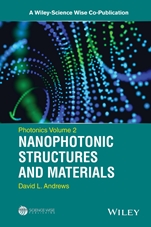
Photonics, Volume 2: Nanophotonic Structures and Materials
ISBN 9781118225516
Autor: David L. Andrews
Wydawca: Wiley
Dostępność: 3-6 tygodni
Cena: 675,15 zł
Przed złożeniem zamówienia prosimy o kontakt mailowy celem potwierdzenia ceny.
ISBN13: |
9781118225516 |
ISBN10: |
1118225511 |
Autor: |
David L. Andrews |
Oprawa: |
Hardback |
Rok Wydania: |
2015-04-03 |
Ilość stron: |
424 |
Wymiary: |
246x159 |
Tematy: |
PH |
Discusses the basic physical principles underlying the science and technology of nanophotonics, its materials and structures
This volume presents nanophotonic structures and Materials. Nanophotonics is photonic science and technology that utilizes light/matter interactions on the nanoscale where researchers are discovering new phenomena and developing techniques that go well beyond what is possible with conventional photonics and electronics.The topics discussed in this volume are: Cavity Photonics; Cold Atoms and Bose–Einstein Condensates; Displays; E–paper; Graphene; Integrated Photonics; Liquid Crystals; Metamaterials; Micro–and Nanostructure Fabrication; Nanomaterials; Nanotubes; Plasmonics; Quantum Dots; Spintronics; Thin Film OpticsComprehensive and accessible coverage of the whole of modern photonics
Emphasizes processes and applications that specifically exploit photon attributes of light
Deals with the rapidly advancing area of modern optics
Chapters are written by top scientists in their field
Written for the graduate level student in physical sciences; Industrial and academic researchers in photonics, graduate students in the area; College lecturers, educators, policymakers, consultants, Scientific and technical libraries, government laboratories, NIH.
David L. Andrews leads research on fundamental molecular photonics and energy transport, optomechanical forces and nonlinear optical phenomena. He has over 160 research papers and also eight books to his name – including the widely adopted textbook Lasers in Chemistry. The current focus of his research group is on novel mechanisms for optical nanomanipulation and switching, and light–harvesting in nanostructured molecular systems. The group enjoys strong international links, particularly with groups in Canada, Lithuania, New Zealand and the United States. Andrews is a Fellow of the Royal Society of Chemistry, and a Fellow of the Institute of Physics, and he is the inaugural Chair of the SPIE Nanotechnology Technical Group.1 Silicon Photonics
Wim Bogaerts
1.1 Introduction
1.2 Applications
1.3 Optical Functions
1.4 Silicon Photonics Technology
1.5 Conclusion
1.6 References
2 Cavity Photonics
Jesper Mørk
2.1 Introduction
2.2 Cavity Fundamentals
2.3 Cavity–based Switches
2.4 Emitters in Cavities
2.5 Nanocavity Lasers and LEDs
2.6 Summary
2.7 Acknowledgements
2.8 References
3 Metamaterials: State–of–the Art and Future Directions
Natalia Litchinitser and Vladimir Shalaev
3.1 Introduction
3.2 Negative Index Materials
3.3 Magnetic Metamaterials
3.4 Graded–index Transition Metamaterials
3.5 Transformation Optics
3.6 Metasurfaces
3.7 References
4 Quantum Nanoplasmonics
Mark Stockman
4.1 Introduction
4.2 Spaser and Nanoplasmonics with Gain
4.3 Adiabatic Hot–electron Nanoscopy
4.4 Acknowledgements
5 Dielectric Photonics Crystals
Robert Lipson
5.1 Introduction
5.2 Fundamentals
5.3 Fabrication Methods and Materials
5.4 Applications
5.5 Conclusions
5.6 References
6 Quantum Dots
Manijeh Razeghi
6.1 Introduction
6.2 Quantum Dots for Infrared Detection
6.3 Quantum Dot Growth
6.4 Device Fabrication and Measurements Procedures
6.5 Gallium Arsenide Based Quantum Dot Detectors
6.6 Indium Phosphide Based Quantum Dot Detectors
6.7 Colloidal Quantum Dots
6.8 Conclusions
6.9 References
7 Magnetic Control of Spin in Molecular Photonics
Eitan Ehrenfreund and Z. Valy Vardeny
7.1 Introduction
7.2 A Survey of the Magneto–electroluminescence in OLEDs
7.3 Organic MEL at Small Magnetic Fields; Compass Effect
7.4 Magnetic Field Effect on Excited State Spectroscopies in Organic Semiconductor Films
7.5 Basic Quantum Mechanical Models Based on Spin Mixing Manipulation by Magnetic Fields
7.6 Acknowledgments
7.7 References
8 Thin–Film Molecular Nanophotonics
Tetsuzo Yoshimura
8.1 Introduction
8.2 Molecular Assembling for Nano–Scale Tailored Structures
8.3 MLD
8.4 Organic MQDs
8.5 SOLNET
8.6 Proposed Applications
8.7 Summary
8.8 References
9 Light Harvesting Materials for Organic Electronics
Carmen Atienza, Juan Luis Delgado, Damien Joly, Nazario Martin
9.1 Introduction
9.2 Photoinduced Electron Transfer (PET) in Artificial Photosynthetic Systems
9.3 Fullerenes for Organic Photovoltaics
9.4 Molecular Wires
9.5 Conclusions
9.6 Acknowledgments
9.7 References
10 Recent Advances in Metal Oxide–Based Photoelectrochemical Hydrogen Production
Bob C. Fitzmorris and Jin Zhang
10.1 Introduction
10.2 Materials for PEC Hydrogen Production
10.3 Conclusion
10.4 References
11 Optical Control of Cold Atoms and Artificial Electromagnetism
Gediminas Juzeliunas and Patrik Ohberg
11.1 Introduction
11.2 Atomic Bose–Einstein Condensates
11.3 Optical Forces on Atoms
11.4 References
David L. Andrews leads research on fundamental molecular photonics and energy transport, optomechanical forces and nonlinear optical phenomena. He has over 160 research papers and also eight books to his name – including the widely adopted textbook Lasers in Chemistry. The current focus of his research group is on novel mechanisms for optical nanomanipulation and switching, and light–harvesting in nanostructured molecular systems. The group enjoys strong international links, particularly with groups in Canada, Lithuania, New Zealand and the United States. Andrews is a Fellow of the Royal Society of Chemistry, and a Fellow of the Institute of Physics, and he is the inaugural Chair of the SPIE Nanotechnology Technical Group.
Koszyk
Książek w koszyku: 0 szt.
Wartość zakupów: 0,00 zł
Informacje


Kontakt
Gambit
Centrum Oprogramowania
i Szkoleń Sp. z o.o.
Al. Pokoju 29b/22-24
31-564 Kraków
Siedziba Księgarni
ul. Kordylewskiego 1
31-542 Kraków
+48 12 410 5991
+48 12 410 5987
+48 12 410 5989
Subskrypcje
Administratorem danych osobowych jest firma Gambit COiS Sp. z o.o. Na podany adres będzie wysyłany wyłącznie biuletyn informacyjny.
Autoryzacja płatności

Informacje na temat autoryzacji płatności poprzez PayU.

© Copyright 2012: GAMBIT COiS Sp. z o.o. Wszelkie prawa zastrzeżone.
Projekt i wykonanie: Alchemia Studio Reklamy