


Wydawcy
Katalog tematyczny
- Archeologia (109)
- Ekonomia, finanse, business (13704)
- Filozofia (1445)
- Historia (3040)
- Języki i językoznawstwo (2356)
- Lifestyle, hobby i rozrywka (475)
- Medycyna (9704)
- Nauki humanistyczne (4)
- Nauki o Ziemi i środowisku (2638)
- Nauki ścisłe (20412)
- Astronomia (294)
- Biologia (5119)
- Chemia (6540)
- Chemia analityczna (361)
- Chemia fizyczna (346)
- Chemia nieorganiczna (137)
- Chemia organiczna (535)
- Krystalografia (27)
- Minerologia (46)
- Fizyka (3309)
- Matematyka (4574)
- Nauki ścisłe, ogólnie (503)
- Nauki społeczne (8486)
- Nauki techniczne (13450)
- Prawo (1696)
- Publikacje informacyjne i interdyscyplinarne (1288)
- Religia i wierzenia (917)
- Technika komputerowa (4067)
- Zdrowie, relacje międzyludzkie i rozwój osobisty (657)





Informacje szczegółowe o książce
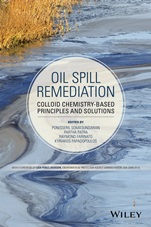
Oil Spill Remediation: Colloid Chemistry–Based Principles and Solutions
ISBN 9781118206706
Autor: Ponisseril Somasundaran, Partha Patra, Raymond S. Farinato, Kyriakos Papadopoulos
Wydawca: Wiley
Dostępność: 3-6 tygodni
Cena: 708,75 zł
Przed złożeniem zamówienia prosimy o kontakt mailowy celem potwierdzenia ceny.
ISBN13: |
9781118206706 |
ISBN10: |
1118206703 |
Autor: |
Ponisseril Somasundaran, Partha Patra, Raymond S. Farinato, Kyriakos Papadopoulos |
Oprawa: |
Hardback |
Rok Wydania: |
2014-06-17 |
Ilość stron: |
392 |
Wymiary: |
235x162 |
Tematy: |
PN |
In April of 2010, the Deepwater Horizon oil spill in the Gulf of Mexico became the largest accidental release of oil into marine waters in history, resulting in severe environmental, health and economic consequences. With massive cleanup and relief efforts that followed, the event led many science and engineering communities to apply their expertise and knowledge towards oil spill remediation advancements. Oil Spill Remediation: Colloid Chemistry–Based Principles and Solutions is based on a special symposium run by leading scientists, engineers and policy makers at the 2011 annual SME meeting, dedicated to advancing oil spill remediation technologies. Divided into three sections, Oil Spill Remediation: Colloid Chemistry–Based Principles and Solutions begins with a science–based overview of the 2010 Deepwater Horizon oil spill. Next, it discusses: Oil spill remediation from the perspective of physicochemical and colloidal science Current regulations on toxic impact of oil and dispersants, and the available environment assessment tools and resources for the remediation of oil spills Current research on dispersants, colloids, and other options for remediation Each chapter addresses deeper scientific problems associated with current technologies and highlights the urgent need for better remediation methods. With contributions from Lisa Jackson (former Administrator of the EPA), leading researchers, scientists, engineers and policy makers, this monograph is valuable for all experts in, but not limited to, the chemical, physical–chemical, geological and environmental fields, endeavoring to understand, design and develop new and efficient remediation techniques.
Preface Foreword Ch. 1 Science–Based Decision Making on the Use of Dispersants in the Deepwater Horizon Oil Spill Albert D. Venosa, Paul T. Anastas, Mace G. Barron, Robyn N. Conmy, Marc S. Greenberg, and Gregory J. Wilson Ch. 2 Understanding and Properly Interpreting the 2010 Deepwater Horizon Blowout Sean Anderson, Charles Peterson, Gary Cherr, Richard Ambrose, Shelly Anghera, Steve Bay, Michael Blum, Rob Condon, Thomas Dean, Jeffrey Duncan, Greg Eckert, Monty Graham, Michael Guzy, Stephanie Hampton, Roger Helm, Michael Hooper, Amanda Joye, John Lambrinos, Bruce Mate, Douglas Meffert, Sean Powers, Christopher Reddy, Ponisseril Sonasundaran, Robert Spies, Caz Taylor, Ronald Tjeerdema, and Joseph Torres Ch. 3 Remediation and Restoration of Northern Gulf of Mexico Coastal Ecosystems Following the Deepwater Horizon Event Michael J. Blum, Brittany M. Bernik, Thomas Azwell, Eric M.V. Hoek Ch. 4 Challenges in and Approaches to Modeling the Complexities of Deep Water Oil and Gas Release Rupesh K. Reddy, A. Rao, Z. Yu, C. Wu, K. Nandakumar, L. Thibodeaux, K. T. Valsaraj Ch. 5 Oil Films: Some Basic Concepts Johan Sjöblom, Sébastien Simon Ch. 6 Remediating Oilfield Waste and Spills Raymond S. Farinato Ch. 7 Multipronged Approach for Oil Spill Remediation Partha Patra, Poniserril Somasundaran Ch. 8 Packed–Bed Capillary Microscopy on BP–Oil–Spill Oil in Porous Media Peixi Zhu, Quing Wang, Yuly A. Jaimes–Lizcano, Kyriakos Papadopoulos Ch. 9 Jameson Cell Technology for Organics Recovery Graeme J. Jameson Ch. 10 Development of Gelling Agent for the Spilled Oils Kazutami Sakamoto Ch. 11 Microstructures of Capped Ethylene Oxide Oligomers in Water and n –Hexane Mangesh I. Chaudhari, Lawrence R. Pratt Ch. 12 Some Colloidal Fundamentals in Oil Spill Remediation: The Water/Surfactant/Hydrocarbon Combination S. E. Friberg, H. Hasinovic, P. I. Belobrov Ch. 13 Physicochemical Properties of Heavy Oil–Water Interface in the Context of Oil Removal from Sea Water by Froth Flotation Louxiang Wang, Meghan Curran, Meijiao Deng, Qingxia Liu, Zhenghe Xu, Jacob Masliyah Ch. 14 Measurement of Interfacial Tension in Hydrocarbon/Water/Dispersant Systems at Deepwater Conditions Mohamed A. Abdelrahim, Dandina N. Rao Ch. 15 Surfactant Technologies for Remediation of Oil Spills Edgar J. Acosta, Suniya Quraishi Ch. 16 Role of Structural Forces in Cleaning Soiled Surfaces Darsh Wasan, Alex Nikolov, Gopi Sethumadhavan
Ponisseril Somasundaran , PhD, is Chairman of the Henry Krumb School at Columbia University and is currently on the board of the new United Engineering Foundation. He has authored/edited fifteen books and over 700 scientific publications and patents. Partha Patra , PhD, isResearch Scientist at Columbia University in New York. His research efforts focus on dealing with challenges associated with earth resource recovery and management, and development of engineering tools to promote usage of bioreagents in personal care, pharmaceuticals and food industries. Raymond S. Farinato , PhD,is currently a Senior Research Fellow in the In Process Separation department of Cytec Industries Inc. and an adjunct professor in the Earth & Environmental Engineering department at Columbia University. Kyriakos Papadopoulos , PhD, is Professor of Chemical & Biomolecular Engineering. His capillary video–microscopy technique has been used in studies of dermal delivery of vaccines, oil–spill cleanup and improvement of engine lubricant oils.
Koszyk
Książek w koszyku: 0 szt.
Wartość zakupów: 0,00 zł
Informacje


Kontakt
Gambit
Centrum Oprogramowania
i Szkoleń Sp. z o.o.
Al. Pokoju 29b/22-24
31-564 Kraków
Siedziba Księgarni
ul. Kordylewskiego 1
31-542 Kraków
+48 12 410 5991
+48 12 410 5987
+48 12 410 5989
Subskrypcje
Administratorem danych osobowych jest firma Gambit COiS Sp. z o.o. Na podany adres będzie wysyłany wyłącznie biuletyn informacyjny.
Autoryzacja płatności

Informacje na temat autoryzacji płatności poprzez PayU.

© Copyright 2012: GAMBIT COiS Sp. z o.o. Wszelkie prawa zastrzeżone.
Projekt i wykonanie: Alchemia Studio Reklamy