


Wydawcy
Katalog tematyczny
- Archeologia (109)
- Ekonomia, finanse, business (13704)
- Filozofia (1445)
- Historia (3040)
- Języki i językoznawstwo (2356)
- Lifestyle, hobby i rozrywka (475)
- Medycyna (9704)
- Nauki humanistyczne (4)
- Nauki o Ziemi i środowisku (2638)
- Nauki ścisłe (20412)
- Astronomia (294)
- Biologia (5119)
- Chemia (6540)
- Chemia analityczna (361)
- Chemia fizyczna (346)
- Chemia nieorganiczna (137)
- Chemia organiczna (535)
- Krystalografia (27)
- Minerologia (46)
- Fizyka (3309)
- Matematyka (4574)
- Nauki ścisłe, ogólnie (503)
- Nauki społeczne (8486)
- Nauki techniczne (13450)
- Prawo (1696)
- Publikacje informacyjne i interdyscyplinarne (1288)
- Religia i wierzenia (917)
- Technika komputerowa (4067)
- Zdrowie, relacje międzyludzkie i rozwój osobisty (657)





Informacje szczegółowe o książce
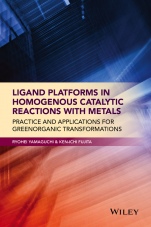
Ligand Platforms in Homogenous Catalytic Reactions with Metals: Practice and Applications for Green Organic Transformations
ISBN 9781118203514
Autor: Ryohei Yamaguchi, Ken–ichi Fujita
Wydawca: Wiley
Dostępność: 3-6 tygodni
Cena: 708,75 zł
Przed złożeniem zamówienia prosimy o kontakt mailowy celem potwierdzenia ceny.
ISBN13: |
9781118203514 |
ISBN10: |
1118203518 |
Autor: |
Ryohei Yamaguchi, Ken–ichi Fujita |
Oprawa: |
Hardback |
Rok Wydania: |
2015-01-20 |
Ilość stron: |
368 |
Wymiary: |
243x162 |
Tematy: |
PN |
The selection of ligands is critical to carrying out practical and efficient reactions, and there has been an increasing desire to devise and develop greener alternatives for such chemical transformations. Chemists must consider the importance of ligands in transition metal complexes used as catalysts–– including selectivity and reactivity characteristics and how to choose different ligands in order to perform practical and efficient synthesis. Motivated by such a pressing need, this book serves as a manual for synthetic organic and catalytic chemists – guiding them in the design and choice of ligands to catalyze green organic transformations. Offering a useful resource, the authors present important industrial perspective and provide rational explanations of ligand effects, impacts, and novelty. Divided into four parts, the book covers different ligands and reactions: N–heterocyclic carbene ligands, cyclopentadienone and related functional ligands, pincer ligands, and notable miscellaneous ligands; all in transition metal catalyzed hydrogen transfer and dehydrogenative reactions. Additional features include: • Discussion of ligand selectivity/reactivity characteristics • Up–to–date discussion on hydrogen transfers and related reactions • Emphasis on ligand designs and applications necessary for more practical and efficient syntheses While scattered literature on efficient ligands for transformations exists on the topics, this book compiles the most up–to–date and necessary information emphasizing design and application under one cover
Preface Part I: N–Heterocyclic Carbene Ligands in Transition Metal Catalyzed Hydrogen Transfer and Dehydrogenative Reactions Chapter 1 Oxidation and Hydrogenation Reactions Catalyzed by Transition Metal Complexes Bearing N–Heterocyclic Carbene Ligands 1.1 Introduction 1.2 Oxidation of Alcohols Based on Hydrogen Transfer 1.3 Oxidation of Alcohols Based on Dehydrogenation 1.4 Hydrogenation and Transfer Hydrogenation of Carbon–Heteroatom Unsaturated Bonds 1.5 Other Related Hydrogenative Reactions 1.6 References Chapter 2 Bond Forming Reactions Catalyzed by Transition Metal Complexes Bearing N–Heterocyclic Carbene Ligands 2.1 Introduction 2.2 Carbon–Carbon Bond Formation Based on Hydrogen Transfer 2.3 Carbon–Nitrogen Bond Formation Based on Hydrogen Transfer and Dehydrogenation 2.4 Carbon–Oxygen Bond Formation Based on Hydrogen Transfer and Dehydrogenation 2.5 References Part II: η 4 –Cyclopentadienone/ η 5 –Hydroxycyclopentadineyl and Related Ligands in Transition Metal Catalyzed Hydrogen Transfer and Dehydrogenative Reactions Chapter 3 Oxidation and Hydrogenation Reactions Catalyzed by Transition Metal Complexes Bearing η 4 –Cyclopentadienone/ η 5 –Hydroxycyclopentadineyl and Related Ligands 3.1 Introduction 3.2 Oxidation of Alcohols Based on Hydrogen Transfer and Dehydrogenation 3.3 Oxidation of Amines Based on Hydrogen Transfer and Dehydrogenation 3.4 Hydrogenation and Transfer Hydrogenation of Carbonyl Compounds 3.5 Hydrogenation and Transfer Hydrogenation of Imines and Related Compounds 3.5 References Chapter 4 Bond Forming Reactions Catalyzed by Transition Metal Complexes Bearing η 4 –Cyclopentadienone/ η 5 –Hydroxycyclopentadineyl and Related Ligands 4.1 Introduction 4.2 Carbon–Nitrogen Bond Formation Based on Hydrogen Transfer and Dehydrogenation 4.3 Carbon–Oxygen Bond Formation Based on Hydrogen Transfer and Dehydrogenation 4.4 Carbon–Carbon Bond Formation Based on Hydrogen Transfer 4.5 References Part III: Pincer Ligands in Transition Metal Catalyzed Hydrogen Transfer and Dehydrogenative Reactions Chapter 5 Dehydrogenation of Alkanes Catalyzed by Transition Metal Complexes Bearing Pincer Ligands 5.1 Introduction 5.2 Conversion of Alkanes into Alkenes Based on Hydrogen Transfer 5.3 Dehydroaromatization of Alkanes Based on Hydrogen Transfer 5.4 Alkane Methathesis by Tandem Alkane Dehydrogenation and Alkene Methathesis 5.5 Conversion of Alkanes into Alkenes Based on Dehydrogenation 5.6 References Chapter 6 Oxidation and Hydrogenation Reactions Catalyzed by Transition Metal Complexes Bearing Pincer Ligands 6.1 Introduction 6.2 Oxidation of Alcohols Based on Hydrogen Transfer and Dehydrogenation 6.3 Dehydrogenation of Amines 6.4 Hydrogenation and Transfer Hydrogenation of Carbon–Heteroatom Unsaturated Bonds 6.5 References Chapter 7 Bond Forming Reactions Catalyzed by Transition Metal Complexes Bearing Pincer Ligands 7.1 Introduction 7.2 Carbon–Carbon Bond Formation Based on Hydrogen Transfer 7.3 Carbon–Nitrogen Bond Formation Based on Hydrogen Transfer and Dehydrogenation 7.4 Carbon–Oxygen Bond Formation Based on Hydrogen Transfer and Dehydrogenation 7.5 References Part IV: Bidentate and Miscellaneous Ligands in Transition Metal Catalyzed Hydrogen Transfer and Dehydrogenative Reactions Chapter 8 Oxidation and Dehydrogenation of Alcohols and Amines Catalyzed by Well–Defined Transition Metal Complexes Bearing Bidentate and Miscellaneous Ligands 8.1 Introduction 8.2 Oxidation of Alcohols Based on Hydrogen Transfer with Oxidant 8.3 Dehydrogenative Oxidation of Alcohols without Oxidant 8.4 Oxidation of Amines Based on Hydrogen Transfer and Dehydrogenation 8.5 References Chapter 9 Hydrogenation and Transfer Hydrogenation of Carbon–Heteroatom Unsaturated Bonds Catalyzed by Well–Defined Transition Metal Complexes Bearing Bidentate and Miscellaneous Ligands 9.1 Introduction 9.2 Hydrogenation and Transfer Hydrogenation of Carbonyl and Related Compounds 9.3 Hydrogenation and Transfer Hydrogenation of Imines and Related Compounds 9.4 References Chapter 10 Bond Forming Reactions Based on Hydrogen Transfer Catalyzed by Well–Defined Transition Metal Complexes Bearing Bidentate and Miscellaneous Ligands 10.1 Introduction 10.2 Carbon–Carbon Bond Formation Based on Hydrogen Transfer 10.3 Carbon–Nitrogen Bond Formation Based on Hydrogen Transfer and Dehydrogenation 10.4 Carbon–Oxygen Bond Formation Based on Hydrogen Transfer and Dehydrogenation 10.5 References
Ryohei Yamaguchi is an Emeritus Professor of Chemistry at Kyoto University, Japan. Previously, he worked as a postdoctoral fellow at University of Minnesota. His research includes the development of selective and catalytic organic reactions by means of metal reagents/complexes directed towards green organic synthesis. Ken–ichi Fujita is an Associate Professor of Chemistry at Kyoto University, Japan. Previously, he worked as a postdoctoral fellow at Yale University and received the Incentive Award in Synthetic Organic Chemistry, Japan in 2006. His research focuses on the development of new catalytic systems for green organic synthesis.
Koszyk
Książek w koszyku: 0 szt.
Wartość zakupów: 0,00 zł
Informacje


Kontakt
Gambit
Centrum Oprogramowania
i Szkoleń Sp. z o.o.
Al. Pokoju 29b/22-24
31-564 Kraków
Siedziba Księgarni
ul. Kordylewskiego 1
31-542 Kraków
+48 12 410 5991
+48 12 410 5987
+48 12 410 5989
Subskrypcje
Administratorem danych osobowych jest firma Gambit COiS Sp. z o.o. Na podany adres będzie wysyłany wyłącznie biuletyn informacyjny.
Autoryzacja płatności

Informacje na temat autoryzacji płatności poprzez PayU.

© Copyright 2012: GAMBIT COiS Sp. z o.o. Wszelkie prawa zastrzeżone.
Projekt i wykonanie: Alchemia Studio Reklamy