


Wydawcy
Katalog tematyczny
- Archeologia (109)
- Ekonomia, finanse, business (13704)
- Filozofia (1445)
- Historia (3040)
- Języki i językoznawstwo (2356)
- Lifestyle, hobby i rozrywka (475)
- Medycyna (9704)
- Nauki humanistyczne (4)
- Nauki o Ziemi i środowisku (2638)
- Nauki ścisłe (20412)
- Astronomia (294)
- Biologia (5119)
- Chemia (6540)
- Chemia analityczna (361)
- Chemia fizyczna (346)
- Chemia nieorganiczna (137)
- Chemia organiczna (535)
- Krystalografia (27)
- Minerologia (46)
- Fizyka (3309)
- Matematyka (4574)
- Nauki ścisłe, ogólnie (503)
- Nauki społeczne (8486)
- Nauki techniczne (13450)
- Prawo (1696)
- Publikacje informacyjne i interdyscyplinarne (1288)
- Religia i wierzenia (917)
- Technika komputerowa (4067)
- Zdrowie, relacje międzyludzkie i rozwój osobisty (657)







Informacje szczegółowe o książce
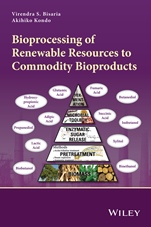
Bioprocessing of Renewable Resources to Commodity Bioproducts
ISBN 9781118175835
Autor: Virendra S. Bisaria, Akihiko Kondo
Wydawca: Wiley
Dostępność: 3-6 tygodni
Cena: 665,70 zł
Przed złożeniem zamówienia prosimy o kontakt mailowy celem potwierdzenia ceny.
ISBN13: |
9781118175835 |
ISBN10: |
1118175832 |
Autor: |
Virendra S. Bisaria, Akihiko Kondo |
Oprawa: |
Hardback |
Rok Wydania: |
2014-06-06 |
Ilość stron: |
584 |
Wymiary: |
241x164 |
Tematy: |
PN |
For the development of a sustainable, industrial society to meet our demands of energy and materials, we will have to shift from our dependence on petroleum to the use of renewable resources. Bio–refineries will enable the production of bio–fuels as well as commodity chemicals (produced in excess of about one million tons per year) from biomass. These processes are favorable from a chemical point of view because the functional groups that must be introduced by costly oxidative process steps into naphtha are already present in lignocelluloic plant materials such as carbohydrates. The commodity bioproducts can be produced by microbial processes. Most of them are natural products of microorganisms, and because of their functional groups, they are extremely useful as starting materials for the chemical industry for synthesis of a wide variety of products such as polymers, surfactants, lubricants and resins. This book provides the vision of a successful biorefinery—the lignocelluloic biomass needs to be efficiently converted to its constituent monomers, comprising mainly of sugars such as glucose, xylose, mannose and arabinose. Accordingly, the first part of the book deals with aspects crucial for the pretreatment and hydrolysis of biomass to give sugars in high yield, as well as the general aspects of bioprocessing technologies which will enable the development of biorefineries through inputs of metabolic engineering, fermentation, downstream processing and formulation. The second part of the book gives the current status and future directions of the biological processes for production of ethanol (a biofuel as well as an important commodity raw material), solvents (butanol, isobutanol, butanediols, propanediols), organic acids (lactic acid, 3–hydroxy propionic acid, fumaric acid, succinic acid and adipic acid), and amino acid (glutamic acid). The commercial production of some of these commodity bioproducts in the near future will have a far reaching effect in realizing our goal of sustainable conversion of these renewable resources and realizing the concept of biorefinery. The book presents the state – of – the art papers by eminent scientists and engineers with practical experience of working in this exciting area of biotechnology and have published extensively in scientific journals. The book is suitable for researchers, practitioners, graduate students and consultants in biochemical/ bioprocess engineering, industrial microbiology, bioprocess technology, metabolic engineering, environmental science and energy.
Part 1: Enabling Processing Technologies Chapter 1: Biorefineries – Concepts for Sustainability Michael Sauer, Matthias Steiger, Hans Marx, Diethard Mattanovich Abstract 1.1 Introduction 1.2 Three levels for biomass use 1.3 The sustainable removal of biomass from the field is crucial for a successful biorefinery 1.4 Making order: classification of biorefineries 1.5 Quantities of sustainably available biomass 1.6 Quantification of sustainability 1.7 Starch and sugar based biorefinery 1.8 Oilseed crops 1.9 Lignocellulosic Feedstocks 1.10 Green biorefinery 1.11 Microalgae 1.12 Future Prospects – aiming for higher value from biomass References Chapter 2: Biomass Logistics Kevin L. Kenney, J. Richard Hess, Nathan A. Stevens, William A. Smith, Ian J. Bonner, David J. Muth Abstract 2.1 Introduction 2.2 Method of Assessing Uncertainty, sensitivity and influence of feedstock logistic system parameters 2.3 Understanding Uncertainty in the Context of Feedstock Logistics 2.4 Future Prospects Financial Disclosure/Acknowledgements References Chapter 3: Pretreatment of Lignocellulosic Materials Karthik Rajendran, Mohammad J. Taherzadeh Abstract 3.1. Introduction 3.2. Complexity of Lignocelluloses 3.3. Challenges in pretreatment of Lignocelluloses 3.4. Pretreatment Methods and Mechanisms 3.5. Economic outlook 3.6. Future prospects References Chapter 4: Enzymatic Hydrolysis of Lignocellulosic Biomass Jonathan J. Stickel, Roman Brunecky, Richard T. Elander, James D. McMillan Abstract 4.1 Introduction 4.2 Cellulase, hemicellulase, and accessory enzyme systems and their synergistic action on lignocellulosic biomass 4.3 Enzymatic hydrolysis at high concentrations of biomass solids 4.4 Mechanistic process modeling and simulation 4.5 Considerations for process integration and economic viability 4.6 Economic outlook 4.7 Future prospects Acknowledgement References Chapter 5: Production of Cellulolytic Enzymes Ranjita Biswas, Abhishek Persad, Virendra S Bisaria Abstract 5.1 Introduction 5.2 Hydrolytic enzymes for digestion of lignocelluloses 5.3 Desirable attributes of cellulase for hydrolysis of cellulose 5.4 Strategies used for enhanced enzyme production 5.5 Economic Outlook 5.6 Future Prospects References Chapter 6: Bioprocessing Technologies Gopal Chotani, Caroline Peres, Alexandra Schuler, Peyman Moslemy Abstract 6.1 Introduction 6.2 Cell Factory Platform 6.3 Fermentation Process 6.4 Recovery Process 6.5 Formulation Process 6.6 Final Product Blends 6.7 Economic Outlook & Future Prospects Acknowledgement References Part 2: Specific Commodity Bioproducts Chapter 7: Ethanol from Bacteria Hideshi Yanase Abstract 7.1 Introduction 7.2 Heteroethanologenic bacteria 7.3 Homoethanologenic bacteria 7.4 Economic outlook 7.5 Future prospects References Chapter 8: Ethanol Production from Yeasts Tomohisa Hasunuma, Ryosuke Yamada, Akihiko Kondo Abstract 8.1 Introduction 8.2 Ethanol production from starchy biomass 8.3 Ethanol production from lignocellulosic biomass 8.4 Economic Outlook 8.5 Future Prospects References Chapter 9: Fermentative Biobutanol Production: an Old Topic with Remarkable Recent Advances Yi Wang, Holger Janssen, Hans P. Blaschek Abstract 9.1. Introduction 9.2. Butanol as a fuel and chemical feedstock 9.3. History of Acetone–Butanol–Ethanol (ABE) fermentation 9.4. Physiology of clostridial ABE fermentation 9.5. ABE Fermentation processes, butanol toxicity and product recovery 9.6. Metabolic engineering and ‘omics’–analyses of solventogenic clostridia 9.7. Economic Outlook 9.8. Current status and future prospects References Chapter 10: Bio–based Butanediols Production: the Contributions of Catalysis, Metabolic Engineering, and Synthetic Biology Xiao–Jun Ji, He Huang Abstract 10.1 Introduction 10.2 Bio–based 2,3–Butanediol 10.3 Bio–based 1,4–Butanediol 10.4 Economic Outlook 10.5 Future Prospects Acknowledgement References Chapter 11: 1,3–Propanediol Yaqin Sun, Chengwei Ma, Hongxin Fu, Ying Mu, Zhilong Xiu Abstract 11.1 Introduction 11.2 Bioconversion of glucose into 1,3–propanediol 11.3 Bioconversion of glycerol into 1,3–propanediol 11.4 Metabolic engineering 11.5 Down–processing of 1,3–propanediol 11.6 Integrated processes 11.7 Economic outlook 11.8 Future prospects References Chapter 12: Isobutanol Bernhard J. Eikmanns, Bastian Blombach Abstract 12.1 Introduction 12.2 The access code for the microbial production of branched–chain alcohols:2–ketoacid decarboxylase and an alcohol dehydrogenase 12.3 Metabolic engineering strategies for directed production of isobutanol 12.4 Overcoming isobutanol cytotoxicity 12.5 Process development for the production of isobutanol 12.6 Economic outlook 12.7 Future prospects Acknowledgements Abbreviations References Chapter 13: Lactic Acid Kenji Okano, Tsutomu Tanaka Abstract 13.1 History of lactic acid 13.2 Applications of lactic acid 13.3 Poly lactic acid 13.4 Conventional lactic acid production 13.5 Lactic acid production from renewable resources 13.6 Economic outlook 13.7 Future prospects Abbreviation References Chapter 14: Microbial Production of 3–hydroxypropionic acid from Renewable Sources: A Green Approach as an Alternative to Conventional Chemistry Vinod Kumar, Somasundar Ashok, Sunghoon Park Abstract 14.1 Introduction 14.2 Natural microbial production of 3–HP 14.3 Production of 3–HP from glucose by recombinant microorganisms 14.4 Production of 3–HP from glycerol by recombinant microorganisms 14.5 Major challenges for microbial production of 3–HP 14.6 Economic outlook 14.7 Future Prospects Acknowledgement References Chapter 15: Fumaric Acid Biosynthesis and Accumulation Israel Goldberg, J Stefan Rokem Abstract 15.1 Introduction 15.2. Microbial Synthesis of Fumaric Acid 15.3 A Plausible Biochemical Mechanism for Fumaric Acid Biosynthesis and Accumulation in Rhizopus 15.4 Towards Engineering Rhizopus for Fumaric Acid Production 15.5Economic Outlook 15.6 Future Perspectives References Chapter 16: Succinic Acid Boris Litsanov, Melanie Brocker, Marco Oldiges, Michael Bott Abstract 16.1 Succinate as an important platform chemical for a sustainable bio–based chemistry 16.2 Microorganisms for bio–succunate production – physiology, metabolic routes, and strain development 16.3 Neutral vs. acidic conditions for product formation 16.4 Downstream processing 16.5 Companies involved in bio–succinic acid manufacturing 16.6 Future prospects and economic outlook References Chapter 17: Glutamic Acid Takashi Hirasawa, Hiroshi Shimizu Abstract 17.1 Introduction 17.2 Glutamic acid production by Corynebacterium glutamicum 17.3 Glutamic acid as a building block 17.4 Economic Outlook 17.5 Future Prospects References Chapter 18: Recent Advances for Microbial Production of Xylitol Yong–Cheol Park, Sun–Ki Kim, Jin–Ho Seo Abstract 18.1 Introduction 18.2. General principles for biological production of xylitol 18.3 Microbial production of xylitol 18.4 Xylitol production by genetically engineered microorganisms 18.5 Economic outlook 18.6 Future prospects References Chapter 19: First and Second Generation Production of Bio–Adipic Acid Jozef Bernard, Johann Henri van Duuren, Christoph Wittmann Abstract 19.1 Introduction 19.2 Production of bio–adipic acid 19.3 Ecological footprint of bio–adipic acid 19.4 Economic outlook 19.5 Future prospects References Index
Virendra S. Bisaria is Professor in the Department of Biochemical Engineering and Biotechnology at the Indian Institute of Technology Delhi, New Delhi, India. He has published more than 100 original papers, 10 reviews and 15 book chapters. He is Editor of the Journal of Bioscience and Bioengineering (Elsevier) and is on the editorial boards of Journal of Chemical Technology and Biotechnology (Wiley) and Process Biochemistry (Elsevier). He was one of the International collaborators to recommend assay procedures for cellulase and xylanase activities on behalf of Commission on Biotechnology, International Union of Pure and Applied Chemistry. His awards include the Research Exchange Award from the Korean Society for Biotechnology and Bioengineering and fellowships from UNESCO and UNDP etc. He is Vice President of Asian Federation of Biotechnology from India. Akihiko Kondo is Professor in the Department of Chemical Engineering and Director of Biorefinery Center at Kobe University, Kobe, Japan. He is Team Leader, Biomass Engineering Program, RIKEN. He has published more than 330 original papers, 75 reviews and 55 book chapters. He is Editor of Journal of Biotechnology (Elsevier), Associate Editor of Biochemical Engineering Journal (Elsevier) and is on the editorial boards of Biotechnology for Biofuels (Springer), Bioresource Technology (Elsevier), Journal of Biological Engineering (Springer) and FEMS Yeast Research (Wiley). He has won numerous awards which include the Advanced Technology Award by Fuji Sankei Business and Takeda International Contributions Award by Takeda Pharmaceuticals.
Koszyk
Książek w koszyku: 0 szt.
Wartość zakupów: 0,00 zł
Informacje


Kontakt
Gambit
Centrum Oprogramowania
i Szkoleń Sp. z o.o.
Al. Pokoju 29b/22-24
31-564 Kraków
Siedziba Księgarni
ul. Kordylewskiego 1
31-542 Kraków
+48 12 410 5991
+48 12 410 5987
+48 12 410 5989
Subskrypcje
Administratorem danych osobowych jest firma Gambit COiS Sp. z o.o. Na podany adres będzie wysyłany wyłącznie biuletyn informacyjny.
Autoryzacja płatności

Informacje na temat autoryzacji płatności poprzez PayU.

© Copyright 2012: GAMBIT COiS Sp. z o.o. Wszelkie prawa zastrzeżone.
Projekt i wykonanie: Alchemia Studio Reklamy