


Wydawcy
Katalog tematyczny
- Archeologia (109)
- Ekonomia, finanse, business (13704)
- Filozofia (1445)
- Historia (3040)
- Języki i językoznawstwo (2356)
- Lifestyle, hobby i rozrywka (475)
- Medycyna (9704)
- Nauki humanistyczne (4)
- Nauki o Ziemi i środowisku (2638)
- Nauki ścisłe (20412)
- Nauki społeczne (8486)
- Nauki techniczne (13450)
- Prawo (1696)
- Publikacje informacyjne i interdyscyplinarne (1288)
- Religia i wierzenia (917)
- Technika komputerowa (4067)
- Zdrowie, relacje międzyludzkie i rozwój osobisty (657)





Informacje szczegółowe o książce
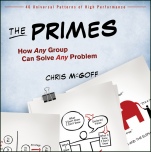
The Primes: How Any Group Can Solve Any Problem
ISBN 9781118173275
Autor: Chris McGoff
Wydawca: Wiley
Dostępność: 3-6 tygodni
Cena: 168,00 zł
Przed złożeniem zamówienia prosimy o kontakt mailowy celem potwierdzenia ceny.
ISBN13: |
9781118173275 |
ISBN10: |
1118173279 |
Autor: |
Chris McGoff |
Oprawa: |
Paperback |
Rok Wydania: |
2012-04-27 |
Ilość stron: |
272 |
Wymiary: |
204x206 |
Tematy: |
KJ |
What Happens When People and Organizations Have TO Change? The primes are universal and unavoidable patterns of group behavior that emerge whenever people attempt to transform systems or collaborate to solve complex problems. Every leader has seen their effect, but few can recognize, anticipate, and manage them. Unacknowledged, the primes can put any leadership agenda at risk. But once mastered, the PRIMES become a force to help you solve any leadership problem. An essential guide for twenty–first–century change agents, The Primes unveils 46 universal secrets of how to step up to major challenges, create a brighter future, and produce extraordinary results. "How many books have we read that talk about the need for change? There are dozens, and they always fall short of giving us the keys to lead and drive successful transformation efforts. Chris McGoff′s The PRIMES fills that gap. I started working with Chris in my former position as the Administrator for E–Government and IT at the US Office of Management and Budget, at which time, the US was ranked 36th in the world for providing web–based government services to its citizens. Using many of the PRIMES, we became a powerful, high–performance team, building a team of over 2,000 leaders in the public sector using e–government initiatives. The outcome: the US became first in the world in its delivery of federal services to taxpayers, businesses, and other nations." — Mark Forman , first US Administrator for E–Government and Information Technology Office of Management and Budget "If you are interested in marginal incremental improvement and hearing feedback on what you already know, hire a consultant. If you want to truly transform your business and personal life, read and live The PRIMES." — Nick DeLuliis , Chief Operating Officer, CONSOL Energy Inc. For information on training and public speaking related to the PRIMES, visit theprimes.com. To learn more about how the PRIMES can solve problems and bring transformation to your organization, visit theclearing.com.
INTRODUCTION xxv PART 1: UNIVERSAL PATTERNS OF LEADING IN UNCERTAIN TIMES 1 How do some people, organizations, and coalitions thrive in uncertain times? What enables them to appear so certain and take decisive action amid ambiguity about the future? CHAPTER 1 – BEING CLEAR ON WHAT’S REALLY IMPORTANT 3 How did you decide how you spent your time yesterday? What criteria are you using to allocate your time tomorrow? LEADING 5 Does being called a ‘‘leader’’ mean you are ‘‘leading’’? What does ‘‘leading’’ mean? IN–ON 9 Are you seduced by working ‘‘in’’ the business at the expense of ‘‘on’’ it? CHANGE VERSUS TRANSFORMATION 13 Are you fixing or creating? CHAPTER 2 – BEING INTENTIONAL AND GOING FIRST 18 What are you committed to making happen and by when? What does ‘‘committed’’ mean? What does your commitment mean to others? INTEGRITY 21 Does your ‘‘yes’’ really mean ‘‘yes’’? TRUST THE UNIVERSE 25 Is your vision limited to what you’ve already seen? DECLARATION 29 Are you willing to live unreasonably? CHAPTER 3 – ENROLLING OTHERS 32 Can you call people, from disenfranchisement and mere compliance, to their highest level of commitment? DYNAMIC INCOMPLETENESS 35 Can you create a vision that is compelling because of what it says and at the same time inviting—for what it leaves yet to be said? ENNOBLEMENT 39 Does your vision elevate people in degree and excellence and respect and inspire them to act boldly? POWER 45 Do you know how to turn strangers, competitors, cautious allies, and suspicious stakeholders into powerful, outcome–driven coalitions? PART 2: UNIVERSAL PATTERNS OF POWERFUL ALLIANCES 47 How do you generate unprecedented power within the group? Is this question all that important to you? CHAPTER 4 – GAINING SHARED PERSPECTIVE 49 Everyone claims to value diversity. Can maintaining diverse perspectives ever be a bad thing? BLIND MEN AND THE ELEPHANT 51 How do you help people to see the ‘‘whole thing’’? LEVELS OF PERSPECTIVE 55 How do you help people to see the same ‘‘whole thing’’? S–CURVES 59 How do you lead people to a shared sense of now? CHAPTER 5 – ESTABLISHING SHARED INTENT 62 How do you lead the group to be intentional? CORE PRIME 65 How do you help the group to focus on the right things and feel urgent about acting? PARITY 73 What is the right ratio of analyzing versus imagining? STAKE 77 How do you get the group ‘‘all in’’? CHAPTER 6 – TAKING COORDINATED ACTION 80 How do you get the group to do everything persistently about a few critical things versus doing a few things about everything? COHESION 83 Cohesion is an unnatural state for a group. How good are you at establishing and sustaining it? REDPOINT 85 A good question to ask is, ‘‘What is important to do?’’ A better question is, ‘‘Of all the important things we could do, what are the fewest, most important?’’ MUDA 93 Can you distinguish ‘‘non–value–added activity’’? How much of your group’s resources is it consuming? PART 3: UNIVERSAL PATTERNS OF OUTSTANDING GROUP PERFORMANCE 96 What do high–performance groups know and do that low–performance groups do not? CHAPTER 7 – MAKING DECISIONS 98 What does the word ‘‘decision’’ actually mean? How are decisions made? LEADERSHIP SPECTRUM 101 Are you the kind of leader who likes to facilitate consensus? The right answer is, ‘‘That depends.’’ CONSENSUS 105 Are you still using the traditional definition of consensus? Are you aware of how destructive the traditional definition is? OPEN–CLOSE–DECIDE 109 How do groups actually make decisions? CHAPTER 8 – BUILDING AN INTENTIONAL CULTURE 113 Quick—what does ‘‘culture’’ mean? There are consequences to using more than seven words to define culture. CULTURE 115 Culture happens. You shape it or it shapes you. How good are you at shaping a culture? CONGRUENCE 119 What is the dark side of a stated culture? FEEDBACK AS CARING 123 How good are you at giving it? How good are you at getting it? Why does it matter? CHAPTER 9 – SOCIAL CONTRACTING AND ACCOUNTABILITY WITHIN THE GROUP 126 How do peers give each other commands? REQUEST 129 Why saying ‘‘no’’ protects your saying ‘‘yes.’’ TRUST 133 We all say how important trust is. What is trust? How do you generate it and how do you destroy it? BREACH 137 What do you do when your ‘‘yes’’ turns out to be a ‘‘no’’? CHAPTER 10 – SAYING AND NOT SAYING; LISTENING AND NOT LISTENING 140 How do high–performance groups sound? PERIMETER 143 How small a fence have you built around what can and cannot be said? FACTS, STORIES, AND BELIEFS 147 Can you distinguish facts from stories from beliefs? Do you use facts the way a drunk uses a lamp post—for support versus illumination? GOSSIP 151 What is it? What makes it so destructive? How do you stop it? PART 4: UNIVERSAL PATTERNS OF GROUP FAILURE 153 How good are you at anticipating, avoiding, and slaying the dragons that inevitably show up and threaten your group and the outcomes your group is standing for? CHAPTER 11 – OVERCOMING RESISTANCE 155 Are you okay with favoring some people and ignoring others? LAGGARDS 157 Do you know how to starve ‘‘possibility killers’’? FRAGMENTATION 161 How skilled are you at overcoming resistance from the powerful middle? SAME–DIFFERENT 165 Everybody’s special. Really? CHAPTER 12 – MANAGING INTRACTABLE DILEMMAS 168 How do you end a never–ending argument? BIG HAT–LITTLE HAT 171 What do you do when the needs of the many conflict with the needs of the few? RIGHT VERSUS RIGHT 175 Resolving conflicts about right and wrong is child’s play. How skilled are you at resolving matters of right versus right? RESOLUTION PRINCIPLES 179 Right versus right arguments have been going on forever. What can we learn from our ancestors? CHAPTER 13 – AVOIDING TRIPPING HAZARDS 181 Tripping hazards are easier to avoid when you know where they are. When it comes to working in groups, can you see them coming? CHASE–LOSE 183 Chase teamwork, leadership, morale, and culture and you will surely lose them all. PROCESS–CONTENT 189 You can run the process. You can contribute to content. Pick one. SHAPE SHIFTING 191 How to destroy your power in groups. CHAPTER 14 – REFUSING TO HIDE OUT 194 We all live our lives trying to avoid embarrassment. Can you recognize when you and your group are hiding out and playing safe? VICTIM–LEADER 197 What does ‘‘going victim’’ sound like? COURT–LOCKER ROOM 199 Do you find planning to be a near–death experience? CONFUSION 203 Why is confusion such a wonderful way of being? PART 5: UNIVERSAL PATTERNS OF THRIVING IN AMBIGUITY 205 How do you stay healthy when the world is sick? CHAPTER 15 – AVOIDING BRIGHT AND SHINY OBJECTS AND SQUIRRELS 206 How do you manage distractions? A CLEARING 209 How skilled are you at creating nothing? ISSUES FORWARD 213 Looking behind and looking ahead are both important. What is the right ratio? CHAPTER 16 – TAKING GREAT CARE OF YOURSELF 216 Can you give up coming from ‘‘something is wrong’’? COMMITMENT VERSUS ATTACHMENT 219 Why saying ‘‘This project makes me so frustrated’’ is irrational. BE 223 How good are you at cutting grass when you are cutting grass? CONCLUSION: NOWWHAT? 226 NOTES 228 INDEX OF THE PRIMES 237 ABOUT THE AUTHOR 239
CHRIS J. McGOFF is the founder of The Clearing, Inc., a Washington, DC–based management consulting firm dedicated to supporting change agents as they tackle the most daunting and complex problems facing organizations. For 30 years, Chris McGoff has been helping leaders in the private and public sector reach difficult consensus and solve problems of consequence—those involving the highest levels of stakeholder and technological complexity. Mr. McGoff′s client list includes most of the agencies of the US federal government as well as a wide range of organizations such as IBM, AARP, Consol Energy, DuPont, the United Nations, and Boeing. He is also a sought–after public speaker, senior advisor, and professor at the University of Maryland School of Public Policy.
Koszyk
Książek w koszyku: 0 szt.
Wartość zakupów: 0,00 zł
Informacje


Kontakt
Gambit
Centrum Oprogramowania
i Szkoleń Sp. z o.o.
Al. Pokoju 29b/22-24
31-564 Kraków
Siedziba Księgarni
ul. Kordylewskiego 1
31-542 Kraków
+48 12 410 5991
+48 12 410 5987
+48 12 410 5989
Subskrypcje
Administratorem danych osobowych jest firma Gambit COiS Sp. z o.o. Na podany adres będzie wysyłany wyłącznie biuletyn informacyjny.
Autoryzacja płatności

Informacje na temat autoryzacji płatności poprzez PayU.

© Copyright 2012: GAMBIT COiS Sp. z o.o. Wszelkie prawa zastrzeżone.
Projekt i wykonanie: Alchemia Studio Reklamy