


Wydawcy
Katalog tematyczny
- Archeologia (109)
- Ekonomia, finanse, business (13704)
- Filozofia (1445)
- Historia (3040)
- Języki i językoznawstwo (2356)
- Lifestyle, hobby i rozrywka (475)
- Medycyna (9704)
- Nauki humanistyczne (4)
- Nauki o Ziemi i środowisku (2638)
- Nauki ścisłe (20412)
- Astronomia (294)
- Biologia (5119)
- Chemia (6540)
- Chemia analityczna (361)
- Chemia fizyczna (346)
- Chemia nieorganiczna (137)
- Chemia organiczna (535)
- Krystalografia (27)
- Minerologia (46)
- Fizyka (3309)
- Matematyka (4574)
- Nauki ścisłe, ogólnie (503)
- Nauki społeczne (8486)
- Nauki techniczne (13450)
- Prawo (1696)
- Publikacje informacyjne i interdyscyplinarne (1288)
- Religia i wierzenia (917)
- Technika komputerowa (4067)
- Zdrowie, relacje międzyludzkie i rozwój osobisty (657)





Informacje szczegółowe o książce
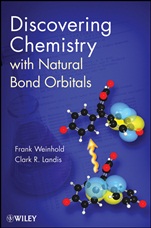
Discovering Chemistry With Natural Bond Orbitals
ISBN 9781118119969
Autor: Frank Weinhold
Wydawca: Wiley
Dostępność: 3-6 tygodni
Cena: 430,50 zł
Przed złożeniem zamówienia prosimy o kontakt mailowy celem potwierdzenia ceny.
ISBN13: |
9781118119969 |
ISBN10: |
1118119967 |
Autor: |
Frank Weinhold |
Oprawa: |
Paperback |
Rok Wydania: |
2012-07-27 |
Ilość stron: |
336 |
Wymiary: |
233x169 |
Tematy: |
PN |
Learn how to investigate chemical bonding questions usingmodern NBO computational methods
Using the latest computational technology, this practical how–toguide to chemical discovery introduces readers to natural bondorbital (NBO) concepts, strategies, and practical implementations.Without resorting to complex mathematics and programming, readerswill learn how to fully leverage the NBO 5.9 computer program tore–express complex multi–electron wave functions in terms ofintuitive chemical concepts and orbital imagery.
Discovering Chemistry with Natural Bond Orbitals begins with anintroductory chapter that sets forth the basics, including how toproduce orbital imagery. Next, the authors cover such criticaltopics as:
Electrons in atoms Hybrids and bonds in molecules Steric and electrostatic effects Atoms in molecules Resonance delocalization corrections Nuclear and electronic spin effectsEach chapter ends with problems and exercises that enablereaders to apply NBO methods to investigate chemical bonds, theirintrinsic energies, and the corresponding dissociation energiesthat are relevant in reactivity problems. There are also worked–outexamples and sample input and output throughout the text to helpguide and support readers in their own investigations. In addition,the text features numerous sidebars and links to websites and othertexts where more in–depth information can be found on individualtopics.
There are five appendices at the end of the text filled withuseful supplementary material, including Appendix D, "What ifSomething Goes Wrong?", to help readers solve common problems thatarise in NBO investigations.
Following this text′s clear explanations, even readers withlimited backgrounds in quantum mechanics will learn how to performsophisticated explorations of modern bonding and valencyconcepts.
Preface
1 Getting Started
1.1 Talking to your electronic structure system
1.2 Helpful tools
1.3 General $NBO keylist usage
1.4 Producing orbital imagery
Problems and Exercises
2 Electrons in Atoms
2.1 Finding the electrons in atomic wavefunctions
2.2 Atomic orbitals and their graphical representation
2.3 Atomic electron configurations
2.4 How to find electronic orbitals and configurations in NBOoutput
2.5 Natural Atomic Orbitals and the Natural Minimal Basis
Problems and Exercises
3 Atoms in Molecules
3.1 Atomic orbitals in molecules
3.2 Atomic configurations and atomic charges in molecules
3.3 Atoms in open–shell molecules
Problems and Exercises
4 Hybrids and Bonds in Molecules
4.1 Bonds and lone pairs in molecules
4.2 Atomic hybrids and bonding geometry
4.3 Bond polarity, electronegativity, and Bent′s rule
4.4 Electron–deficient 3–center bonds
4.5 Open–shell Lewis structures
4.6 Lewis–like structures in transition metal bonding
Problems and Exercises
5 Resonance Delocalization Corrections
5.1 The Natural Lewis Structure perturbative model
5.2 2nd–order perturbative analysis of donor–acceptorinteractions
5.3 $DEL energetic analysis
5.4 Delocalization tails of Natural Localized MolecularOrbitals
5.5 How to $CHOOSE alternative Lewis structures
5.6 Natural Resonance Theory
Problems and Exercises
6 Steric and Electrostatic Effects
6.1 Nature and evaluation of steric interactions
6.2 Electrostatic and dipolar analysis
Problems and Exercises
7 Nuclear and Electronic Spin Effects
7.1 NMR chemical shielding analysis
7.2 NMR J–coupling analysis
7.3 ESR spin–density distribution
Problems and Exercises
8 Coordination and Hyperbonding
8.1 Lewis acid–base complexes
8.2 Transition metal coordinate bonding
8.3 Three–center, four–electron hyperbonding
Problems and Exercises
9 Intermolecular Interactions
9.1 Hydrogen–bonded complexes
9.2 Other donor–acceptor complexes
9.3 Natural energy decomposition analysis
Problems and Exercises
10 Transition State Species and Chemical Reactions
10.1 Ambivalent Lewis structures: the transition–state limit
10.2 Example: bimolecular formation of formaldehyde
10.3 Example: unimolecular isomerization of formaldehyde
10.4 Example: SN2 halide exchange reaction
Problems and Exercises
11 Excited State Chemistry
11.1 Getting to the root of the problem
11.2 Illustrative applications to NO excitations
11.3 Finding common ground: state–to–state NBOtransferability
11.4 NBO/NRT description of excited state structure andreactivity
11.5 Conical intersections and intersystem crossings
Problems and Exercises
Appendix A: What′s Under the Hood?
Appendix B: Orbital Graphics: The NBOView OrbitalPlotter
Appendix C: Digging at the Details
Appendix D: What if Something Goes Wrong?
Appendix E: Atomic Units and Conversion Factors
FRANK WEINHOLD, PhD, is Emeritus Professor of Physicaland Theoretical Chemistry at the University ofWisconsin Madison. Professor Weinhold has served on theeditorial advisory boards of the International Journal of QuantumChemistry and Russian Journal of Physical Chemistry. He is theauthor of more than 170 technical publications and softwarepackages, including the natural bond orbital program.
CLARK R. LANDIS, PhD, is Professor of Inorganic Chemistryat the University of Wisconsin Madison. He has receivedteaching and lectureship awards for his contributions to chemicaleducation. Dr. Landis′s research focuses on catalysis in transitionmetal complexes.
Following this text s clear explanations, evenreaders with limited backgrounds in quantum mechanics will learnhow to perform sophisticated explorations of modern bonding andvalency concepts. (Chimie Nouvelle, 1 March2013)
Koszyk
Książek w koszyku: 0 szt.
Wartość zakupów: 0,00 zł
Informacje


Kontakt
Gambit
Centrum Oprogramowania
i Szkoleń Sp. z o.o.
Al. Pokoju 29b/22-24
31-564 Kraków
Siedziba Księgarni
ul. Kordylewskiego 1
31-542 Kraków
+48 12 410 5991
+48 12 410 5987
+48 12 410 5989
Subskrypcje
Administratorem danych osobowych jest firma Gambit COiS Sp. z o.o. Na podany adres będzie wysyłany wyłącznie biuletyn informacyjny.
Autoryzacja płatności

Informacje na temat autoryzacji płatności poprzez PayU.

© Copyright 2012: GAMBIT COiS Sp. z o.o. Wszelkie prawa zastrzeżone.
Projekt i wykonanie: Alchemia Studio Reklamy