


Wydawcy
Katalog tematyczny
- Archeologia (1)
- Ekonomia, finanse, business (698)
- Filozofia (20)
- Historia (57)
- Języki i językoznawstwo (4)
- Lifestyle, hobby i rozrywka (32)
- Medycyna (1025)
- Nauki humanistyczne (2)
- Nauki o Ziemi i środowisku (430)
- Nauki ścisłe (1681)
- Nauki społeczne (1297)
- Nauki techniczne (530)
- Prawo (1437)
- Publikacje informacyjne i interdyscyplinarne (32)
- Religia i wierzenia (15)
- Technika komputerowa (237)
- Zdrowie, relacje międzyludzkie i rozwój osobisty (4)





Informacje szczegółowe o książce
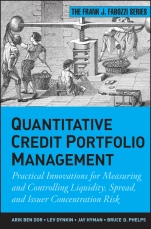
Quantitative Credit Portfolio Management: Practical Innovations for Measuring and Controlling Liquidity, Spread, and Issuer Concentration Risk
ISBN 9781118117699
Autor: Arik Ben Dor, Lev Dynkin, Jay Hyman, Bruce D. Phelps
Wydawca: Wiley
Dostępność: 3-6 tygodni
Cena: 502,95 zł
Przed złożeniem zamówienia prosimy o kontakt mailowy celem potwierdzenia ceny.
ISBN13: |
9781118117699 |
ISBN10: |
1118117697 |
Autor: |
Arik Ben Dor, Lev Dynkin, Jay Hyman, Bruce D. Phelps |
Oprawa: |
Hardback |
Rok Wydania: |
2012-01-20 |
Ilość stron: |
416 |
Wymiary: |
238x161 |
Tematy: |
KF |
"For many years, this quantitative research team has offered new insights and helpful support to many institutional investors such as APG. By applying these concepts to the portfolio construction process, we have gained more confidence in the robustness of our portfolios." Eduard van Gelderen, CIO, Capital Markets, APG Asset Management, Netherlands "A must–read for all future and current credit portfolio managers. The book is a comprehensive review of the quantitative tools available to better manage the risks within a credit portfolio and combines the right amount of statistical work with practical answers to questions confronting credit managers." Curtis Ishii, Head of Global Fixed Income, California Public Employees′ Retirement System "The practical orientation of this book on institutional credit portfolio management makes it particularly useful for practitioners. All key areas of interest are well covered." Lim Chow Kiat, President, GIC Asset Management, Singapore "This book provides enormous insights for beginning practitioners looking to learn the most advanced credit management techniques. For experienced professionals, it provides a great update and advancement.The book is a must–read for all active players in credit markets given the changes after the recent crisis." Jan Straatman, Global CIO, ING Investment Management, Netherlands "Lev Dynkin and his team are the highest authority on fixed income portfolio analytics. Their thoughtful and rigorous quantitative research, unparalleled access to high quality data, and cooperative approach with leading fixed income managers sets them apart." Carolyn Gibbs and Rich King, Co–Heads of U.S. Taxable Fixed Income and Global High Income, Invesco "Quantitative Credit Portfolio Management is a one of a kind book addressing everyday issues and topics submitted by investors and practitioners to the QPS team. Practical instructions advocated in this book are best practices that we already rely on in our credit investment process for superior active management." Ibrahima Kobar, CIO, Fixed Income, Natixis Asset Management, France "The authors ... industry leaders from Barclays Capital ... have done it again! ... They not only delve into improved risk management metrics, but also reveal helpful strategies to improve both passive and active fund management." Ken Volpert, CFA, Head of Taxable Bond Group, Vanguard "This book tackles the Big CCREDIT. Institutional bond investors have long known to go to Lev and his team with their thorniest and most complex portfolio problems. Here, they lay out a very straightforward exposition of best practices in credit portfolio management." Ken Leech, former CIO, Western Asset Management Company A more complete list of endorsements may be found inside the book.
Foreword xvii Introduction xix Notes on Terminology xxvii PART ONE Measuring the Market Risks of Corporate Bonds CHAPTER 1 Measuring Spread Sensitivity of Corporate Bonds 3 Analysis of Corporate Bond Spread Behavior 5 A New Measure of Excess Return Volatility 20 Refinements and Further Tests 25 Summary and Implications for Portfolio Managers 30 Appendix: Data Description 34 CHAPTER 2 DTS for Credit Default Swaps 39 Estimation Methodology 40 Empirical Analysis of CDS Spreads 41 Appendix: Quasi–Maximum Likelihood Approach 51 CHAPTER 3 DTS for Sovereign Bonds 55 Spread Dynamics of Emerging Markets Debt 55 DTS for Developed Markets Sovereigns: The Case of Euro Treasuries 59 Managing Sovereign Risk Using DTS 66 CHAPTER 4 A Theoretical Basis for DTS 73 The Merton Model: A Zero–Coupon Bond 74 Dependence of Slope on Maturity 77 CHAPTER 5 Quantifying the Liquidity of Corporate Bonds 81 Liquidity Cost Scores (LCS) for U.S. Credit Bonds 82 Liquidity Cost Scores: Methodology 88 LCS for Trader–Quoted Bonds 92 LCS for Non–Quoted Bonds: The LCS Model 96 Testing the LCS Model: Out–of–Sample Tests 102 LCS for Pan–European Credit Bonds 113 Using LCS in Portfolio Construction 123 Trade Efficiency Scores (TES) 129 CHAPTER 6 Joint Dynamics of Default and Liquidity Risk 133 Spread Decomposition Methodology 138 What Drives OAS Differences across Bonds? 139 How Has the Composition of OAS Changed? 141 Spread Decomposition Using an Alternative Measure of Expected Default Losses 145 High–Yield Spread Decomposition 147 Applications of Spread Decomposition 147 Alternative Spread Decomposition Models 150 Appendix 152 CHAPTER 7 Empirical versus Nominal Durations of Corporate Bonds 157 Empirical Duration: Theory and Evidence 159 Segmentation in Credit Markets 173 Potential Stale Pricing and Its Effect on Hedge Ratios 173 Hedge Ratios Following Rating Changes: An Event Study Approach 179 Using Empirical Duration in Portfolio Management Applications 186 PART TWO Managing Corporate Bond Portfolios CHAPTER 8 Hedging the Market Risk in Pairs Trades 197 Data and Hedging Simulation Methodology 199 Analysis of Hedging Results 200 Appendix: Hedging Pair–Wise Trades with Skill 208 CHAPTER 9 Positioning along the Credit Curve 213 Data and Methodology 214 Empirical Analysis 217 CHAPTER 10 The 2007–2009 Credit Crisis 229 Spread Behavior during the Credit Crisis 229 Applications of DTS 234 Advantages of DTS in Risk Model Construction 244 CHAPTER 11 A Framework for Diversification of Issuer Risk 249 Downgrade Risk before and after the Credit Crisis 250 Using DTS to Set Position–Size Ratios 257 Comparing and Combining the Two Approaches to Issuer Limits 260 CHAPTER 12 How Best to Capture the Spread Premium of Corporate Bonds? 265 The Credit Spread Premium 266 Measuring the Credit Spread Premium for the IG Corporate Index 266 Alternative Corporate Indexes 279 Capturing Spread Premium: Adopting an Alternative Corporate Benchmark 288 CHAPTER 13 Risk and Performance of Fallen Angels 295 Data and Methodology 298 Performance Dynamics around Rating Events 303 Fallen Angels as an Asset Class 319 CHAPTER 14 Obtaining Credit Exposure Using Cash and Synthetic Replication 337 Cash Credit Replication (TCX) 338 Synthetic Replication of Cash Indexes 351 Credit RBIs 358 References 367 Index 371
ARIK BEN–DOR, PhD , is a Director and Senior Analyst in the Quantitative Portfolio Strategy (QPS) Group at Barclays Capital Research. He joined the group in 2004 after completing a PhD in finance from the Kellogg School of Management. Ben–Dor has published extensively in the Journal of Portfolio Management, Journal of Fixed Income, and Journal of Alternative Investments on innovative approaches to managing risk in credit portfolios and on performance analysis and optimization of hedge fund portfolios. LEV DYNKIN, PhD , is the founder and Global Head of the Quantitative Portfolio Strategy Group at Barclays Capital Research. Dynkin and the QPS group joined Barclays Capital in 2008 from Lehman Brothers where the group was a part of fixed income research since 1987—one of the longest tenures for an investor–focused research group on Wall Street. QPS was rated first in Quantitative Portfolio Research by Institutional Investor magazine for all three years that this category was included in their fixed income survey. Dynkin is a member of the editorial advisory board of the Journal of Portfolio Management . He coauthored, with other members of QPS (including Hyman and Phelps), Quantitative Management of Bond Portfolios . JAY HYMAN, PhD, is a Managing Director in the Quantitative Portfolio Strategy Group at Barclays Capital Research. He joined the group in 1991 and has since worked on issues of risk budgeting, cost of investment constraints, improved measures of risk sensitivities, and optimal risk diversification for portfolios spanning all fixed income asset classes. Hyman helped develop a number of innovative measures that have been broadly adopted by portfolio managers and that have changed standard industry practice. BRUCE D. PHELPS, PhD, is a Managing Director in the Quantitative Portfolio Strategy Group at Barclays Capital Research, which he joined in 2000. Prior to that, he was an institutional portfolio manager and head of fixed income at Ark Asset Management. Phelps was also senior economist at the Chicago Board of Trade, where he designed derivative contracts and electronic trading systems, and an international credit officer and foreign exchange trader at Wells Fargo Bank. Phelps is a member of the editorial board of the Financial Analysts Journal .
Koszyk
Książek w koszyku: 0 szt.
Wartość zakupów: 0,00 zł
Informacje


Kontakt
Gambit
Centrum Oprogramowania
i Szkoleń Sp. z o.o.
Al. Pokoju 29b/22-24
31-564 Kraków
Siedziba Księgarni
ul. Kordylewskiego 1
31-542 Kraków
+48 12 410 5991
+48 12 410 5987
+48 12 410 5989
Subskrypcje
Administratorem danych osobowych jest firma Gambit COiS Sp. z o.o. Na podany adres będzie wysyłany wyłącznie biuletyn informacyjny.
Autoryzacja płatności

Informacje na temat autoryzacji płatności poprzez PayU.

© Copyright 2012: GAMBIT COiS Sp. z o.o. Wszelkie prawa zastrzeżone.
Projekt i wykonanie: Alchemia Studio Reklamy