


Wydawcy
Katalog tematyczny
- Archeologia (109)
- Ekonomia, finanse, business (13704)
- Filozofia (1445)
- Historia (3040)
- Języki i językoznawstwo (2356)
- Lifestyle, hobby i rozrywka (475)
- Medycyna (9704)
- Nauki humanistyczne (4)
- Nauki o Ziemi i środowisku (2638)
- Nauki ścisłe (20412)
- Astronomia (294)
- Biologia (5119)
- Chemia (6540)
- Chemia analityczna (361)
- Chemia fizyczna (346)
- Chemia nieorganiczna (137)
- Chemia organiczna (535)
- Krystalografia (27)
- Minerologia (46)
- Fizyka (3309)
- Matematyka (4574)
- Nauki ścisłe, ogólnie (503)
- Nauki społeczne (8486)
- Nauki techniczne (13450)
- Prawo (1696)
- Publikacje informacyjne i interdyscyplinarne (1288)
- Religia i wierzenia (917)
- Technika komputerowa (4067)
- Zdrowie, relacje międzyludzkie i rozwój osobisty (657)





Informacje szczegółowe o książce
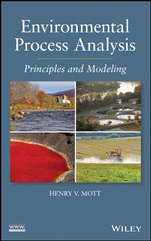
Environmental Process Analysis: Principles and Modeling
ISBN 9781118115015
Autor: Henry V. Mott
Wydawca: Wiley
Dostępność: 3-6 tygodni
Cena: 660,45 zł
Przed złożeniem zamówienia prosimy o kontakt mailowy celem potwierdzenia ceny.
ISBN13: |
9781118115015 |
ISBN10: |
1118115015 |
Autor: |
Henry V. Mott |
Oprawa: |
Hardback |
Rok Wydania: |
2014-01-28 |
Ilość stron: |
632 |
Wymiary: |
241x162 |
Tematy: |
PN |
Enables readers to apply core principles of environmental engineering to analyze environmental systems Environmental Process Analysis takes a unique approach, applying mathematical and numerical process modeling within the context of both natural and engineered environmental systems. Readers master core principles of natural and engineering science such as chemical equilibria, reaction kinetics, ideal and non-ideal reactor theory, and mass accounting by performing practical real-world analyses. As they progress through the text, readers will have the opportunity to analyze a broad range of environmental processes and systems, including water and wastewater treatment, surface mining, agriculture, landfills, subsurface saturated and unsaturated porous media, aqueous and marine sediments, surface waters, and atmospheric moisture. The text begins with an examination of water, core definitions, and a review of important chemical principles. It then progressively builds upon this base with applications of Henry's law, acid/base equilibria, and reactions in ideal reactors. Finally, the text addresses reactions in non-ideal reactors and advanced applications of acid/base equilibria, complexation and solubility/dissolution equilibria, and oxidation/reduction equilibria. Several tools are provided to fully engage readers in mastering new concepts and then applying them in practice, including: Detailed examples that demonstrate the application of concepts and principles Problems at the end of each chapter challenging readers to apply their newfound knowledge to analyze environmental processes and systems MathCAD worksheets that provide a powerful platform for constructing process models Environmental Process Analysis serves as a bridge between introductory environmental engineering textbooks and hands-on environmental engineering practice. By learning how to mathematically and numerically model environmental processes and systems, readers will also come to better understand the underlying connections among the various models, concepts, and systems.
Chapter 1 Introductory Remarks 1.1 Perspective 1.2 Organization and Objectives 1.3 Approach Chapter 2 Water 2.1 Perspective 2.2 Important Properties of Water Chapter 3 Concentration Units for Gases, Liquids and Solids . 3.1 Selected Concentration Units. 3.2 The Ideal Gas Law and Gas Phase Concentration Units. 3.3 Aqueous Concentration Units. 3.4 Applications of Volume Fraction Units. Problems Chapter 4 The Law of Mass Action and Chemical Equilibria . 4.1 Perspective 4.2 The Law of Mass Action. 4.3 Gas/Water Distributions. 4.4 Acid/Base Systems. 4.5 Metal Complexation Systems. 4.6 Water/Solid Systems (Solubility/Dissolution) 4.7 Oxidation/Reduction Half Reactions. Chapter 5 Air/Water Distribution: Henry’s Law .. 5.1 Perspective 5.2 Henry’s Law Constants. 5.3 Applications of Henry’s Law.. Problems Chapter 6 Acid/Base Component Distributions . 6.1 Perspective 6.2 Proton Abundance in Aqueous Solutions – pH and the Ion Product of Water 6.3 Acid Dissociation Constants. 6.4 Mole Accounting Relations. 6.5 Combination of Mole Balance and Acid/Base Equilibria. 6.6 Alkalinity, Acidity and the Carbonate System.. 6.7 Applications of Acid/Base Principles in Selected Environmental Contexts. Problems Chapter 7 Mass Balance, Ideal Reactors, and Mixing . 7.1 Perspective 7.2 The Mass Balance. 7.3 Residence Time Distribution (RTD) Analyses. 7.4 Exit Responses for Ideal Reactors. 7.5 Modeling of Mixing in Ideal CMFRs. Problems Chapter 8 Reactions in Ideal Reactors . 8.1 Perspective 8.2 Chemical Stoichiometry and Mass/Volume Relations. 8.3 Reactions in Ideal Reactors. 8.4 Applications of Reactions in Ideal Reactors. 8.5 Interfacial Mass Transfer in Ideal Reactors. Problems Chapter 9 Reactions in Non–ideal Reactors . 9.1 Perspective 9.2 Exit Concentration versus Time Traces. 9.3 Residence Time Distribution (RTD) Density. 9.4 Cumulative Residence Time Distributions. 9.5 Characterization of RTD Distributions. 9.6 Models for Addressing Longitudinal Dispersion in Reactors. 9.7 Modeling Reactions in CMFRs in Series (TiS) Teactors. 9.8 Modeling Reactions with the Plug–Flow with Dispersion (PFD) Model 9.9 Modeling Reactions using the Segregated Flow (SF) Model 9.10 Applications of Non–ideal Reactor Models. 9.11 Considerations for Analyses of Spatially Variant Processes. 9.12 Modeling Utilization and Growth in PFR–like Reactors using TiS and SF. Chapter 10 Acids and Bases: Advanced Principles . 10.1 Perspective 10.2 The Activity Coefficient 10.3 Temperature Dependence of Equilibrium Constants. 10.4 Non–ideal Conjugate Acid/Conjugate Base Distributions. 10.5 The Proton Balance (Proton Condition) 10.6 Analyses of Solutions Prepared by Addition of Acids, Bases and Salts to Water 10.7 Mixing of Aqueous Solutions. 10.8 Activity versus Concentration for Non–Electrolytes. Problems Chapter 11 Metal Complexation and Solubility . 11.1 Perspective 11.2 Hydration of Metal Ions. 11.3 Cumulative Formation Constants. 11.4 Formation Equilibria for Solids. 11.5 Speciation of Metals in Aqueous Solutions Containing Ligands. 11.6 Metal Hydroxide Solubility. 11.7 Solubility of Metal Carbonates. 11.8 Solubility of Other Metal–Ligand Solids. Problems Chapter 12 Oxidation and Reduction . 12.1 Perspective 12.2 Redox Half Reactions. 12.3 The Nernst Equation. 12.4 Electron availability in environmental systems. Problems Appendices References
HENRY V. MOTT, PhD, Professor Emeritus of Civil and Environmental Engineering of the South Dakota School of Mines and Technology, is now a consultant in private practice and part-time instructor for the Civil Engineering Department of the University of Minnesota. Dr. Mott has developed and delivered a broad range of undergraduate and graduate courses, drawing upon his engineering practice experience to develop opportunities for students to apply fundamental principles in problem solving and design. His research has focused on contaminant fate and transport, physical/chemical/microbial processes, and environmental chemistry.
Koszyk
Książek w koszyku: 0 szt.
Wartość zakupów: 0,00 zł
Informacje


Kontakt
Gambit
Centrum Oprogramowania
i Szkoleń Sp. z o.o.
Al. Pokoju 29b/22-24
31-564 Kraków
Siedziba Księgarni
ul. Kordylewskiego 1
31-542 Kraków
+48 12 410 5991
+48 12 410 5987
+48 12 410 5989
Subskrypcje
Administratorem danych osobowych jest firma Gambit COiS Sp. z o.o. Na podany adres będzie wysyłany wyłącznie biuletyn informacyjny.
Autoryzacja płatności

Informacje na temat autoryzacji płatności poprzez PayU.

© Copyright 2012: GAMBIT COiS Sp. z o.o. Wszelkie prawa zastrzeżone.
Projekt i wykonanie: Alchemia Studio Reklamy