


Wydawcy
Katalog tematyczny
- Archeologia (109)
- Ekonomia, finanse, business (13704)
- Filozofia (1445)
- Historia (3040)
- Języki i językoznawstwo (2356)
- Lifestyle, hobby i rozrywka (475)
- Medycyna (9704)
- Nauki humanistyczne (4)
- Nauki o Ziemi i środowisku (2638)
- Nauki ścisłe (20412)
- Astronomia (294)
- Biologia (5119)
- Chemia (6540)
- Chemia analityczna (361)
- Chemia fizyczna (346)
- Chemia nieorganiczna (137)
- Chemia organiczna (535)
- Krystalografia (27)
- Minerologia (46)
- Fizyka (3309)
- Matematyka (4574)
- Nauki ścisłe, ogólnie (503)
- Nauki społeczne (8486)
- Nauki techniczne (13450)
- Prawo (1696)
- Publikacje informacyjne i interdyscyplinarne (1288)
- Religia i wierzenia (917)
- Technika komputerowa (4067)
- Zdrowie, relacje międzyludzkie i rozwój osobisty (657)





Informacje szczegółowe o książce
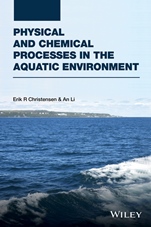
Physical and Chemical Processes in the Aquatic Environment
ISBN 9781118111765
Autor: Erik R. Christensen, An Li
Wydawca: Wiley
Dostępność: 3-6 tygodni
Cena: 530,25 zł
Przed złożeniem zamówienia prosimy o kontakt mailowy celem potwierdzenia ceny.
ISBN13: |
9781118111765 |
ISBN10: |
1118111761 |
Autor: |
Erik R. Christensen, An Li |
Oprawa: |
Hardback |
Rok Wydania: |
2014-10-17 |
Ilość stron: |
440 |
Wymiary: |
244x158 |
Tematy: |
PN |
There is need in environmental research for a book on fresh waters including rivers and lakes. Compared with other books on the topic, this book has a unique outline in that it follows pollution from sources to impact. Included in the text is the treatment of various tracers, ranging from pathogens to stable isotopes of elements and providing a comprehensive discussion which is lacking in many other books on pollution control of natural waters. Geophysical processes are discussed emphasizing mixing of water, interaction between water and the atmosphere, and sedimentation processes. Important geochemistry processes occurring in natural waters are described as are the processes specific to nutrients, organic pollutants, metals, and pathogens in subsequent chapters. Each of these chapters includes an introduction on the selected groups, followed by the physicochemical properties which are the most relevant to their behavior in natural waters, and the theories and models to describe their speciation, transport and transformation. The book also includes the most up to date information including a discussion on emerging pollutants such as brominated and phosphate flame retardants, perflurochemicals, and pharmaceutical and personal care products. Due to its importance an ecotoxicology chapter has been included featuring molecular biological methods, nanoparticles, and comparison of the basis of biotic ligand model with the Weibull dose–response model. Finally, the last chapter briefly summarizes the regulations on ambient water quality.
PREFACE 1. TRANSPORT OF POLLUTANTS 1.1 Introduction 1.2 Advection Diffusion Equation with Reaction 1.3 Steady–State Mixing in Estuaries 1.4 Time–Dependent Mixing in Rivers and Soil Systems 1.5 Vertical Mixing 1.6 Hydrodynamic Models 1.7 Groundwater Plumes 1.8 Sediment Mixing 1.9 REFERENCES 2. SEDIMENTATION PROCESSES 2.1 Introduction 2.2 210 Pb dating of sediments 2.3 137 Cs and 239+240 Pu dating of sediments 2.4 Dated Records of Metals and Organic Pollutants 2.5 Deconvolution of Sedimentary Records 2.6 Chemical and Biological Degradation 2.7 Sediments as a Source of Pollutants 2.8 REFERENCES 3. ATMOSPHERIC INTERACTIONS 3.1 Introduction 3.2 Atmospheric Deposition Processes 3.3 Deposition and Gas Exchange of Organic Contaminants 3.4 Marine and Freshwater Microlayers 3.5 Case Study: Emission of VOCs from Wastewater Treatment Plants 3.6 The Fugacity Model 3.7 REFERENCES 4. WATER CHEMISTRY 4.1 Introduction 4.2 Carbonate and Alkalinity 4.3 Sulfur Chemistry 4.4 Impact of Global Warming on Natural Waters 4.5 REFERENCES 5. NUTRIENTS 5.1 Introduction 5.2 Input of Nutrients and Acidity 5.3 Eutrophication 5.4 Nitrogen 5.5 Phosphorus 5.6 Vitamins and Trace Metals 5.7 REFERENCES 6. METALS 6.1 Introduction 6.2 Trends, Measurement, and Toxicity 6.3 Sources and Reactions of Metals in Water 6.4 Behavior of Selected Metals in Water 6.5 Zero Valent Iron in Remediation of Contaminated Water 6.6 REFERENCES 7. ORGANIC POLLUTANTS 7.1 Introduction 7.2 Important Organic Pollutant Groups 7.3 of Organic Molecules 7.4 Basic Physicochemical Properties 7.5 Distribution of Organic Chemicals in Aquatic Environment 7.6 Transformations in Water 7.7 REFERENCES 8. PATHOGENS 8.1 Introduction 8.2 Bacteria 8.3 Protozoa 8.4 Molecular techniques for detection of pathogens 8.5 Pathogen Indicator Organisms and Surrogates 8.6 Bacterial Contamination of Recreational Waters 8.7 Pathogen Removal in Water and Wastewater Treatment 8.8 REFERENCES 9. TRACERS 9.1 Introduction 9.2 Natural vs. Artificial Tracers 9.3 Radioisotope 9.4 Stable isotopes 9.5 Applications of Tracer Technology 9.6 Chemical Mass Balance Modeling 9.7 Factor Analysis 9.8 REFERENCES 10. ECOTOXICOLOGY 10.1 Introduction 10.2 Bioassays 10.3 Molecular Biology Tools 10.4 Human Health 10.5 Endocrine Disrupting Chemicals 10.6 Types of Toxicity 10.7 Models and Toxicity Tests 10.8 Quality Criteria 10.9 REFERENCES 11. AMBIENT WATER QUALITY CRITERIA 11.1 Introduction 11.2 A Primer on Ambient Water Quality Regulations 11.3 Current U.S. Water Quality Criteria 11.4 Water Quality Data Bases 11.5 REFERENCES
Erik R. Christensen is a UWM Distinguished Professor Emeritus in the College of Engineering and Applied Science of the University of Wisconsin–Milwaukee. In 2008 he was nominated by UWM for Wisconsin Distinguished Professorship. He has published >80 journal articles, one book chapter, and edited a book: Contaminated Aquatic Sediments (1993), based on an international conference. He is an associate editor and frequent reviewer for many journals. An Li is a professor of environmental chemistry in the School of Public Health at the University of Illinois at Chicago. She has written four book chapters, edited one book: Persistent Organic Pollutants in Asia (2007) and produced numerous journal articles as well as providing book and journal reviews.
Koszyk
Książek w koszyku: 0 szt.
Wartość zakupów: 0,00 zł
Informacje


Kontakt
Gambit
Centrum Oprogramowania
i Szkoleń Sp. z o.o.
Al. Pokoju 29b/22-24
31-564 Kraków
Siedziba Księgarni
ul. Kordylewskiego 1
31-542 Kraków
+48 12 410 5991
+48 12 410 5987
+48 12 410 5989
Subskrypcje
Administratorem danych osobowych jest firma Gambit COiS Sp. z o.o. Na podany adres będzie wysyłany wyłącznie biuletyn informacyjny.
Autoryzacja płatności

Informacje na temat autoryzacji płatności poprzez PayU.

© Copyright 2012: GAMBIT COiS Sp. z o.o. Wszelkie prawa zastrzeżone.
Projekt i wykonanie: Alchemia Studio Reklamy