


Wydawcy
Katalog tematyczny
- Archeologia (109)
- Ekonomia, finanse, business (13704)
- Filozofia (1445)
- Historia (3040)
- Języki i językoznawstwo (2356)
- Lifestyle, hobby i rozrywka (475)
- Medycyna (9704)
- Nauki humanistyczne (4)
- Nauki o Ziemi i środowisku (2638)
- Nauki ścisłe (20412)
- Nauki społeczne (8486)
- Nauki techniczne (13450)
- Prawo (1696)
- Publikacje informacyjne i interdyscyplinarne (1288)
- Religia i wierzenia (917)
- Technika komputerowa (4067)
- Zdrowie, relacje międzyludzkie i rozwój osobisty (657)





Informacje szczegółowe o książce
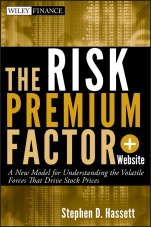
The Risk Premium Factor: A New Model for Understanding the Volatile Forces that Drive Stock Prices + Website
ISBN 9781118099056
Autor: Stephen D. Hassett
Wydawca: Wiley
Dostępność: 3-6 tygodni
Cena: 394,80 zł
Przed złożeniem zamówienia prosimy o kontakt mailowy celem potwierdzenia ceny.
ISBN13: |
9781118099056 |
ISBN10: |
1118099052 |
Autor: |
Stephen D. Hassett |
Oprawa: |
Hardback |
Rok Wydania: |
2011-10-28 |
Ilość stron: |
208 |
Wymiary: |
233x159 |
Tematy: |
KF |
Praise for THE RISK PREMIUM FACTOR
"Stephen Hassett is onto something. His notion that the risk premium on stocks is not constant, but varies with the risk free rate, helps to explain an enduring puzzle: why actual stock prices vary from the estimates that analysts′ models imply. This book will offer fresh and provocative insight to careful students of the stock market. Read it and grow wiser." Robert F. Bruner, Dean and Charles C. Abbott Professor of Business Administration, Darden Graduate School of Business, University of Virginia
"The equity risk premium is a key input to the cost of capital. During periods of economic stability, practitioners typically used an estimate of the long–term average equity risk premium, typically adjusting the estimate once a year. But all that changed as the crisis in late 2008 unfolded. In these uncertain economic times, we have found the Risk Premium Factor Valuation Model to be a powerful tool for adjusting our equity risk premium estimate as we move through the rapidly changing business cycle. We recommend that practitioners use the Risk Premium Factor Valuation Model to better understand the economic interrelationships that drive the pricing of the broad stock market and the equity risk premium." Roger J. Grabowski, Managing Director, Duff & Phelps LLC and coauthor of Cost of Capital: Applications and Examples
"Understanding and accurately estimating the cost of capital is fundamental to making decisions that create value. Stephen Hassett′s Risk Premium Factor Valuation Model provides an easy–to–understand approach to estimating the cost of equity capital that is accessible and insightful to those with a basic understanding of finance and expert practitioners alike. Further, it demystifies the drivers of market valuation and provides a compelling and often under–appreciated linkage between growth and stock price. It will enrich the perspective of any investor or manager." David M. Kostel, Managing Director and Co–Head of Healthcare Mergers & Acquisitions, Credit Suisse
List of Figures xi
List of Tables xiii
Preface xv
Evolution of a Theory xvi
Overview xvii
How This Book Is Structured xxi
As You Begin xxii
Acknowledgments xxiii
About the Author xxv
Chapter 1 Understanding the Simplicity of Valuation 1
Rates, Compounding and Time Value 3
Why Time Value Matters for the Stock Market 3
Valuing a Perpetuity 4
Constant Growth Equation: The Key to Understanding the Stock Market 5
Not the First to Try This 6
Why Growth Rate and Cost of Capital Matter 9
P/E Ratio Expansion and Contraction 10
CAPM, Risk Premium and Valuation 11
Equity Risk Premium 11
Impact of Risk Premium on Valuation 13
Chapter Recap 14
PART ONE Exploring the Risk Premium Factor Valuation Model
Chapter 2 The Risk Premium Factor Valuation Model 18
The RPF Model is Simple, but Does it Work? 21
Estimating the Risk Premium Factor (RPF) 24
Potential Causes for Shifts in the RPF 27
Potential Weaknesses in RPF Theory and Methodology 28
Adjusted Risk Free Rate 29
Comparison to the Fed Model 29
Chapter Recap 31
Chapter 3 Solving the Equity Premium Puzzle: The Link to Loss Aversion 33
Loss Aversion 34
Loss Aversion and Corporate Decision Making 34
Attempts to Solve the Equity Premium Puzzle 35
Impact of Inflation on Value 39
Back to Loss Aversion 39
Our Reptilian Brain 40
Chapter Recap 42
Chapter 4 The RPF Model and Major Market Events from 1981 to 2009 43
Efficient Market Hypothesis 44
How the RPF Valuation Model Explains Black Monday 45
2000 "Dot Com" Bubble: RPF Model Suggests Significant Bubble for the S&P 500 47
How the RPF Valuation Model Explains 2008–2009 Meltdown and Recovery 49
Markets Mostly Efficient and Rational, But Prone to Mistakes 52
Chapter Recap 53
PART TWO Applying the Risk Premium Factor Valuation Model
Chapter 5 Application to Market Valuation 57
Beware of Interest Rates 58
Example: Application to the Market in Late September 2009 59
Why the Source of Growth Matters 61
Chapter Recap 63
Chapter 6 Risk Adjusted Real Implied Growth Rate (RIGR) 65
Analyzing Individual Companies with RIGR 66
RIGR Analysis of Apple and Google Pre–Earnings Announcement 71
Chapter Recap 75
Chapter 7 Valuing an Acquisition or Project 77
Brief Introduction to Valuing an Acquisition or Project 78
Translating Your World View into Numbers 79
Setting the Cost of Capital 84
Example: Utility Acquiring a Risky Asset 86
Selecting the Investment Forecast Time Horizon 87
The All Important Terminal Value 89
Chapter Recap 96
Chapter 8 Case Study 1: Valuation of a High–Growth Business 99
Calculating Enterprise Value and Stock Price 107
Scenario Analysis 107
Chapter Recap 108
Chapter 9 Case Study 2: Valuation of a Cyclical Business 109
Chapter Recap 118
Chapter 10 Using the RPF Model to Translate Punditry 119
Read Carefully Then Analyze 119
What Have I Got to Lose? 120
Beware of Oversimplification 122
Confusing Headlines and Misguided Blame 123
Almost Nailed It 124
Graham and Dodd 125
The Wrong Discussion 127
Dumb Money and Bubbles 127
The Right Discussion 128
Chapter Recap 129
Chapter 11 Using the RPF Model for Investment and Business Strategy 131
Estimating Fair Value: How to Identify and Exploit Bubbles 132
Beware of RPF Shifts 137
Investing in Individual Companies 137
Reported Earnings Can Be Misleading 138
How to Apply the RPF Model to Day–to–Day Business Decisions 140
Capital Structure and Risk Impact Cost of Capital 141
Opportunistic Adjustments to Corporate Capital Structure 141
Creating a Sense of Urgency 142
Avoiding Value Destruction 143
Value Creation 145
Key Merger–and–Acquisition Valuation Concepts 147
Inflation Is the Enemy of Value 147
Final Thoughts 147
Appendix A Mobile Apps: The Wave of the Past 149
Appendix B Technology on the Horizon: What if Moore′s Law Continues for Another 40 Years? 152
Appendix C A Simple and Powerful Model Suggests the S&P 500 Is Greatly Underpriced 156
Appendix D S&P Index Still Undervalued 160
Appendix E 30 Percent Value Gap in S&P 500 Closed by Rise in Treasury Yields, Price 163
Appendix F Making a Case for Salesforce.com Valuation 165
Glossary 169
Notes 171
About the Companion Website 177
Index 179
STEPHEN D. HASSETT is a corporate development executive with Sage North America, a subsidiary of The Sage Group plc, a leading global supplier of business management software and services. He has published in the Journal of Applied Corporate Finance and is a regular contributing author for the Seeking Alpha investment website. Previously, he was an executive at the Weather Channel, software entrepreneur and consultant with Stern Stewart & Co. He holds an MBA from the Darden School of Business at the University of Virginia.
Koszyk
Książek w koszyku: 0 szt.
Wartość zakupów: 0,00 zł
Informacje


Kontakt
Gambit
Centrum Oprogramowania
i Szkoleń Sp. z o.o.
Al. Pokoju 29b/22-24
31-564 Kraków
Siedziba Księgarni
ul. Kordylewskiego 1
31-542 Kraków
+48 12 410 5991
+48 12 410 5987
+48 12 410 5989
Subskrypcje
Administratorem danych osobowych jest firma Gambit COiS Sp. z o.o. Na podany adres będzie wysyłany wyłącznie biuletyn informacyjny.
Autoryzacja płatności

Informacje na temat autoryzacji płatności poprzez PayU.

© Copyright 2012: GAMBIT COiS Sp. z o.o. Wszelkie prawa zastrzeżone.
Projekt i wykonanie: Alchemia Studio Reklamy