


Wydawcy
Katalog tematyczny
- Archeologia (109)
- Ekonomia, finanse, business (13704)
- Filozofia (1445)
- Historia (3040)
- Języki i językoznawstwo (2356)
- Lifestyle, hobby i rozrywka (475)
- Medycyna (9704)
- Nauki humanistyczne (4)
- Nauki o Ziemi i środowisku (2638)
- Nauki ścisłe (20412)
- Astronomia (294)
- Biologia (5119)
- Chemia (6540)
- Chemia analityczna (361)
- Chemia fizyczna (346)
- Chemia nieorganiczna (137)
- Chemia organiczna (535)
- Krystalografia (27)
- Minerologia (46)
- Fizyka (3309)
- Matematyka (4574)
- Nauki ścisłe, ogólnie (503)
- Nauki społeczne (8486)
- Nauki techniczne (13450)
- Prawo (1696)
- Publikacje informacyjne i interdyscyplinarne (1288)
- Religia i wierzenia (917)
- Technika komputerowa (4067)
- Zdrowie, relacje międzyludzkie i rozwój osobisty (657)





Informacje szczegółowe o książce
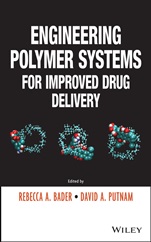
Engineering Polymer Systems for Improved Drug Delivery
ISBN 9781118098479
Autor: Rebecca A. Bader, David A. Putnam
Wydawca: Wiley
Dostępność: 3-6 tygodni
Cena: 611,10 zł
Przed złożeniem zamówienia prosimy o kontakt mailowy celem potwierdzenia ceny.
ISBN13: |
9781118098479 |
ISBN10: |
1118098471 |
Autor: |
Rebecca A. Bader, David A. Putnam |
Oprawa: |
Hardback |
Rok Wydania: |
2014-02-11 |
Ilość stron: |
496 |
Wymiary: |
237x165 |
Tematy: |
PN |
Reviews new and emerging polymer systems that improve the accuracy of drug delivery High-throughput technology has dramatically increased the pace of new drug development; however, negative side effects remain a significant problem in the field, hampering our ability to bring safe and effective drugs to market. Drawing from the latest advances in pharmaceutical science and polymer engineering, this text explains the role of polymers in the rational design and application of drug delivery systems that increase the efficacy and reduce the toxicity of therapeutics. As a result, readers will learn how to maximize the potential of therapeutics, including those previously eliminated as viable candidates due to undesirable interactions. Engineering Polymer Systems for Improved Drug Delivery features contributions from a team of leading experts and pioneers in the field. The text begins with an exploration of the fundamentals and challenges of drug delivery, setting a solid foundation for the text's core topics: Injectable polymeric drug delivery systems Implantable polymeric drug delivery systems Oral polymeric drug delivery systems Advanced polymeric drug delivery Each chapter covers the basics to engage novice investigators and students as well as more advanced topics to support experienced researchers. Worked examples in every chapter help readers better understand the ins and outs of designing successful polymeric drug delivery systems. There are also practice problems that challenge readers to apply their newfound knowledge. With its systematic and logical approach, Engineering Polymer Systems for Improved Drug Delivery is recommended both as a textbook for courses in pharmaceutical science and drug delivery as well as a reference for professionals in drug delivery.
Part I: Introduction Chapter 1 Fundamentals of Drug Delivery 1–1 Rebecca Bader 1.1 Introduction: History & Future of Drug Delivery 1–1 1.2 Terminology 1–4 1.3 Basic Pharmacokinetics 1–11 1.4 Basic Pharmacodynamics 1–17 1.5 Mass Transfer 1–19 1.6 Key Points 1–32 1.7 Homework Problems 1–32 Chapter 2 Challenges of Drug Delivery 2–1 Patricia R. Wardwell and Rebecca Bader 2.1 Introduction 2–1 2.2 History and Challenges of Drug Delivery 2–2 2.3 Physical Barriers 2–4 2.4 Metabolic and Chemical Concerns 2–14 2.5 Physical Properties of Therapeutics 2–18 2.6 Polymer Carriers as a Solution to Challenges 2–21 2.7 Key Points 2–27 2.8 Homework Problems 2–28 Part II: Injectable Polymeric Drug Delivery Systems Chapter 3 Polymer–Drug Conjugates 3–1 Cristina Fante and Francesca Greco 3.1 Introduction 3–1 3.2 Historical perspective 3–2 3.3 Polymer–drug conjugates: biological rationale 3–4 3.4 Structural features of polymer–drug conjugates 3–10 3.5 Making a polymer–drug conjugate 3–23 3.6 Current challenges and future perspectives 3–32 3.7 Key Points 3–40 3.8 Worked Examples 3–41 3.9 Homework Problems 3–42 Chapter 4 Polymeric Microparticles 4–1 Colleen E. Clark and Noelle K. Comolli 4.1 Introduction 4–1 4.2 The rationale for microparticles 4–2 4.3 Defining the design criteria 4–7 4.4 Polymer selection 4–10 4.5 Microparticle synthesis 4–16 4.6 Microparticle characterization methods 4–25 4.7 Drug release from microparticles 4–33 4.8 Microparticle design examples 4–55 4.9 Key Points 4–56 4.10 Worked Example 4–58 4.11 Homework Problems 4–60 Chapter 5 Polymeric Nanoparticles 5–1 Andrew L. Vasilakes, Thomas D. Dziubla, and Paritosh P. Wattamwar 5.1 Introduction 5–1 5.2 PNP Design 5–10 5.3 PNP Formulation Methods and Targeting 5–15 5.4 Nanoparticle Targeting Overview 5–22 5.5 PNP Characterization 5–30 5.6 Major Clinical Achievements 5–41 5.7 Key Points 5–42 5.8 Worked Example 5–44 5.9 Homework Problems 5–45 Chapter 6 Polymeric Micelles & Vesicles 6–1 James D Robertson, Nisa Patikarnmonthon, Adrian S Joseph, and Giuseppe Battaglia 6.1 Introduction 6–1 6.2 Drug Encapsulation and Release 6–3 6.3 Bioavailability and Biodistribution 6–7 6.4 Stimuli Responsiveness 6–11 6.5 The Immune System 6–16 6.6 Gene Therapy 6–20 6.7 Cancer Therapy 6–24 6.8 Conclusions 6–26 6.9 Key Points 6–26 6.10 Homework Problems 6–27 Part III: Implantable Polymeric Drug Delivery Systems Chapter 7 Polymeric Implants 7–1 Luis Solorio, Angela Carlson, Haoyan Zhou and Agata A. Exner 7.1 Overview 7–1 7.2 Non–Degradable Polymeric Implant 7–5 7.3 Biodegradable Polymeric Implants 7–17 7.4 Conclusions and Future Perspectives 7–51 7.5 Key Points 7–53 7.6 Homework Problems 7–53 Chapter 8 Polymeric Drug Delivery Systems in Tissue Engineering 8–1 Matthew Skiles and James Blanchette 8.1 Introduction 8–1 8.2 Wound healing as a prototype for adult tissue generation 8–2 8.3 Bioactive factors in tissue engineering and regenerative medicine.8–8 8.4 Delivery of growth factors in tissue engineering and regenerative Medicine 8–25 8.5 Key Points 8–54 8.6 Worked Example 8–56 8.7 Homework Problems 8–56 Part IV: Oral Polymeric Drug Delivery Systems Chapter 9 Oral Controlled Release Polymeric Drug Delivery Systems 9–1 James W. McGinity, James C. DiNunzio and Justin M. Keen 9.1 Introduction 9–1 9.2 Release mechanisms of oral polymeric dosage forms 9–9 9.3 Oral polymeric release modifiers 9–23 9.4 Manufacturing technologies and industrial applications of controlled release 9–27 9.5 Worked Examples 9–61 9.6 Key Points 9–65 9.7 Homework Problems 9–65 Chapter 10 Mucoadhesive Drug Delivery Systems 10–1 Srinath Muppalaneni, David Mastropietro, and Hossein Omidian 10.1 Introduction 10–1 10.2 Factors Affecting Mucoadhesion 10–1 10.3 Polymer–Mucus Interactions 10–3 10.4 Mucoadhesion Mechansims 10–5 10.5 Mucoadhesive Polymers 10–7 10.6 Novel Mucoadhesive Materials 10–14 10.7 Mucoadhesion Testing 10–16 10.8 Drug Release Studies 10–19 10.9 Mucoadhesive Dosage Forms 10–19 10.10 Conclusion 10–26 10.11 Key Points 10–27 10.12 Homework Questions 10–27 Chapter 11 Enhanced Drug Delivery through Metabolic Pathways 11–1 Gregory Russell–Jones 11.1 Introduction 11–1 11.2 Uptake of Nutrients from the Intestine 11–2 11.3 Nutrient Transport in the Intestine 11–13 11.4 Use of Nutrient Transporters for Drug Delivery 11–16 11.5 Case Study: The use of the Vitamin B12 Uptake System for Drug Delivery 11–19 11.6 Key Points 11–34 11.7 Worked Example 11–34 11.8 Homework Problems 11–37 Part V: Advanced Polymeric Drug Delivery Chapter 12 Stimuli–Responsive Polymers 12–1 Amy Van Hove, Zhanwu Cui, and Danielle S.W. Benoit 12.1 Introduction 12–1 12.2 Temperature–Responsive Polymers for Drug Delivery 12–2 12.3 pH Responsive Polymers for Drug Delivery 12–18 12.4 Reduction/oxidation (Redox)–Responsive Polymer 12–41 12.5 Enzymatically–responsive drug delivery 12–54 12.6 Key Points 12–82 12.7 Homework Questions 12–83 Chapter 13 Affinity–Based Drug Delivery 13–1 Andrew S. Fu and Horst A. von Recum 13.1 Introduction 13–1 13.2 Association Contrast 13–3 13.3 Affinity–Based Drug Delivery Systems 13–15 13.4 Mathematical Modeling of Affinity Based Systems 13–31 13.5 Challenges and Future Directions 13–38 13.6 Key Points 13–40 13.7 Homework Problems 13–40
REBECCA A. BADER, PhD, is Assistant Professor in the Department of Biomedical & Chemical Engineering at Syracuse University and resident member of the Syracuse Biomaterials Institute. Combining her expertise in chemistry and materials science, Dr. Bader's current research focuses on the development of polysaccharide-based carrier systems for targeted delivery in the treatment of rheumatoid arthritis, biofilm-related diseases, cancer, and vascular diseases. DAVID A. PUTNAM, PhD, is Associate Professor in the College of Engineering at Cornell University. His research is dedicated to the rational design and synthesis of functional biomaterials to facilitate targeted and controlled drug delivery. Dr. Putnam is a Fellow of the Coulter Foundation and the American Institute for Medical and Biological Engineering, an honor bestowed upon the top 2% of biomedical engineers in the United States.
Koszyk
Książek w koszyku: 0 szt.
Wartość zakupów: 0,00 zł
Informacje


Kontakt
Gambit
Centrum Oprogramowania
i Szkoleń Sp. z o.o.
Al. Pokoju 29b/22-24
31-564 Kraków
Siedziba Księgarni
ul. Kordylewskiego 1
31-542 Kraków
+48 12 410 5991
+48 12 410 5987
+48 12 410 5989
Subskrypcje
Administratorem danych osobowych jest firma Gambit COiS Sp. z o.o. Na podany adres będzie wysyłany wyłącznie biuletyn informacyjny.
Autoryzacja płatności

Informacje na temat autoryzacji płatności poprzez PayU.

© Copyright 2012: GAMBIT COiS Sp. z o.o. Wszelkie prawa zastrzeżone.
Projekt i wykonanie: Alchemia Studio Reklamy