


Wydawcy
Katalog tematyczny
- Archeologia (109)
- Ekonomia, finanse, business (13704)
- Filozofia (1445)
- Historia (3040)
- Języki i językoznawstwo (2356)
- Lifestyle, hobby i rozrywka (475)
- Medycyna (9704)
- Nauki humanistyczne (4)
- Nauki o Ziemi i środowisku (2638)
- Nauki ścisłe (20412)
- Nauki społeczne (8486)
- Edukacja (229)
- Kryminologia, opieka spełeczna (284)
- Obronność (10)
- Polityka (1389)
- Psychologia (777)
- Socjologia (410)
- Społeczeństwo i kultura (187)
- Nauki techniczne (13450)
- Prawo (1696)
- Publikacje informacyjne i interdyscyplinarne (1288)
- Religia i wierzenia (917)
- Technika komputerowa (4067)
- Zdrowie, relacje międzyludzkie i rozwój osobisty (657)





Informacje szczegółowe o książce
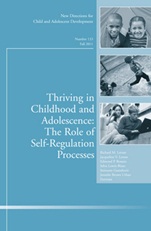
Thriving in Childhood and Adolescence: The Role of Self Regulation Processes: New Directions for Child and Adolescent Development, Number 133
ISBN 9781118094105
Autor: Richard M. Lerner, Jacqueline V. Lerner, Edmond P. Bowers, Selva Lewin–Bizan, Steinunn Gestsdottir
Wydawca: Wiley
Dostępność: 3-6 tygodni
Cena: 162,75 zł
Przed złożeniem zamówienia prosimy o kontakt mailowy celem potwierdzenia ceny.
ISBN13: |
9781118094105 |
ISBN10: |
1118094107 |
Autor: |
Richard M. Lerner, Jacqueline V. Lerner, Edmond P. Bowers, Selva Lewin–Bizan, Steinunn Gestsdottir |
Oprawa: |
Paperback |
Rok Wydania: |
2011-12-16 |
Ilość stron: |
112 |
Wymiary: |
228x152 |
Tematy: |
JC |
FROM THE EDITORS
In the last decade, self–regulation has emerged as a burgeoning area of research that is critical to enhancing our understanding of human development. Both organismic and intentional self–regulation processes must be integrated across childhood and adolescence for adaptive developmental regulations to exist and for the developing person to thrive, both during the first two decades of life and across the adult years. To date, such an integrated, life–span approach to self–regulation during childhood and adolescence has not been fully formulated. This monograph provides such integration by bringing together scholars whose research has focused on age–specific facets of self–regulation processes and on the dynamics of the developmental system acrossthe life span.
Spis treści:
1. Self–Regulation Processes and Thriving in Childhood and Adolescence: A View of the Issues 1
Richard M. Lerner, Jacqueline V. Lerner, Edmond P. Bowers, Selva Lewin–Bizan, Steinunn Gestsdottir, Jennifer Brown Urban
The editors discuss the need to integrate self–regulation processes and to create a life–span oriented framework of these processes. They provide a brief overview of the work of the scholars contributing to this volume.
2. When Everything New Is Well–Forgotten Old: Vygotsky/Luria Insights in the Development of Executive Functions 11
Elena Bodrova, Deborah J. Leong, Tatiana V. Akhutina
Vygotsky and Luria′s concept of the "extra–cortical organization of higher mental functions" and its evolution are explored using the example of self–regulation.
3. Self–Regulation and Academic Achievement in Elementary School Children 29
Megan M. McClelland, Claire E. Cameron
The authors situate self–regulation and social competence in a theoretical context that describes the components most impor
tant for early school success.
4. Influences of Children′s and Adolescents′ Action–Control Processes on School Achievement, Peer Relationships, and Coping with Challenging Life Events 45
G. John Geldhof, Todd D. Little
Self–regulation is discussed as a construct that depends on the development of key lower–order components. The conceptualization of selfregulation and its development is applied to other approaches to self–regulation.
5. Intentional Self–Regulation, Ecological Assets, and Thriving in Adolescence: A Developmental Systems Model 61
Steinunn Gestsdottir, Jennifer Brown Urban, Edmond P. Bowers, Jacqueline V. Lerner, Richard M. Lerner
The positive youth development (PYD) perspective is used to emphasize that enhancing adolescents’ abilities to engage in intentional selfregulatory processes will increase the capacity of youth to thrive.
6. A Life–Span, Relational, Public Health Model of Self–Regulation: Impact on Individual and Community Health 77
Swapnil Maniar, Jonathan F. Zaff
The authors extend the ideas of the development of self–regulation and its impact on development by proposing a life–span, relational, public health model.
7. Adolescents′ Conscious Processes of Developing Regulation: Learning to Appraise Challenges 87
Reed W. Larson
The author discusses the challenges reported by youth working on arts, technology, and social justice projects in organized programs and how they learn to address them.
INDEX 99
Okładka tylna:
FROM THE EDITORS
In the last decade, self–regulation has emerged as a burgeoning area of research that is critical to enhancing our understanding of human development. Both organismic and intentional self–regulation processes must be integrated across childhood and adolescence for adaptive developmental regulations t
o exist and for the developing person to thrive, both during the first two decades of life and across the adult years. To date, such an integrated, life–span approach to self–regulation during childhood and adolescence has not been fully formulated. This monograph provides such integration by bringing together scholars whose research has focused on age–specific facets of self–regulation processes and on the dynamics of the developmental system acrossthe life span.
Koszyk
Książek w koszyku: 0 szt.
Wartość zakupów: 0,00 zł
Informacje


Kontakt
Gambit
Centrum Oprogramowania
i Szkoleń Sp. z o.o.
Al. Pokoju 29b/22-24
31-564 Kraków
Siedziba Księgarni
ul. Kordylewskiego 1
31-542 Kraków
+48 12 410 5991
+48 12 410 5987
+48 12 410 5989
Subskrypcje
Administratorem danych osobowych jest firma Gambit COiS Sp. z o.o. Na podany adres będzie wysyłany wyłącznie biuletyn informacyjny.
Autoryzacja płatności

Informacje na temat autoryzacji płatności poprzez PayU.

© Copyright 2012: GAMBIT COiS Sp. z o.o. Wszelkie prawa zastrzeżone.
Projekt i wykonanie: Alchemia Studio Reklamy