


Wydawcy
Katalog tematyczny
- Archeologia (109)
- Ekonomia, finanse, business (13704)
- Filozofia (1445)
- Historia (3040)
- Języki i językoznawstwo (2356)
- Lifestyle, hobby i rozrywka (475)
- Medycyna (9704)
- Chirurgia (272)
- Inne gałęzie medycyny (1871)
- Medycyna kliniczna (4187)
- Choroby wewnętrzne (514)
- Dermatologia (51)
- Diagnostyka medyczna (3)
- Endokrynologia (144)
- Gastroenterologia (27)
- Geriatria (50)
- Ginekologia i położnictwo (134)
- Hematologia (46)
- Hepatologia (10)
- Kardiologia (71)
- Laryngologia (12)
- Nefrologia (10)
- Neurologia (500)
- Oftalmologia (50)
- Pediatria (33)
- Pulmunologia (32)
- Reumatologia (14)
- Terapia genowa (1)
- Układ mięśniowo-szkieletowy (1)
- Urologia (14)
- Medycyna niekonwencjonalna (14)
- Medycyna przedkliniczna (269)
- Medycyna, ogólnie (1740)
- Medyczne służby pomocnicze (745)
- Studia medyczne (16)
- Weterynaria (548)
- Nauki humanistyczne (4)
- Nauki o Ziemi i środowisku (2638)
- Nauki ścisłe (20412)
- Nauki społeczne (8486)
- Nauki techniczne (13450)
- Prawo (1696)
- Publikacje informacyjne i interdyscyplinarne (1288)
- Religia i wierzenia (917)
- Technika komputerowa (4067)
- Zdrowie, relacje międzyludzkie i rozwój osobisty (657)





Informacje szczegółowe o książce
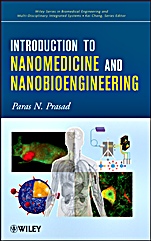
Introduction to Nanomedicine and Nanobioengineering
ISBN 9781118093436
Autor: Paras N. Prasad
Wydawca: Wiley
Dostępność: 3-6 tygodni
Cena: 676,20 zł
Przed złożeniem zamówienia prosimy o kontakt mailowy celem potwierdzenia ceny.
ISBN13: |
9781118093436 |
ISBN10: |
1118093437 |
Autor: |
Paras N. Prasad |
Oprawa: |
Hardback |
Rok Wydania: |
2012-06-29 |
Ilość stron: |
608 |
Wymiary: |
249x169 |
Tematy: |
MJ |
The first comprehensive and authoritative introduction toNanomedicine and Nanobioengineering
Nanomedicine and nanobioengineering fuse nanotechnology withmedicine and bioengineering. They are emerging new frontiers,providing challenges for fundamental research and opportunities forrevolutionary advances in medical technology. They also provide aglobal vision to produce breakthrough approaches for meeting ourcurrent and future healthcare needs.
Introduction to Nanomedicine and Nanobioengineeringprovides an integrated description of nanomedicine andnanobioengineering for next–generation diagnostics and therapy. Itpresents a basic introduction to a broad range of topics in anintegrated manner, so that individuals in all disciplines canrapidly acquire the background needed for research and developmentin this field. It is intended to serve both as a textbook foreducation and training, as well as a reference book that aidsfurther advancement in areas integrating nanotechnology withmedicine and bioengineering.
The book encompasses the fundamentals of nanomaterials design,bioengineering, nanodiagnostics, and nanotherapy. It is intended tobenefit investigators and students from the disciplines ofchemistry, physics, biology, biomedical sciences, and engineering,as well as medical, pharmacy, and dental school trainees andpractitioners, and scientists from the pharmaceutical and cosmeticindustries.
PREFACE xiii
ACKNOWLEDGMENTS xv
1 INTRODUCTION 1
1.1. Nanomedicine: A Global Vision 1
1.2. The Nanotechnology Revolution: Realization of Asimov′s Fiction 3
1.3. Nanomedicine: A New Era in Personalized Medicine 7
1.4. Nanomedicine: A Promise or Reality? 9
1.5. A New Frontier: Multidisciplinary Challenges and Opportunities 10
1.6. Scope of the Book: Multidisciplinary Education, Training, and Research 12
2 THE HUMAN BODY 15
2.1. Introductory Concepts 16
2.2. Cellular Structure 18
2.3. Various Types of Cells 23
2.4. Biochemical Makeup of Cells 25
2.5. Other Important Cellular Components 29
2.6. Cellular Processes 30
2.7. Organization of Cells into Tissues 37
2.8. Types of Tissues and Their Functions 39
2.9. Various Organs and Organ Systems in the Body 40
2.10. Tumors and Cancers 45
3 NANOCARRIERS 51
3.1. Nanocarriers: Delivering Payloads to Needed Sites 52
3.2. The Various Nanoformulations for Nanomedicine 53
3.3. Viruses as Nanocarriers 55
3.4. Polymeric Nanocarriers 56
3.5. Lipid–Based Nanocarriers 58
3.6. Dendrimers 59
3.7. Carbon Nanostructures 61
3.8. Inorganic Nanoparticles 63
3.9. PEBBLE 65
3.10. Nanoclinics 66
3.11. Nanoplexes 68
3.12. New–Generation Nanocarriers 69
4 NANOCHEMISTRY OF NANOCARRIERS 77
4.1. Nanochemistry and Nanomedicine 78
4.2. Top–Down Approaches 78
4.3. Bottom–Up Approaches 83
4.4. Combination of Bottom–Up and Top–Down Approaches 92
4.5. Nanoparticle Surface Modification 93
4.6. Functionalization and Bioconjugation 95
5 MULTIFUNCTIONALITIES FOR DIAGNOSTICS AND THERAPY 103
5.1. The Various Functionalities 104
5.2. Optical Functionalities 105
5.3. Optical Nanoprobes 110
5.4. Magnetic Functionality 116
5.5. Thermal Functionality 120
5.6. Radioactive Functionality 121
5.7. Biological Functionality 124
5.8. Multifunctionality 125
6 CROSSING THE BIOLOGICAL BARRIERS 135
6.1. Various Delivery Pathways 135
6.2. Various Biological Barriers 137
6.3. Stealth Nanoparticles 140
6.4. The Various In Vitro Barrier Models 141
7 BIOTARGETING 149
7.1. Biotargeting: Why We Need It 149
7.2. Targeted Biological Sites 150
7.3. Intracellular Uptake 151
7.4. Targeting Strategies 153
7.5. Targeting Groups 155
8 MULTIMODAL BIOMEDICAL IMAGING 163
8.1. Biomedical Imaging Techniques 164
8.2. Optical Bioimaging 170
8.3. Magnetic Resonance Imaging 185
8.4. X–Ray CT Imaging 188
8.5. Radio Imaging 190
8.6. Ultrasound Imaging 190
8.7. Photoacoustic Imaging 191
8.8. Multimodal Imaging 192
9 BIOSENSING 207
9.1. Principles of Biosensing 208
9.2. Optical Biosensors 211
9.3. Magnetic Biosensors 228
9.4. Electrical Biosensing 234
9.5. Electrochemical Biosensing 236
9.6. Electrochemiluminescence Biosensing 238
9.7. In Vivo Bioelectronic Sensors 239
10 HIGH–THROUGHPUT MULTIPLEXED DIAGNOSTICS 253
10.1. Comprehensive Diagnostic Strategy 254
10.2. Flow Cytometry 255
10.3. Enzyme–Linked Immunosorbent Assay (ELISA) 264
10.4. Microarrays Technology 269
10.5. Suspension Bead Assay 277
11 NANOPHARMACOTHERAPY 291
11.1. Nanopharmacotherapy: An Overview 292
11.2. Modes of Nanoformulation for Nanopharmacotherapy 294
11.3. Pharmacokinetics 296
11.4. Biodistribution 297
11.5. Pharmacodynamics 298
11.6. Controlled Release by External Activation 299
12 THE HUMAN CIRCULATORY SYSTEM AND THERANOSTICS 305
12.1. Blood Fluidics and Cardiovascular System 306
12.2. Circulatory–System–Based Disease Profiling 309
12.3. Methods to Monitor Blood Flow 312
12.4. Therapeutic Approaches Utilizing Manipulation of Blood Flow 318
12.5. Lymph Node Mapping 320
12.6. Lymphatic Drug Delivery 322
13 NANOTECHNOLOGY FOR CANCER 331
13.1. Benefits of Cancer Nanotechnology 332
13.2. Chemotherapy 335
13.3. Cancer Gene Therapy 339
13.4. Photodynamic Therapy 340
13.5. Magnetic Therapy 349
13.6. Photothermal Therapy 353
13.7. Neutron Capture Therapy 357
13.8. Circulating Tumor Cells 359
13.9. NCI Alliance for Cancer Nanotechnology 360
14 GENE THERAPY 371
14.1. The Principles, Steps, and Impact of Gene Therapy 372
14.2. Methods of Gene Delivery 374
14.3. Gene Augmentation Therapy 381
14.4. Gene Silencing Therapy 381
14.5. Indirect Gene Therapy Modulating Innate Immune Response 384
14.6. Transmucosal Gene Delivery 385
15 NANOTECHNOLOGY FOR INFECTIOUS DISEASES 393
15.1. Pathogen Infections and Nanoparticle–Based Approaches 394
15.2. HIV 401
15.3. Influenza 408
15.4. Tuberculosis 410
15.5. Malaria 416
16 REJUVENATION THERAPY 433
16.1. Rejuvenation Therapy: Fantasy or Reality? 433
16.2. Free Radical Scavenging 436
16.3. Chelation Therapy 439
16.4. Hormone Therapy 441
17 STEM CELL BIOTECHNOLOGY 447
17.1. Stem Cell Biotechnology: Overview 448
17.2. Cell Reprogramming 449
17.3. Gene Transfection 452
17.4. Somatic Cell Transdifferentiation 453
17.5. Stem Cell Sorting 454
17.6. Stem Cell Tracking 454
18 TISSUE ENGINEERING 461
18.1. Tissue Engineering: Overview 462
18.2. Tissue Regeneration 464
18.3. Nanotechnology in Tissue Engineering 467
18.4. Nanofibers for Tissue Engineering 472
18.5. Nanoparticle Delivery of Biomolecules 473
18.6. Magnetically Assisted Tissue Engineering 474
18.7. Tissue/Organ Printing 475
18.8. Tissue Bonding 477
19 NANODERMATOLOGY AND NANOCOSMETICS 487
19.1. Delivery Through Skin 487
19.2. Skin Care and Nanotechnology 488
19.3. Various Nanoparticles for Dermatology and Cosmetics 491
19.4. Nanodermatology 492
19.5. Nanocosmetics 494
19.6. Nanotoxicology of the Skin 497
20 NANODENTISTRY 503
20.1. Nanotechnology for Dental Care 504
20.2. Nanoparticles for Preventive Dentistry 507
20.3. Nanomaterials for Restorative Dentistry 509
20.4. Regenerative Dentistry 516
20.5. Nanoparticle–Enhanced Dental Imaging and Oral Diagnostics 519
20.6. Nanorobotics for Dentistry 522
21 NANOTOXICITY 529
21.1. Toxicity of Nanoparticles 529
21.2. Cytotoxicity 533
21.3. In Vitro Cytotoxicity Assays 535
21.4. In Vivo Toxicity 539
21.5. In Vivo Toxicity Evaluation 542
21.6. Nanotoxicity Studies on Selected Nanoparticles 542
Highlights of the Chapter 547
Exercises 550
References 551
INDEX 555
PARAS N. PRASAD, PhD, is the SUNY Distinguished Professorof Chemistry, Physics, Electrical Engineering, and Medicine; theSamuel P. Capen Chair of Chemistry; and the Executive Director ofthe Institute for Lasers, Photonics, and Biophotonics at theUniversity at Buffalo. He was named among the top 50 science andtechnology leaders in the world by Scientific American in2005. He has published 700 scientific and technical papers inhigh–impact journals, three monographs that practically defined thefields of organic nonlinear optics, biophotonics, andnanophotonics, eight edited books, and holds numerous patents. Heis the recipient of many scientific awards and honors (MorleyMedal; Schoellkopf Medal; Guggenheim Fellowship; Sloan Fellowship;Western New York Health Care Industries Technology/Discovery Award;Fellow of the APS, OSA, and SPIE). He is a pioneer in nanomedicineand nanobioengineering, and has been giving plenary, opening, andkeynote lectures worldwide in this field.
This volume is most handy for those in the physics,chemistry, or materials science fields who are interested inbiomedical applications of nanotechnology; it would also be usefulfor those in the biological or medical fields who are interested inlearning how nanotechnology would be beneficial to theirresearch. Summing Up: Recommended. Upper–divisionundergraduates and above. (Choice, 1 January2013)
Koszyk
Książek w koszyku: 0 szt.
Wartość zakupów: 0,00 zł
Informacje


Kontakt
Gambit
Centrum Oprogramowania
i Szkoleń Sp. z o.o.
Al. Pokoju 29b/22-24
31-564 Kraków
Siedziba Księgarni
ul. Kordylewskiego 1
31-542 Kraków
+48 12 410 5991
+48 12 410 5987
+48 12 410 5989
Subskrypcje
Administratorem danych osobowych jest firma Gambit COiS Sp. z o.o. Na podany adres będzie wysyłany wyłącznie biuletyn informacyjny.
Autoryzacja płatności

Informacje na temat autoryzacji płatności poprzez PayU.

© Copyright 2012: GAMBIT COiS Sp. z o.o. Wszelkie prawa zastrzeżone.
Projekt i wykonanie: Alchemia Studio Reklamy