


Wydawcy
Katalog tematyczny
- Archeologia (109)
- Ekonomia, finanse, business (13704)
- Filozofia (1445)
- Historia (3040)
- Języki i językoznawstwo (2356)
- Lifestyle, hobby i rozrywka (475)
- Medycyna (9704)
- Nauki humanistyczne (4)
- Nauki o Ziemi i środowisku (2638)
- Nauki ścisłe (20412)
- Astronomia (294)
- Biologia (5119)
- Chemia (6540)
- Chemia analityczna (361)
- Chemia fizyczna (346)
- Chemia nieorganiczna (137)
- Chemia organiczna (535)
- Krystalografia (27)
- Minerologia (46)
- Fizyka (3309)
- Matematyka (4574)
- Nauki ścisłe, ogólnie (503)
- Nauki społeczne (8486)
- Nauki techniczne (13450)
- Prawo (1696)
- Publikacje informacyjne i interdyscyplinarne (1288)
- Religia i wierzenia (917)
- Technika komputerowa (4067)
- Zdrowie, relacje międzyludzkie i rozwój osobisty (657)





Informacje szczegółowe o książce
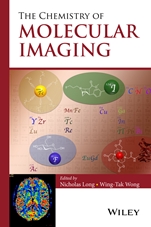
The Chemistry of Molecular Imaging
ISBN 9781118093276
Autor: Nicholas Long, Wing–Tak Wong
Wydawca: Wiley
Dostępność: 3-6 tygodni
Cena: 687,75 zł
Przed złożeniem zamówienia prosimy o kontakt mailowy celem potwierdzenia ceny.
ISBN13: |
9781118093276 |
ISBN10: |
1118093275 |
Autor: |
Nicholas Long, Wing–Tak Wong |
Oprawa: |
Hardback |
Rok Wydania: |
2015-02-20 |
Ilość stron: |
408 |
Wymiary: |
292x221 |
Tematy: |
PN |
The first book to apply the chemistry perspective to imaging techniques and their applications The development of a plethora of bioimaging techniques, such as the MRI, PET, SPECT, ultrasound and optical/fluorescence imaging, has been vital to improving human life. Although these imaging technologies continue to advance with unique applications and advantages, the ability to see within the human body and understand its biological complexities remains one of the greatest challenges of modern medical science. The Chemistry of Molecular Imaging is the first book written from a chemist’s point of view about the chemistry of novel biological probes, addressing the nature of the chemical interaction between probe and environment to help elucidate biochemical detail instead of bulk anatomy. Written by experts of various fields and aimed at students as well as researchers involved in the area of molecular imaging, this book: Covers all of the fundamentals of modern imaging methodologies, including their techniques and application within medicine and industry Focuses primarily on the chemistry of probes and imaging agents, and chemical methodology for labelling and bioconjugation Investigates the chemistry of molecular imaging and helps to educate non–chemists already involved in the area of molecular imaging Addresses all applications and techniques, including MRI, positron emission tomography, single photon emission computed tomography, ultrasound, and fluorescence/optical imaging Consisting of sixteen chapters, with examples and illustrations, the book constructs a comprehensive picture of imaging chemistry, from introducing the various imaging modes, to investigating the nature and properties of multi–modality imaging contrast agents. Thus, readers, including synthetic chemists, undergraduate or graduate students, educators, and medical professionals in the field, will gain a thorough understanding of the art of imaging contrast agent design. Nicholas Long , PhD, is the Sir Edward Frankland BP Professor of Inorganic Chemistry and Head of the Catalysis, Sustainability and Applied Inorganics section in the Department of Chemistry, Imperial College London. He has published more than 150 scientific papers, including several high impact review articles and a critically–acclaimed textbook titled ‘Metallocenes’. He is Co–Director of the Centre for Doctoral Training in Medical Imaging at Imperial College and King’s College London. Wing–Tak Wong , PhD, ScD, is Chair Professor of Chemical Technology and Head of the Department of Applied Biology and Chemical Technology at the Hong Kong Polytechnic University. He has received three International and US patents for his recent research on lanthanide luminescent materials, and is an author of more than 450 research papers.
Preface CHAPTER ONE: An Introduction to Molecular Imaging Ga–Lai Law and Wing–Tak Wong 1. Introduction 2. What is Positron Emission Tomography (PET)? 3. What is Single Photon Emission Computed Tomography (SPECT)? 4. What is Computed Tomography (CT) or Computed Axial Tomography (CAT)? 5. What is Magnetic Resonance Imaging (MRI)? 6. What is Optical Imaging? 7. What is Ultrasound (US)? 8. Conclusions References CHAPTER TWO: Chemical Methodology for Labelling and Bioconjugation Lina Cui and Jianghong Rao 1. Introduction Part I Chemical Methods 2. Through Reactions with Aldehydes or Ketones 3. Through Reactions with Azides 4. Through Reactions with Alkenes 5. Cross–Coupling Reactions Part II Site–Specific Modification of Protein or Peptide 6. N–terminal Cysteine 7. Aromatic Residues 8. N–terminus of Protein 9. C–terminus of Protein 10. Introduction of Chemical Tags for Site–Specific Labeling on Peptides or Proteins 11. Conclusions References CHAPTER THREE: Recent Developments in the Chemistry of [ 18 F]Fluoride for PET Dirk Roeda and Frédéric Dollé 1. Introduction 2. Fluorine–18, The Starting Material 3. Reactive [ 18 F] Fluoride 4. The Radiofluorination 5. Labelling of Large Biological Molecules 6. Conclusions References CHAPTER FOUR: Carbon–11, Nitrogen–13 and Oxygen–15 Chemistry: An Introduction to Chemistry With Short–Lived Radioisotopes Philip W. Miller, Koichi Kato, and Bengt Långström 1. Introduction 2. Carbon–11 Chemistry 3. Nitrogen–13 Chemistry 4. Oxygen–15 Chemistry 5. Conclusions References CHAPTER FIVE: The Chemistry of Inorganic Nuclides ( 86 Y, 68 Ga, 64 Cu, 89 Zr, 124 I) Eric W. Price and Chris Orvig 1. Introduction: Inorganic Nuclide–Based Radiopharmaceuticals 2. Radiopharmaceutical Design 3. Radiopharmaceutical Stability 4. 86 Yttrium Radiometal Ion Properties 5. 68 Gallium Radiometal Ion Properties 6. 64 Copper Radiometal Ion Properties 7. 89 Zirconium Radiometal Ion Properties 8. 124 Iodine Nuclide Properties 9. Conclusions References CHAPTER SIX: The Radiopharmaceutical Chemistry of Technetium and Rhenium Jonathan R. Dilworth and Sofia I. Pascu 1. Introduction 2. Technetium and Rhenium Radiopharmaceutical Chemistry 3. Technetium and Rhenium(IV) 4. Technetium and Rhenium(III) 5. Technetium and Rhenium(I) 6. Imaging of Hypoxia with 99m Tc 7. Technetium and Rhenium Diphosphonate Complexes 8. The Future for Technetium and Rhenium Radiopharmaceuticals References CHAPTER SEVEN: The Radiopharmaceutical Chemistry of Gallium(III) and Indium(III) for SPECT Imaging Jonathan R. Dilworth and Sofia I. Pascu 1. Introduction to Gallium and Indium Chemistry 2. Gallium and Indium Complexes and Related Bioconjugates 3. Auger Electron Therapy with 111 Indium 4. Prospects for 67 Ga and 111 In radiochemistry References CHAPTER EIGHT: The Chemistry of Lanthanide MRI Contrast Agents Stephen Faulkner and Octavia A. Blackburn 1. Introduction 2. Gadolinium Complexes as MRI Contrast Agents 3. Minimising the Toxicity of Gadolinium Contrast Agents 4. Rationalising the Behaviour of MRI Contrast Agents 5. Strategies for Increasing Relaxivity 6. Responsive MRI 7. Conclusions and Prospects References CHAPTER NINE: Nanoparticulate MRI Contrast Agents Juan Gallo and Nicholas J. Long 1. Introduction 2. T 2 Contrast Agents 3. T 1 Contrast Agents 4. T 1 –T 2 dual MRI contrast agents 5. Water Solubilisation 6. Functionalization and Surface Modification 7. Applications 8. Conclusions and Outlook References CHAPTER TEN: CEST and PARACEST Agents for Molecular Imaging Osasere M. Evbuomwan, Enzo Terreno, Silvio Aime, and A. Dean Sherry 1. Introduction 2. Diamagnetic CEST Agents 3. Paramagnetic Chemical Exchange Saturation Transfer (PARACEST) Agents 4. Responsive PARACEST Agents 5. In Vivo Detection of PARACEST Agents 6. Supramolecular CEST Agents 7. LipoCEST Agents 8. Conclusions References CHAPTER ELEVEN: Organic Molecules for Optical Imaging Michael Hon–Wah Lam, Ga–Lai Law, Chi–Sing Lee and Ka–Leung Wong 1. Introduction 2. Designing Molecular Probes for Bio–imaging 3. Different Types of Organic–based Chromophores and Fluorophores for Bio–imaging 4. Mechanisms of Photophysical Processes and Their Applications in Molecular Imaging and Chemosensing 5. Two/multi–photon Induced Emission and In Vitro / In Vivo Imaging 6. Time–Resolved Imaging 7. Bioluminescence in Molecular Imaging 8. Photoacoustic Imaging 9. Conclusion and Future Perspectives References CHAPTER TWELVE: A pplication of d– and f– Block Fluorescent Cell Imaging Agents Michael P. Coogan and Simon J. A. Pope 1. Introduction 2. d 6 Metal Complexes in Fluorescent Cell Imaging 3. f –Block Imaging Agents 4. Conclusions References CHAPTER THIRTEEN: Lanthanide–based Upconversion Nanophosphors for Bioimaging Fuyou Li, Wei Feng, Jing Zhou, and Yun Sun 1. Introduction 2. Fabrication of Ln–UCNPs suitable for bioimaging 3. Surface modification of Ln–UCNPs 4. In Vivo Imaging Applications 5. Biodistribution and Toxicity of UCNPs 6. Future Directions References CHAPTER FOURTEEN: Microbubbles: Contrast Agents for Ultrasound and MRI April M. Chow and Ed X. Wu 1. Introduction 2. Classification of Microbubbles 3. Applications in Ultrasound Imaging 4. Applications in Magnetic Resonance Imaging 5. Applications beyond US imaging and MRI 6. Conclusions: Limitations, Bioeffects and Safety References CHAPTER FIFTEEN: Non–Nanoparticle–Based Dual–Modality Imaging Agents Reinier Hernandez,Tapas R. Nayak, and Hao Hongand Weibo Cai 1. Introduction 2. PET / Optical Agents 3. SPECT / Optical Agents 4. MRI / Optical Agents 5. PET / MRI Agents 6. Conclusions References CHAPTER SIXTEEN: Chemical Strategies for the Development of Multimodal Imaging Probes Using Nanoparticles Amanda L. Eckermann, Daniel J. Mastarone, and Thomas J. Meade 1. Introduction 2. Fluorescence–MRI 3. Near–Infrared Fluorescence / MRI 4. NIR–PET 5. Upconversion Luminescence 6. PET–SPECT–CT–MRI 7. Ultrasound 8. Magnetomotive Optical Coherence Tomography (MM–OCT) 9. Conclusions References
Nicholas Long, PhD, is the Sir Edward Frankland BP Professor of Inorganic Chemistry and Head of the Catalysis, Sustainability and Applied Inorganics section in the Department of Chemistry, Imperial College London. He has published more than 150 scientific papers, including several high impact review articles and a critically–acclaimed textbook titled ‘Metallocenes’. He is Co–Director of the Centre for Doctoral Training in Medical Imaging at Imperial College and King’s College London. Wing–Tak Wong, PhD, ScD, is Chair Professor of Chemical Technology and Head of the Department of Applied Biology and Chemical Technology at the Hong Kong Polytechnic University. He has received three International and US patents for his recent research on lanthanide luminescent materials, and is an author of more than 450 research papers.
Koszyk
Książek w koszyku: 0 szt.
Wartość zakupów: 0,00 zł
Informacje


Kontakt
Gambit
Centrum Oprogramowania
i Szkoleń Sp. z o.o.
Al. Pokoju 29b/22-24
31-564 Kraków
Siedziba Księgarni
ul. Kordylewskiego 1
31-542 Kraków
+48 12 410 5991
+48 12 410 5987
+48 12 410 5989
Subskrypcje
Administratorem danych osobowych jest firma Gambit COiS Sp. z o.o. Na podany adres będzie wysyłany wyłącznie biuletyn informacyjny.
Autoryzacja płatności

Informacje na temat autoryzacji płatności poprzez PayU.

© Copyright 2012: GAMBIT COiS Sp. z o.o. Wszelkie prawa zastrzeżone.
Projekt i wykonanie: Alchemia Studio Reklamy