


Wydawcy
Katalog tematyczny
- Archeologia (109)
- Ekonomia, finanse, business (13704)
- Filozofia (1445)
- Historia (3040)
- Języki i językoznawstwo (2356)
- Lifestyle, hobby i rozrywka (475)
- Medycyna (9704)
- Nauki humanistyczne (4)
- Nauki o Ziemi i środowisku (2638)
- Nauki ścisłe (20412)
- Astronomia (294)
- Biologia (5119)
- Biochemia (575)
- Biologia człowieka (14)
- Biologia komórkowa (377)
- Biologia molekularna (398)
- Biologia rozwoju (130)
- Biologia, ogólnie (1277)
- Botanika (280)
- Hydrobiologia (92)
- Mikrobiologia (363)
- Mykologia (22)
- Zoologia (303)
- Chemia (6540)
- Fizyka (3309)
- Matematyka (4574)
- Nauki ścisłe, ogólnie (503)
- Nauki społeczne (8486)
- Nauki techniczne (13450)
- Prawo (1696)
- Publikacje informacyjne i interdyscyplinarne (1288)
- Religia i wierzenia (917)
- Technika komputerowa (4067)
- Zdrowie, relacje międzyludzkie i rozwój osobisty (657)





Informacje szczegółowe o książce
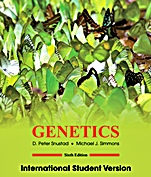
Genetics
ISBN 9781118092422
Autor: D. Peter Snustad, Michael J. Simmons
Wydawca: Wiley
Dostępność: 3-6 tygodni
Cena: 305,55 zł
Przed złożeniem zamówienia prosimy o kontakt mailowy celem potwierdzenia ceny.
ISBN13: |
9781118092422 |
ISBN10: |
1118092422 |
Autor: |
D. Peter Snustad, Michael J. Simmons |
Oprawa: |
Paperback |
Rok Wydania: |
2011-12-30 |
Numer Wydania: |
6th Edition International Student Version |
Ilość stron: |
784 |
Wymiary: |
274x234 |
Tematy: |
PS |
Principles of Genetics, 6e balances key content and problemsolving so that students can apply what they are reading to helpsolve related problems. Instructors and students can feel confidentthat they have the following in–text tools and supplements theyneed to succeed in the genetics course:
In–Text tools
Test Your Problem–Solving Skills feature shows studentshow to approach and solve a key problem. In addition, a Solve Iticon prompts students to go online to work with animated tutorials.Practice problems for all question types are found at the end ofeach chapter. The Focus On boxes (one per chapter) have been revisedto include the most current developments in genetics as well as themost relevant topics to students. A streamlined topical coverage, vetted by a panel ofgenetics instructors, makes for a text that is manageable in size.This textbook will provide instructors and students with in–depthexplanations of key topics frequently covered in a one–semestercourse.On–Line Tools
Animated solutions to the Solve It promptsin the text utilize Camastia Studio software, a registeredtrademark of TechSmith Corporation. There tutorials providestep–by–step solutions that appear as if they are written out byhand as an instructor voice–over explains each step. GO Problem tutorials help students build confidence asthey observe a problem being worked out and then attempt to solve asimilar problem on their own.Chapter 1 The Science Of Genetics.
The Personal Genome.
An Invitation.
Three Great Milestones In Genetics.
DNA As The Genetic Material.
Genetics And Evolution.
Levels Of Genetic Analysis.
Genetics In The World: Applications Of Genetics To HumanEndeavors.
Chapter 2. Cellular Reproduction.
Cells And Chromosomes.
Mitosis.
Meiosis.
Life Cycles Of Some Model Genetic Organisms.
Chapter 3 Mendelism: The Basic Principles OfInheritance.
Mendel′s Study Of Heredity.
Applications Of Mendel′s Principles.
Testing Genetic Hypotheses.
Mendelian Principles In Human Genetics.
Chapter 4 Extensions Of Mendelism.
Allelic Variation And Gene Function.
Gene Action: From Genotype To Phenotype.
Inbreeding: Another Look At Pedigrees.
Chapter 5 The Chromosomal Basis Of Mendelism.
Chromosomes.
The Chromosome Theory Of Heredity.
Sex–Linked Genes In Humans.
Sex Chromosomes And Sex Determination.
Dosage Compensation Of X–Linked Genes.
Chapter 6 Variation In Chromosome Number AndStructure.
Cytological Techniques.
Polyploidy.
Aneuploidy.
Rearrangements Of Chromosome Structure.
Chapter 7 Linkage, Crossing Over, And Chromosome Mapping InEukaryotes.
Chromosome Mapping.
Cytogenetic Mapping.
Linkage Analysis In Humans.
Recombination And Evolution.
Chapter 8 The Genetics Of Bacteria And Their Viruses.
Multi–Drug–Resistant Bacteria: A Ticking Timebomb?
Viruses And Bacteria In Genetics.
The Genetics Of Viruses.
The Genetics Of Bacteria.
Mechanisms Of Genetic Exchange In Bacteria.
The Evolutionary Significance Of Genetic Exchange InBacteria.
Chapter 9 DNA And The Molecular Structure OfChromosomes.
Functions Of The Genetic Material.
Proof That Genetic Information Is Stored In DNA.
Proof That RNA Stores The Genetic Information In SomeViruses.
Chromosome Structure In Prokaryotes And Viruses.
Chromosome Structure In Eukaryotes.
Chapter 10 Replication Of DNA And Chromosomes.
Basic Features Of DNA Replication In Vivo.
DNA Replication In Prokaryotes.
Unique Aspects Of Eukaryotic Chromosome Replication.
Chapter 11 Transcription And RNA Processing.
Transfer Of Genetic Information: The Central Dogma.
The Process Of Gene Expression.
Transcription In Prokaryotes.
Transcription And RNA Processing In Eukaryotes.
Interrupted Genes In Eukaryotes: Exons And Introns.
Removal Of Intron Sequences By RNA Splicing.
Chapter 12 Translation and the GeneticCode
Protein Structure
One Gene One Colinear Polypeptide
Protein Synthesis: Translation
The Genetic Code
Codon–tRNA Interactions
Chapter 13 Mutation, DNA Repair, andRecombination
Mutation: Source of the Genetic Variability Required forEvolution
The Molecular Basis of Mutation
Mutation: Basic Features of the Process
Mutation: Phenotypic Effects
Assigning Mutations to Genes by the Complementation Test
Screening Chemicals for Mutagenicity: The Ames Test
DNA Repair Mechanisms
Inherited Human Diseases with Defects in DNA Repair
DNA Recombination Mechanisms
Chapter 14 The Techniques of MolecularGenetics
Basic Techniques Used to Identify, Amplify, and Clone Genes
Construction and Screening of DNA Libraries
The Molecular Analysis of DNA, RNA, and Protein
The Molecular Analysis of Genes and Chromosomes
Chapter 15 Genomics
Genomics: An Overview
Correlated Genetic, Cytological, and Physical Maps ofChromosomes
Map Position–Based Cloning of Genes
The Human Genome Project
RNA and Protein Assays of Genome Function
Comparative Genomics
Chapter 16 Applications of MolecularGenetics
Use of Recombinant DNA Technology to Identify Human Genes andDiagnose Human Diseases
Molecular Diagnosis of Human Diseases
Human Gene Therapy
DNA Profiling
Production of Eukaryotic Proteins in Bacteria
Transgenic Plants and Animals
Reverse Genetics: Dissecting Biological Processes by InhibitingGene Expression
Chapter 17 Transposable Genetic Elements
Transposable Elements: An Overview
Transposable Elements in Bacteria
Cut–and–Paste Transposons in Eukaryotes
Retroviruses and Retrotransposons
Transposable Elements in Humans
The Genetic and Evolutionary Significance of TransposableElements
Chapter 18 Regulation of Gene Expression inProkaryotes
Constitutive, Inducible, and Repressible Gene Expression
Positive and Negative Control of Gene Expression
Operons: Coordinately Regulated Units of GeneExpression
The Lactose Operon in E. coli: Induction and CataboliteRepression
The Tryptophan Operon in E. coli: Repression andAttenuation
Translational Control of Gene Expression
Posttranslational Regulatory Mechanisms
Chapter 19 Regulation of Gene Expression inEukaryotes
Ways of Regulating Eukaryotic Gene Expression: An Overview
Induction of Transcriptional Activity by Environmental andBiological Factors
Molecular Control of Transcription in Eukaryotes
Posttranscriptional Regulation of Gene Expression by RNAInterference
Gene Expression and Chromatin Organization
Activation and Inactivation of Whole Chromosomes
Chapter 20 The Genetic Control of AnimalDevelopment
A Genetic Perspective on Development
Maternal Gene Activity in Development
Genetic Analysis of Development in Vertebrates
Chapter 21 The Genetic Basis of Cancer
Cancer: A Genetic Disease
Oncogenes
Tumor Suppressor Genes
Genetic Pathways to Cancer
Chapter 22 Inheritance of Complex Traits
Complex Traits
Statistics of Quantitative Genetics
Analysis of Quantitative Traits
Correlations Between Relatives
Quantitative Genetics of Human Behavioral Traits
Chapter 23 Population Genetics
The Theory of Allele Frequencies
Natural Selection
Random Genetic Drift
Populations in Genetic Equilibrium
Chapter 24 Evolutionary Genetics
The Emergence of Evolutionary Theory
Genetic Variation in Natural Populations
Molecular Evolution
Speciation
Human Evolution
Appendices
Appendix A: The Rules of Probability
Appendix B: Binomial Probabilities
Appendix C: In Situ Hybridization
Appendix D: Evidence for an Unstable Messenger RNA
Appendix E: Evolutionary Rates
Answers to Odd–Numbered Questions and Problems
Glossary
Photo Credits
Illustration Credits
Index
D. Peter Snustad is a Professor Emeritus at the Universityof Minnesota, Twin Cities. He received his B.S. degree from theUniversity of Minnesota and his M.S. and Ph.D. degrees from theUniversity of California, Davis. He began his faculty career in theDepartment of Agronomy and Plant Genetics at Minnesota in 1965,became a charter member of the new Department of Genetics in 1966,and moved to the Department of Plant Biology in 2000. During his 43years at Minnesota, he taught courses ranging from general biologyto biochemical genetics. His initial research focused on theinteractions between bacteriophage T4 and its host, E. coli.In the 1980s, his research switched to the cytoskeleton of Arabidopsis and the glutamine synthetase genes of corn. Hishonors include the Morse–Amoco and Dagley Memorial teaching awardsand election to Fellow of the American Association for theAdvancement of Science. A lifelong love of the Canadian wildernesshas kept him in nearby Minnesota.
Michael J. Simmons is a Professor in the Department ofGenetics, Cell Biology and Development at the University ofMinnesota, Twin Cities. He received his B.A. degree in biology fromSt. Vincent College in Latrobe, Pennsylvania, and his M.S. andPh.D. degrees in genetics from the University of Wisconsin,Madison. Dr. Simmons has taught a variety of courses, includinggenetics and population genetics. He has also mentored manystudents on research projects in his laboratory. Early in hiscareer he received the Morse–Amoco teaching award from theUniversity of Minnesota in recognition of his contributions toundergraduate education. Dr. Simmons s research focuses onthe genetic significance of transposable elements in the genome ofDrosophila melanogaster. He has served on advisorycommittees at the National Institutes of Health and was a member ofthe Editorial Board of the journal Genetics for 21 years.One of his favorite activities, figure skating, is especiallycompatible with the Minnesota climate.
Koszyk
Książek w koszyku: 0 szt.
Wartość zakupów: 0,00 zł
Informacje


Kontakt
Gambit
Centrum Oprogramowania
i Szkoleń Sp. z o.o.
Al. Pokoju 29b/22-24
31-564 Kraków
Siedziba Księgarni
ul. Kordylewskiego 1
31-542 Kraków
+48 12 410 5991
+48 12 410 5987
+48 12 410 5989
Subskrypcje
Administratorem danych osobowych jest firma Gambit COiS Sp. z o.o. Na podany adres będzie wysyłany wyłącznie biuletyn informacyjny.
Autoryzacja płatności

Informacje na temat autoryzacji płatności poprzez PayU.

© Copyright 2012: GAMBIT COiS Sp. z o.o. Wszelkie prawa zastrzeżone.
Projekt i wykonanie: Alchemia Studio Reklamy