


Wydawcy
Katalog tematyczny
- Archeologia (109)
- Ekonomia, finanse, business (13704)
- Filozofia (1445)
- Historia (3040)
- Języki i językoznawstwo (2356)
- Lifestyle, hobby i rozrywka (475)
- Medycyna (9704)
- Nauki humanistyczne (4)
- Nauki o Ziemi i środowisku (2638)
- Nauki ścisłe (20412)
- Nauki społeczne (8486)
- Nauki techniczne (13450)
- Prawo (1696)
- Publikacje informacyjne i interdyscyplinarne (1288)
- Religia i wierzenia (917)
- Technika komputerowa (4067)
- Zdrowie, relacje międzyludzkie i rozwój osobisty (657)





Informacje szczegółowe o książce
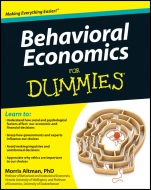
Behavioral Economics For Dummies
ISBN 9781118085035
Autor: Morris Altman
Wydawca: Wiley
Dostępność: 3-6 tygodni
Cena: 130,20 zł
Przed złożeniem zamówienia prosimy o kontakt mailowy celem potwierdzenia ceny.
ISBN13: |
9781118085035 |
ISBN10: |
1118085035 |
Autor: |
Morris Altman |
Oprawa: |
Paperback |
Rok Wydania: |
2012-03-27 |
Ilość stron: |
384 |
Wymiary: |
235x189 |
Tematy: |
KC |
The guide to understanding why people really make economic and financial decisions The field of behavioral economics sheds light on the many subtle and not–so–subtle factors that contribute to financial and purchasing choices. This friendly guide explores how socialand psychological factors, such as instinctual behavior patterns, social pressure, and mental framing, can dramatically affect our day–to–day decision making and financial choices. Based on psychology and sociology and rooted in real–world examples, Behavioral Economics For Dummies offers the sort of insights designed to help investors avoid impulsive mistakes, companies understand the mechanisms behind individual choices, and governments and nonprofits make public decisions. Make realistic assumptions for economic analysis — investigate the assumptions conventional economics makes, and discover how behavioral economists introduce social, psychological, and cultural considerations Explore the relationship between the brain and economics — understand how human behavior and surroundings affect economic phenomena Examine the role of free choice in economic decision making — review the conditions that are necessary in order for people to make choices that reflect their true preferences, given the constraints they face Get happy — recognize that factors other than wealth and money are critically important to a person′s happiness, as defined by behavioral economics Learn to: Understand how social and psychological factors affect our economic and financial decisions Grasp how governments and experts influence our choices Avoid making impulsive and uninformed decisions Appreciate why ethics are important to our choices Open the book and find: The many subtle factors that contribute to our financial and purchasing choices Why people really make financial decisions Real–world examples of how behavioral economics affects our lives What social and psychological factors affect our decision making How to use behavioral economics to be happier Why government policies affect the economy Helpful consumer tips Go to Dummies.com for videos, step–by–step examples, how–to articles, or to shop!
Introduction 1 Part I: Introducing Behavioral Economics: The Science of Making Real–World Choices 7 Chapter 1: Decoding Behavioral Economics 9 Chapter 2: Getting Real about Assumptions 19 Chapter 3: Neuroeconomics: Exploring the Brain for Economic Analysis 41 Chapter 4: Why Incentives and Markets Matter, but Money Isn’t Everything 65 Part II: Understanding Choice 89 Chapter 5: Exploring the Limits to Free Choice 91 Chapter 6: Quick and Simple Heuristics and Real–World Decision Making 107 Chapter 7: How the Framing of Choices Affects Decision Making 131 Chapter 8: How Norms, Peers, History, and Culture Influence Choice 153 Chapter 9: Why Gender, Children, and Age Matter for Economic Analysis 167 Part III: Growing the Economic Pie: The Economic Importance of Ethics, Well–Being, and Culture 181 Chapter 10: Why Smart People Pay Taxes, Recycle, and Even Break the Law 183 Chapter 11: Labor Supply in the Real World 197 Chapter 12: The Black Box of the Firm: Human Relationships and Productivity 215 Chapter 13: The Good Economy: How Ethical Behavior Can Grow the Economy 229 Chapter 14: Why Institutions Matter 243 Part IV: When Bubbles and Busts and Inefficiencies Are Possible: Some Behavioral Insights into the Strange World of Economic Reality 257 Chapter 15: Deciphering Behavioral Finance 259 Chapter 16: Looking into Recessions and Depressions 275 Chapter 17: The Art and Science of Happiness: Can You Be Happy without More Money? 291 Part V: The Part of Tens 309 Chapter 18: Ten (Or So) Key Public Policy Implications of Behavioral Economics 311 Chapter 19: Ten (Or So) Experiments in Behavioral Economics 321 Chapter 20: Ten Decision–Making Lessons from Behavioral Economics 333 Index 341
Morris Altman , PhD, is a professor of behavioral economics at Victoria University of Wellington in New Zealand and a professor of economics at the University of Saskatchewan in Canada. He is on the board of the Society for the Advancement of Behavioral Economics and is a former president of that organization. He also edited the Handbook of Contemporary Behavioral Economics .
Koszyk
Książek w koszyku: 0 szt.
Wartość zakupów: 0,00 zł
Informacje


Kontakt
Gambit
Centrum Oprogramowania
i Szkoleń Sp. z o.o.
Al. Pokoju 29b/22-24
31-564 Kraków
Siedziba Księgarni
ul. Kordylewskiego 1
31-542 Kraków
+48 12 410 5991
+48 12 410 5987
+48 12 410 5989
Subskrypcje
Administratorem danych osobowych jest firma Gambit COiS Sp. z o.o. Na podany adres będzie wysyłany wyłącznie biuletyn informacyjny.
Autoryzacja płatności

Informacje na temat autoryzacji płatności poprzez PayU.

© Copyright 2012: GAMBIT COiS Sp. z o.o. Wszelkie prawa zastrzeżone.
Projekt i wykonanie: Alchemia Studio Reklamy