


Wydawcy
Katalog tematyczny
- Archeologia (109)
- Ekonomia, finanse, business (13704)
- Filozofia (1445)
- Historia (3040)
- Języki i językoznawstwo (2356)
- Lifestyle, hobby i rozrywka (475)
- Medycyna (9704)
- Nauki humanistyczne (4)
- Nauki o Ziemi i środowisku (2638)
- Nauki ścisłe (20412)
- Astronomia (294)
- Biologia (5119)
- Chemia (6540)
- Chemia analityczna (361)
- Chemia fizyczna (346)
- Chemia nieorganiczna (137)
- Chemia organiczna (535)
- Krystalografia (27)
- Minerologia (46)
- Fizyka (3309)
- Matematyka (4574)
- Nauki ścisłe, ogólnie (503)
- Nauki społeczne (8486)
- Nauki techniczne (13450)
- Prawo (1696)
- Publikacje informacyjne i interdyscyplinarne (1288)
- Religia i wierzenia (917)
- Technika komputerowa (4067)
- Zdrowie, relacje międzyludzkie i rozwój osobisty (657)





Informacje szczegółowe o książce
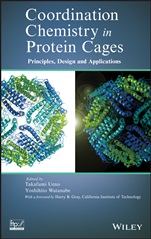
Coordination Chemistry in Protein Cages: Principles, Design, and Applications
ISBN 9781118078570
Autor: Takafumi Ueno, Yoshihito Watanabe
Wydawca: Wiley
Dostępność: 3-6 tygodni
Cena: 687,75 zł
Przed złożeniem zamówienia prosimy o kontakt mailowy celem potwierdzenia ceny.
ISBN13: |
9781118078570 |
ISBN10: |
1118078578 |
Autor: |
Takafumi Ueno, Yoshihito Watanabe |
Oprawa: |
Hardback |
Rok Wydania: |
2013-05-17 |
Ilość stron: |
408 |
Wymiary: |
241x164 |
Tematy: |
PN |
Sets the stage for the design and application of new proteincages
Featuring contributions from a team of international experts inthe coordination chemistry of biological systems, this book enablesreaders to understand and take advantage of the fascinatinginternal molecular environment of protein cages. With the aid ofmodern organic and polymer techniques, the authors explain step bystep how to design and construct a variety of protein cages.Moreover, the authors describe current applications of proteincages, setting the foundation for the development of newapplications in biology, nanotechnology, synthetic chemistry, andother disciplines.
Based on a thorough review of the literature as well as theauthors′ own laboratory experience, Coordination Chemistry inProtein Cages
Sets forth the principles of coordination reactions in naturalprotein cages Details the fundamental design of coordination sites of smallartificial metalloproteins as the basis for protein cagedesign Describes the supramolecular design and assembly of proteincages for or by metal coordination Examines the latest applications of protein cages in biologyand nanotechnology Describes the principles of coordination chemistry that governself–assembly of synthetic cage–like moleculesChapters are filled with detailed figures to help readersunderstand the complex structure, design, and application ofprotein cages. Extensive references at the end of each chapterserve as a gateway to important original research studies andreviews in the field.
With its detailed review of basic principles, design, andapplications, Coordination Chemistry in Protein Cages isrecommended for investigators working in biological inorganicchemistry, biological organic chemistry, and nanoscience.
Foreword xiii
Preface xv
Contributors xvii
PART I COORDINATION CHEMISTRY IN NATIVE PROTEIN CAGES
1 The Chemistry of Nature s Iron Biominerals inFerritin Protein Nanocages 3
Elizabeth C. Theil and Rabindra K. Behera
1.1 Introduction 3
1.2 Ferritin Ion Channels and Ion Entry 6
1.2.1 Maxi– and Mini–Ferritin 6
1.2.2 Iron Entry 7
1.3 Ferritin Catalysis 8
1.3.1 Spectroscopic Characterization of –1,2 PeroxodiferricIntermediate (DFP) 8
1.3.2 Kinetics of DFP Formation and Decay 12
1.4 Protein–Based Ferritin Mineral Nucleation and Mineral Growth13
1.5 Iron Exit 16
1.6 Synthetic Uses of Ferritin Protein Nanocages 17
1.6.1 Nanomaterials Synthesized in Ferritins 18
1.6.2 Ferritin Protein Cages in Metalloorganic Catalysis andNanoelectronics 19
1.6.3 Imaging and Drug Delivery Agents Produced in Ferritins19
1.7 Summary and Perspectives 20
Acknowledgments 20
References 21
2 Molecular Metal Oxides in Protein Cages/Cavities25
Achim M¨uller and Dieter Rehder
2.1 Introduction 25
2.2 Vanadium: Functional Oligovanadates and Storage of VO2+ inVanabins 26
2.3 Molybdenum and Tungsten: Nucleation Process in a ProteinCavity 28
2.4 Manganese in Photosystem II 33
2.5 Iron: Ferritins, DPS Proteins, Frataxins, and Magnetite35
2.6 Some General Remarks: Oxides and Sulfides 38
References 38
PART II DESIGN OF METALLOPROTEIN CAGES
3 De Novo Design of Protein Cages to Accommodate MetalCofactors 45
Flavia Nastri, Rosa Bruni, Ornella Maglio, and AngelaLombardi
3.1 Introduction 45
3.2 De Novo–Designed Protein Cages Housing Mononuclear MetalCofactors 47
3.3 De Novo–Designed Protein Cages Housing Dinuclear MetalCofactors 59
3.4 De Novo–Designed Protein Cages Housing Heme Cofactor 66
3.5 Summary and Perspectives 79
Acknowledgments 79
References 80
4 Generation of Functionalized Biomolecules Using HemoproteinMatrices with Small Protein Cavities for Incorporation of Cofactors87
Takashi Hayashi
4.1 Introduction 87
4.2 Hemoprotein Reconstitution with an Artificial Metal Complex89
4.3 Modulation of the O2 Affinity of Myoglobin 90
4.4 Conversion of Myoglobin into Peroxidase 95
4.4.1 Construction of a Substrate–Binding Site Near the HemePocket 95
4.4.2 Replacement of Native Heme with Iron Porphyrinoid inMyoglobin 99
4.4.3 Other Systems Used in Enhancement of Peroxidase Activityof Myoglobin 100
4.5 Modulation of Peroxidase Activity of HRP 102
4.6 Myoglobin Reconstituted with a Schiff Base Metal Complex103
4.7 A Reductase Model Using Reconstituted Myoglobin 106
4.7.1 Hydrogenation Catalyzed by Cobalt Myoglobin 106
4.7.2 A Model of Hydrogenase Using the Heme Pocket of Cytochromec 107
4.8 Summary and Perspectives 108
Acknowledgments 108
References 108
5 Rational Design of Protein Cages for Alternative EnzymaticFunctions 111
Nicholas M. Marshall, Kyle D. Miner, Tiffany D. Wilson, and YiLu
5.1 Introduction 111
5.2 Mononuclear Electron Transfer Cupredoxin Proteins 112
5.3 CuA Proteins 116
5.4 Catalytic Copper Proteins 118
5.4.1 Type 2 Red Copper Sites 118
5.4.2 Other T2 Copper Sites 120
5.4.3 Cu, Zn Superoxide Dismutase 121
5.4.4 Multicopper Oxygenases and Oxidases 122
5.5 Heme–Based Enzymes 124
5.5.1 Mb–Based Peroxidase and P450 Mimics 124
5.5.2 Mimicking Oxidases in Mb 125
5.5.3 Mimicking NOR Enzymes in Mb 127
5.5.4 Engineering Peroxidase Proteins 128
5.5.5 Engineering Cytochrome P450s 129
5.6 Non–Heme ET Proteins 131
5.7 Fe and Mn Superoxide Dismutase 132
5.8 Non–Heme Fe Catalysts 133
5.9 Zinc Proteins 134
5.10 Other Metalloproteins 135
5.10.1 Cobalt Proteins 135
5.10.2 Manganese Proteins 136
5.10.3 Molybdenum Proteins 137
5.10.4 Nickel Proteins 137
5.10.5 Uranyl Proteins 138
5.10.6 Vanadium Proteins 138
5.11 Summary and Perspectives 139
References 142
PART III COORDINATION CHEMISTRY OF PROTEIN ASSEMBLYCAGES
6 Metal–Directed and Templated Assembly of ProteinSuperstructures and Cages 151
F. Akif Tezcan
6.1 Introduction 151
6.2 Metal–Directed Protein Self–Assembly 152
6.2.1 Background 152
6.2.2 Design Considerations for Metal–Directed ProteinSelf–Assembly 153
6.2.3 Interfacing Non–Natural Chelates with MDPSA 155
6.2.4 Crystallographic Applications of Metal–Directed ProteinSelf–Assembly 159
6.3 Metal–Templated Interface Redesign 162
6.3.1 Background 162
6.3.2 Construction of a Zn–Selective Tetrameric Protein ComplexThrough MeTIR 163
6.3.3 Construction of a Zn–Selective Protein Dimerization MotifThrough MeTIR 166
6.4 Summary and Perspectives 170
Acknowledgments 171
References 171
7 Catalytic Reactions Promoted in Protein Assembly Cages175
Takafumi Ueno and Satoshi Abe
7.1 Introduction 175
7.1.1 Incorporation of Metal Compounds 176
7.1.2 Insight into Accumulation Process ofMetal Compounds177
7.2 Ferritin as a Platform for Coordination Chemistry 177
7.3 Catalytic Reactions in Ferritin 179
7.3.1 Olefin Hydrogenation 179
7.3.2 Suzuki Miyaura Coupling Reaction in Protein Cages182
7.3.3 Polymer Synthesis in Protein Cages 185
7.4 Coordination Processes in Ferritin 188
7.4.1 Accumulation of Metal Ions 188
7.4.2 Accumulation of Metal Complexes 192
7.5 Coordination Arrangements in Designed Ferritin Cages 194
7.6 Summary and Perspectives 197
Acknowledgments 198
References 198
8 Metal–Catalyzed Organic Transformations Inside a ProteinScaffold Using Artificial Metalloenzymes 203
V. K. K. Praneeth and Thomas R. Ward
8.1 Introduction 203
8.2 Enantioselective Reduction Reactions Catalyzed by ArtificialMetalloenzymes 204
8.2.1 Asymmetric Hydrogenation 204
8.2.2 Asymmetric Transfer Hydrogenation of Ketones 206
8.2.3 Artificial Transfer Hydrogenation of Cyclic Imines 208
8.3 Palladium–Catalyzed Allylic Alkylation 211
8.4 Oxidation Reaction Catalyzed by Artificial Metalloenzymes212
8.4.1 Artificial Sulfoxidase 212
8.4.2 Asymmetric cis–Dihydroxylation 215
8.5 Summary and Perspectives 216
References 218
PART IV APPLICATIONS IN BIOLOGY
9 Selective Labeling and Imaging of Protein Using MetalComplex 223
Yasutaka Kurishita and Itaru Hamachi
9.1 Introduction 223
9.2 Tag Probe Pair Method Using Metal–Chelation System225
9.2.1 Tetracysteine Motif/Arsenical Compounds Pair 225
9.2.2 Oligo–Histidine Tag/Ni(ii)–NTA Pair 227
9.2.3 Oligo–Aspartate Tag/Zn(ii)–DpaTyr Pair 230
9.2.4 Lanthanide–binding Tag 235
9.3 Summary and Perspectives 237
References 237
10 Molecular Bioengineering of Magnetosomes forBiotechnological Applications 241
Atsushi Arakaki, Michiko Nemoto, and Tadashi Matsunaga
10.1 Introduction 241
10.2 Magnetite Biomineralization Mechanism in Magnetosome242
10.2.1 Diversity of Magnetotactic Bacteria 242
10.2.2 Genome and Proteome Analyses of Magnetotactic Bacteria244
10.2.3 Magnetosome Formation Mechanism 246
10.2.4 Morphological Control of Magnetite Crystal inMagnetosomes 250
10.3 Functional Design of Magnetosomes 251
10.3.1 Protein Display on Magnetosome by Gene Fusion Technique252
10.3.2 Magnetosome Surface Modification by In Vitro System255
10.3.3 Protein–mediated Morphological Control of MagnetiteParticles 257
10.4 Application 258
10.4.1 Enzymatic Bioassays 259
10.4.2 Cell Separation 260
10.4.3 DNA Extraction 262
10.4.4 Bioremediation 264
10.5 Summary and Perspectives 266
Acknowledgments 266
References 266
PART V APPLICATIONS IN NANOTECHNOLOGY
11 Protein Cage Nanoparticles for HybridInorganic Organic Materials 275
Shefah Qazi, Janice Lucon, Masaki Uchida, and TrevorDouglas
11.1 Introduction 275
11.2 Biomineral Formation in Protein Cage Architectures 277
11.2.1 Introduction 277
11.2.2 Mineralization 278
11.2.3 Model for Synthetic Nucleation–Driven Mineralization279
11.2.4 Mineralization in Dps: A 12–Subunit Protein Cage 279
11.2.5 Icosahedral Protein Cages: Viruses 282
11.2.6 Nucleation of Inorganic Nanoparticles Within IcosahedralViruses 282
11.3 Polymer Formation Inside Protein Cage Nanoparticles 283
11.3.1 Introduction 283
11.3.2 Azide Alkyne Click Chemistry in sHsp and P22285
11.3.3 Atom Transfer Radical Polymerization in P22 287
11.3.4 Application as Magnetic Resonance Imaging Contrast Agents290
11.4 Coordination Polymers in Protein Cages 292
11.4.1 Introduction 292
11.4.2 Metal Organic Branched Polymer Synthesis byPreforming Complexes 292
11.4.3 Coordination Polymer Formation from Ditopic Ligands andMetal Ions 295
11.4.4 Altering Protein Dynamics by Coordination: Hsp–Phen–Fe296
11.5 Summary and Perspectives 298
Acknowledgments 298
References 298
12 Nanoparticles Synthesized and Delivered by Protein in theField of Nanotechnology Applications 305
Ichiro Yamashita, Kenji Iwahori, Bin Zheng, and ShinyaKumagai
12.1 Nanoparticle Synthesis in a Bio–Template 305
12.1.1 NP Synthesis by Cage–Shaped Proteins for NanoelectronicDevices and Other Applications 305
12.1.2 Metal Oxide or Hydro–Oxide NP Synthesis in theApoferritin Cavity 307
12.1.3 Compound Semiconductor NP Synthesis in the ApoferritinCavity 308
12.1.4 NP Synthesis in the Apoferritin with the Metal–BindingPeptides 311
12.2 Site–Directed Placement of NPs 312
12.2.1 Nanopositioning of Cage–Shaped Proteins 312
12.2.2 Nanopositioning of Au NPs by Porter Proteins 313
12.3 Fabrication of Nanodevices by the NP and Protein Conjugates317
12.3.1 Fabrication of Floating Nanodot Gate Memory 318
12.3.2 Fabrication of Single–Electron Transistor Using Ferritin321
References 326
13 Engineered Cages for Design ofNanostructured Inorganic Materials 329
Patrick B. Dennis, Joseph M. Slocik, and Rajesh R. Naik
13.1 Introduction 329
13.2 Metal–Binding Peptides 331
13.3 Discrete Protein Cages 332
13.4 Heat–Shock Proteins 334
13.5 Polymeric Protein and Carbohydrate Quasi–Cages 340
13.6 Summary and Perspectives 346
References 347
PART VI COORDINATION CHEMISTRY INSPIRED BY PROTEINCAGES
14 Metal Organic Caged Assemblies 353
Sota Sato and Makoto Fujita
14.1 Introduction 353
14.2 Construction of Polyhedral Skeletons by Coordination Bonds355
14.2.1 Geometrical Effect on Products 356
14.2.2 Structural Extension Based on Rigid, Designable Framework358
14.2.3 Mechanistic Insight into Self–Assembly 366
14.3 Development of Functions via Chemical Modification 366
14.3.1 Chemistry in the Hollow of Cages 367
14.3.2 Chemistry on the Periphery of Cages 368
14.4 Metal Organic Cages for Protein Encapsulation 370
14.5 Summary and Perspectives 370
References 371
Index 375
TAKAFUMI UENO is Professor in the School and GraduateSchool of Bioscience and Biotechnology at Tokyo Institute ofTechnology. His current research interests involve the moleculardesign of artificial metalloproteins and exploitation of meso–scalematerials with the coordination chemistry of protein assemblies. Hewas awarded the Young Investigator Award of the Japan Society ofCoordination Chemistry in 2007 and the Young Scientists′ Prize ofthe Commendation for Science and Technology by the Minister ofEducation, Culture, Sports, Science and Technology, Japan, in2008.
YOSHIHITO WATANABE is Professor in the Department ofChemistry at Nagoya University. Since 2009, he has been appointed aVice President of Research and International Affairs. His currentresearch interests include the design of hydrogenperoxide–dependent monooxygenase and construction of metalloenzymeswith synthetic complexes at their catalytic centers. He is arecipient of the Chemical Society of Japan Award for Creative Workin 1999, and the Japan Society of Coordination Chemistry in 2011.He sits on two editorial boards and an international advisoryboard.
Koszyk
Książek w koszyku: 0 szt.
Wartość zakupów: 0,00 zł
Informacje


Kontakt
Gambit
Centrum Oprogramowania
i Szkoleń Sp. z o.o.
Al. Pokoju 29b/22-24
31-564 Kraków
Siedziba Księgarni
ul. Kordylewskiego 1
31-542 Kraków
+48 12 410 5991
+48 12 410 5987
+48 12 410 5989
Subskrypcje
Administratorem danych osobowych jest firma Gambit COiS Sp. z o.o. Na podany adres będzie wysyłany wyłącznie biuletyn informacyjny.
Autoryzacja płatności

Informacje na temat autoryzacji płatności poprzez PayU.

© Copyright 2012: GAMBIT COiS Sp. z o.o. Wszelkie prawa zastrzeżone.
Projekt i wykonanie: Alchemia Studio Reklamy