


Wydawcy
Katalog tematyczny
- Archeologia (109)
- Ekonomia, finanse, business (13704)
- Filozofia (1445)
- Historia (3040)
- Języki i językoznawstwo (2356)
- Lifestyle, hobby i rozrywka (475)
- Medycyna (9704)
- Nauki humanistyczne (4)
- Nauki o Ziemi i środowisku (2638)
- Nauki ścisłe (20412)
- Nauki społeczne (8486)
- Nauki techniczne (13450)
- Budownictwo lądowe (1045)
- Chemia przemysłowa (2258)
- Elektronika i telekomunikacja (3287)
- Energetyka (1122)
- Inne nauki stosowane (363)
- Inżynieria biochemiczna (507)
- Inżynieria transportu (232)
- Mechanika i materiały (3316)
- Nauka o środowisku (321)
- Rolnictwo (507)
- Technika, ogólnie (475)
- Prawo (1696)
- Publikacje informacyjne i interdyscyplinarne (1288)
- Religia i wierzenia (917)
- Technika komputerowa (4067)
- Zdrowie, relacje międzyludzkie i rozwój osobisty (657)





Informacje szczegółowe o książce
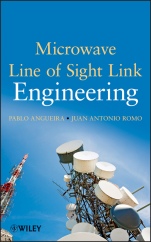
Microwave Line of Sight Link Engineering
ISBN 9781118072738
Autor: Pablo Angueira, Juan Romo
Wydawca: Wiley
Dostępność: 3-6 tygodni
Cena: 627,90 zł
Przed złożeniem zamówienia prosimy o kontakt mailowy celem potwierdzenia ceny.
ISBN13: |
9781118072738 |
ISBN10: |
1118072731 |
Autor: |
Pablo Angueira, Juan Romo |
Oprawa: |
Hardback |
Rok Wydania: |
2012-08-24 |
Ilość stron: |
424 |
Wymiary: |
253x152 |
Tematy: |
TJ |
A comprehensive guide to the design, implementation, and operation of line of sight microwave link systems
The microwave Line of Sight (LOS) transport network of any cellular operator requires at least as much planning effort as the cellular infrastructure itself. The knowledge behind this design has been kept private by most companies and has not been easy to find. Microwave Line of Sight Link Engineering solves this dilemma. It provides the latest revisions to ITU reports and recommendations, which are not only key to successful design but have changed dramatically in recent years. These include the methodologies related to quality criteria, which the authors address and explain in depth.
Combining relevant theory with practical recommendations for such critical planning decisions as frequency band selection, radio channel arrangements, site selection, antenna installation, and equipment choice, this one–stop primer:
Describes the procedure for designing a frequency plan and a channel arrangement structure according to ITU current standards, illustrated with specific application examples Offers analytical examples that illustrate the specifics of calculations and provide order of magnitude for parameters and design factors Presents case studies that describe real–life projects, putting together the puzzle pieces necessary when facing a real design created from scratchMicrowave Line of Sight Link Engineering is an indispensable resource for radio engineers who need to understand international standards associated with LOS microwave links. It is also extremely valuable for students approaching the topic for the first time.
PREFACE xix
ACRONYMS xxiii
1 INTRODUCTION TO MICROWAVE LOS LINK SYSTEMS 1
1.1 Introduction 1
1.2 Historic Evolution of Radio Links 3
1.3 Point–to–Point Fixed Communication Technologies 5
1.4 Field of Application and Use Cases 13
1.5 Basic Structure of a Fixed Service MicrowaveLink 18
1.6 Spectrum Management Aspects 21
1.7 First Approach to the Design of a Microwave LOSLink 26
1.8 Link Budget Basics 28
1.9 Noise 36
1.10 Interferences 39
2 LOSS AND FADING ASSOCIATED WITH TROPOSPHERE PROPAGATIONPHENOMENA 42
2.1 Introduction 42
2.2 Influence of Refraction on Propagation in theTroposphere 43
2.3 Terrain Diffraction Losses: Fresnel Zones 59
2.4 Vegetation Attenuation 60
2.5 Atmospheric Gas and Vapor Absorption 61
2.6 Hydrometeors 62
2.7 Reflection 65
2.8 Distortion due to Propagation Effects 67
3 FREQUENCY PLAN FOR A FIXED SERVICE MICROWAVE LINK72
3.1 Frequency Planning Overview 72
3.2 Bandwidth and Capacity of a Microwave LOS Link 74
3.3 ITU–R Frequency Plans 79
3.4 Assignment of Radio–frequency Channels 93
3.5 Comments on the Frequency Band Choice 97
4 EQUIPMENT AND SUBSYSTEM TECHNOLOGY ASPECTS: A RADIO LINKDESIGNER APPROACH 100
4.1 Introduction 100
4.2 Basic Block Diagrams 102
4.3 Transport Technologies 107
4.4 Baseband Unit 114
4.5 Modulation and Demodulation 123
4.6 Transceiver Unit 139
4.7 Antenna Coupling Elements 142
4.8 Antennas 147
4.9 Redundancy Arrangements 166
4.10 System Monitoring and Management 171
5 PERFORMANCE OBJECTIVES AND CRITERIA FOR FIXED SERVICEMICROWAVE LINKS 174
5.1 Introduction 174
5.2 Error Performance Objectives and Criteria Based onRecommendation ITU–T G.821 176
5.3 Error Performance Objectives and Criteria Based onRecommendations ITU–T G.826 and ITU–T G.828 179
5.4 Availability Criteria 188
5.5 Availability Objectives for Microwave LOS Links DesignedBefore 2005 190
5.6 Availability Objectives for Microwave LOS Links DesignedAfter 2005 192
5.7 ITU Error Performance and Availability Usage Guidelines194
5.8 Degradation due to Interferences 195
6 LINK PATH ENGINEERING 207
6.1 General Considerations on Link Path Engineering 207
6.2 Site Selection Criteria 209
6.3 Digital Terrain Databases 211
6.4 Profile Extraction, Clearance, and Obstructions 212
6.5 Optimum Choice of Antenna Heights 216
7 PROPAGATION CALCULATION METHODS ACCORDING TO ITU–R P SERIESRECOMMENDATIONS 227
7.1 General Considerations on Propagation CalculationMethods 227
7.2 Fading Definition 228
7.3 Reflection on Earth s Surface 230
7.4 Attenuation Due to Atmospheric Gases 236
7.5 Diffraction Fading 237
7.6 Multipath Flat Fading 245
7.7 Distortion Due to Multipath Propagation Effects Under ClearSky 250
7.8 Attenuation due to Hydrometeors 255
7.9 Reduction of Cross–Polar Discrimination (XPD) 262
7.10 ITU–R Databases for Tropospheric Propagation Studies265
8 LINK ENGINEERING ACCORDING TO AVAILABILITY AND ERRORPERFORMANCE CRITERIA 271
8.1 Introduction 271
8.2 Design According to Availability and Error Performance272
8.3 Microwave LOS Link Design According to Availability Criteria281
8.4 Microwave LOS Link Design According to Error PerformanceObjectives 285
8.5 Design in Problematic Propagation Environments 294
8.6 Quality and Availability Calculation Guidelines in RealLinks 304
8.7 Interferences 306
8.8 Link Engineering Summary Procedure 319
9 LINK OPERATION AND MONITORING 321
9.1 Introduction 321
9.2 Reference Performance Objectives (RPO) 322
9.3 Bringing into Service (BIS) 325
9.4 Maintenance 328
Bibliography 333
APPENDIX 335
INDEX 378
PABLO ANGUEIRA, PhD, is an Associate Professor in theDepartment of Communication Engineering of the University of theBasque Country UPV/EHU. He has been involved in radiocommunications research and teaching activities for more thanfifteen years. He is author of several contributions to the ITU–RWP3 and WP6 groups as well as many journal and internationalconference papers. He is Associate Editor of the IEEETransactions on Broadcasting journal.
JUAN ANTONIO ROMO, PhD, is an Associate Professorteaching fixed, mobile, and satellite radio systems in theDepartment of Communication Engineering of the University of theBasque Country UPV/EHU. He has twenty–five years′ experience indiverse areas of radio communications, in both manufacturing andnetwork operations.
This practical book provides design and implementationguidelines for LOS (Line of Sight) Microwave Radio Links, which area technological necessity in the telecommunications industry,offering readers ample case studies and ways to apply and adhere toindustry standards. (ITbriefing.net, 11September 2012)
Koszyk
Książek w koszyku: 0 szt.
Wartość zakupów: 0,00 zł
Informacje


Kontakt
Gambit
Centrum Oprogramowania
i Szkoleń Sp. z o.o.
Al. Pokoju 29b/22-24
31-564 Kraków
Siedziba Księgarni
ul. Kordylewskiego 1
31-542 Kraków
+48 12 410 5991
+48 12 410 5987
+48 12 410 5989
Subskrypcje
Administratorem danych osobowych jest firma Gambit COiS Sp. z o.o. Na podany adres będzie wysyłany wyłącznie biuletyn informacyjny.
Autoryzacja płatności

Informacje na temat autoryzacji płatności poprzez PayU.

© Copyright 2012: GAMBIT COiS Sp. z o.o. Wszelkie prawa zastrzeżone.
Projekt i wykonanie: Alchemia Studio Reklamy