


Wydawcy
Katalog tematyczny
- Archeologia (109)
- Ekonomia, finanse, business (13704)
- Filozofia (1445)
- Historia (3040)
- Języki i językoznawstwo (2356)
- Lifestyle, hobby i rozrywka (475)
- Medycyna (9704)
- Chirurgia (272)
- Inne gałęzie medycyny (1871)
- Medycyna kliniczna (4187)
- Medycyna niekonwencjonalna (14)
- Medycyna przedkliniczna (269)
- Medycyna, ogólnie (1740)
- Historia medycyny (3)
- Lekarze, sprawy zawodowe (8)
- Medycyna, aspekty prawne (10)
- Służba zdrowia (36)
- Wyposażenie medyczne (157)
- Zdrowie publiczne (460)
- Medyczne służby pomocnicze (745)
- Studia medyczne (16)
- Weterynaria (548)
- Nauki humanistyczne (4)
- Nauki o Ziemi i środowisku (2638)
- Nauki ścisłe (20412)
- Nauki społeczne (8486)
- Nauki techniczne (13450)
- Prawo (1696)
- Publikacje informacyjne i interdyscyplinarne (1288)
- Religia i wierzenia (917)
- Technika komputerowa (4067)
- Zdrowie, relacje międzyludzkie i rozwój osobisty (657)





Informacje szczegółowe o książce
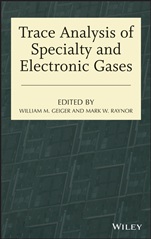
Trace Analysis of Specialty and Electronic Gases
ISBN 9781118065662
Autor: William M. Geiger, Mark W. Raynor
Wydawca: Wiley
Dostępność: 3-6 tygodni
Cena: 500,85 zł
Przed złożeniem zamówienia prosimy o kontakt mailowy celem potwierdzenia ceny.
ISBN13: |
9781118065662 |
ISBN10: |
1118065662 |
Autor: |
William M. Geiger, Mark W. Raynor |
Oprawa: |
Hardback |
Rok Wydania: |
2013-11-05 |
Ilość stron: |
386 |
Wymiary: |
247x157 |
Tematy: |
MBN |
Explores the latest advances and applications of specialty and electronic gas analysis The semiconductor industry depends upon a broad range of instrumental techniques in order to detect and analyze impurities that may be present in specialty and electronic gases, including permanent gases, water vapor, reaction by-products, and metal species. Trace Analysis of Specialty and Electronic Gases draws together all the latest advances in analytical chemistry, providing researchers with both the theory and the operating principles of the full spectrum of instrumental techniques available for specialty and electronic gas analysis. Moreover, the book details the advantages and disadvantages of each technique, steering readers away from common pitfalls. Featuring contributions from leading analytical and industrial chemists, Trace Analysis of Specialty and Electronic Gases covers a wide range of practical industrial applications. The book begins with the historical development of gas analysis and then focuses on particular subjects or techniques such as: Metals sampling and ICP-MS analysis Improvements in FTIR spectroscopy Water vapor analysis techniques New infrared laser absorption spectroscopy approaches GC/MS, GC/AED, and GC-ICP-MS techniques Gas chromatography columns Atmospheric pressure ionization mass spectrometry Lastly, the book examines gas mixtures and standards that are critical for instrument calibration. There are also two appendices offering information on fittings and material compatibility. With its thorough review of the literature and step-by-step guidance, Trace Analysis of Specialty and Electronic Gases enables researchers to take full advantage of the latest advances in gas analysis. Although the book's focus is the semiconductor and electronics industry, analytical chemists in other industries facing challenges with such issues as detection selectivity and sensitivity, matrix gas interference, and materials compatibility will also discover plenty of useful analytical approaches and techniques.
List of Figures xiii List of Tables xxix Foreword xxxiii Acknowledgments xxxv Acronyms xxxvii 1 Introduction to Gas Analysis: Past and Future 1 Suhas N. Ketkar 1.1 The Beginning 2 1.2 Gas Chromatography 5 1.3 Ion Chromatography 9 1.4 Mass Spectrometry 9 1.5 Ion Mobility Spectrometry 11 1.6 Optical Spectroscopy 11 1.7 Metals Analysis 12 1.8 Species Specific Analyzers 13 1.9 Sensors 16 1.10 Future 16 References 17 2 Sample Preparation and ICP–MS Analysis of Gases for Metals 21 Tracey Jacksier, Kohei Tarutani and Martine Carre 2.1 Introduction 21 2.2 Extraction of Impurities Before Analysis 22 2.3 Direct Analysis of ESGs 34 2.4 Conclusion 40 References 41 3 Novel Improvements in FTIR Analysis of Specialty Gases 43 Barbara Marshik and Jorge E. Pérez 3.1 Gas Phase Analysis Using FTIR Spectroscopy 43 3.2 Gas Phase Effects on Spectral Line Shape 44 3.3 Effects that Greatly Impact Quantification 55 3.4 Future Applications 68 References 69 4 Emerging Infrared Laser Absorption Spectroscopic Techniques for Gas Analysis 71 Frank K. Tittel, Rafal Lewicki, Robert Lascola and Scott McWhorter 4.1 Introduction 71 4.2 Laser Absorption Spectroscopic Techniques 72 4.3 Applications of Semiconductor LAS Based Trace Gas Sensor Systems 88 4.4 Conclusions and Future Trends 99 References 100 5 Atmospheric Pressure Ionization Mass Spectrometry for Bulk and Electronic Gas Analysis 111 Daniel R. Chase and Glenn M. Mitchell 5.1 Introduction 111 5.2 APIMS Operating Principle 112 5.3 Point–to–Plane Corona Discharge Ionization 113 5.4 Factors Affecting Sensitivity in Point–to–Plane Corona Discharge APIMS 114 5.5 Applications of Point–to–Plane Corona Discharge APIMS in Bulk and Electronic Gases 120 5.6 63 Ni Beta ( β ) Emitter APIMS 132 5.7 Specialty Gas Analysis Application: Determination of Oxygenated Impurities in High Purity Ammonia 136 5.8 Conclusion 144 References 144 6 GC/MS, GC/AED, and GC–ICP–MS Analysis of Electronic Specialty Gases 151 Daniel Cowles, MarkW. Raynor andWilliam M. Geiger 6.1 Introduction 151 6.2 GC/MS 153 6.3 GC/AED 164 6.4 GC–ICP–MS 173 6.5 Conclusions 191 References 191 7 Trace Water Vapor Analysis in Specialty Gases: Sensor and Spectroscopic Approaches 195 Mark W. Raynor, Kris A. Bertness, Kevin C. Cossel, Florian Adler and Jun Ye 7.1 Introduction 195 7.2 Primary Standards for Water Vapor Measurement 197 7.3 Sensor Technologies 200 7.4 Spectroscopic Methods 211 7.5 Conclusion 239 References 240 8 Gas Chromatographic Column Considerations 251 Daron Decker and Leonard M. Sidisky 8.1 Column Considerations with Packed Columns 252 8.2 Primary Selection Criteria for Capillary Columns 258 8.3 Applications 263 8.4 Future 272 8.5 Conclusion 272 References 273 9 Gas Mixtures and Standards 275 Stephen Vaughan 9.1 Introduction 275 9.2 Definition of Gas Standards 276 9.3 Cylinders and Valves Sizes, Types, and Material Compositions 280 9.4 Preparation Techniques for Gas Standards 284 9.5 Pressure Restrictions and Compressibility Considerations 290 9.6 Multi–Component Standards General Considerations 292 9.7 Cylinder Standard Stability Consideration 293 9.8 Liquefied Compressed Gas Standards Preparation Differences and Uses 295 9.9 Cylinder Standard Alternatives 297 9.10 Dilution Devices and Calibration Uses 297 References 299 A Cylinder and Specialized Fittings 301 A.1 Cylinder Fittings 301 A.2 Specialized Fittings 310 B Materials of Construction 321 B.1 Tubing, Transfer Lines and Other Hardware 322 B.1.1 Valves 330 B.2 FTIR Materials 332 B.2.1 O–rings/Gaskets 334 B.2.2 Cells/Mirrors 334 Index 337
WILLIAM M. GEIGER, B.S., is Senior Partner of CONSCI, LTD, an independent service provider. He is responsible for implementation of analytical technology as it relates to gas analysis, including method development, turn-key instrumentation for customers, and consultation. Mr. Geiger has authored or coauthored numerous papers and presentations relating to trace gas measurement techniques. MARK W. RAYNOR, PhD, is Senior R&D Director at Matheson's Advanced Technology Center. He is responsible for the development of new gas products and precursors for the electronics industry, with an emphasis on the development of instrumental techniques for gas analysis as well as the synthesis, scale-up and purification of specialty gases. Dr Raynor has authored or coauthored more than sixty papers in analytical chemistry.
Koszyk
Książek w koszyku: 0 szt.
Wartość zakupów: 0,00 zł
Informacje


Kontakt
Gambit
Centrum Oprogramowania
i Szkoleń Sp. z o.o.
Al. Pokoju 29b/22-24
31-564 Kraków
Siedziba Księgarni
ul. Kordylewskiego 1
31-542 Kraków
+48 12 410 5991
+48 12 410 5987
+48 12 410 5989
Subskrypcje
Administratorem danych osobowych jest firma Gambit COiS Sp. z o.o. Na podany adres będzie wysyłany wyłącznie biuletyn informacyjny.
Autoryzacja płatności

Informacje na temat autoryzacji płatności poprzez PayU.

© Copyright 2012: GAMBIT COiS Sp. z o.o. Wszelkie prawa zastrzeżone.
Projekt i wykonanie: Alchemia Studio Reklamy