


Wydawcy
Katalog tematyczny
- Archeologia (109)
- Ekonomia, finanse, business (13704)
- Filozofia (1445)
- Historia (3040)
- Języki i językoznawstwo (2356)
- Lifestyle, hobby i rozrywka (475)
- Medycyna (9704)
- Nauki humanistyczne (4)
- Nauki o Ziemi i środowisku (2638)
- Nauki ścisłe (20412)
- Nauki społeczne (8486)
- Nauki techniczne (13450)
- Budownictwo lądowe (1045)
- Chemia przemysłowa (2258)
- Elektronika i telekomunikacja (3287)
- Energetyka (1122)
- Inne nauki stosowane (363)
- Inżynieria biochemiczna (507)
- Inżynieria transportu (232)
- Mechanika i materiały (3316)
- Nauka o środowisku (321)
- Rolnictwo (507)
- Technika, ogólnie (475)
- Prawo (1696)
- Publikacje informacyjne i interdyscyplinarne (1288)
- Religia i wierzenia (917)
- Technika komputerowa (4067)
- Zdrowie, relacje międzyludzkie i rozwój osobisty (657)





Informacje szczegółowe o książce
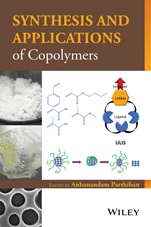
Synthesis and Applications of Copolymers
ISBN 9781118057469
Autor: Anbanandam Parthiban
Wydawca: Wiley
Dostępność: 3-6 tygodni
Cena: 595,35 zł
Przed złożeniem zamówienia prosimy o kontakt mailowy celem potwierdzenia ceny.
ISBN13: |
9781118057469 |
ISBN10: |
1118057465 |
Autor: |
Anbanandam Parthiban |
Oprawa: |
Hardback |
Rok Wydania: |
2014-07-22 |
Ilość stron: |
400 |
Wymiary: |
242x161 |
Tematy: |
TDCB |
This book comprehensively covers fundamental aspects of polymerization, emphasizing the synthesis, applications, and advances of copolymers. It focuses on monomers and reaction conditions for newly formed polymeric materials that exhibit desired properties. Providing a broad scope of up–to–date discussion, the book helps readers better understand synthetic methodology and chemistry. Chapters begin with detailed discussion on synthetic techniques and trends in controlling chain length, functionality, composition, and arrangement as well as developments in copolymerzation. The following chapters focus on topics in polymer processing, from renewable processes and materials to the application of copolymers obtained by fixing carbon dioxide. Several popular applications and tools are covered, including stimuli responsive polymers, pharmaceutical polymers, nano–patterns, self–assembly, microporous materials and polymer–drug conjugates. Overall, the book introduces experimental advances in an expanding area that can lead to further research and multidisciplinary applications.
Section I. Synthesis of Copolymers 1 Trends in synthetic strategies for making (co)polymers Anbanandam Parthiban 1 Background and Introduction 2 1.1 Significance of control over arrangement of monomers in copolymers 6 1.2 Chain growth condensation polymerization 6 1.3 Sequence controlled polymerization 10 1.4 Processing of thermoset polymers – Dynamic bond forming processes and self–healing materials 12 1.5 Miscellaneous developments 16 1.6 Conclusion 20 References 21 2 Functional Polyolefins from the Coordination Copolymerization of Vinyl Monomers 30 Fabio Di Lena and Joao Bomfim 2.1 Molecular aspects of olefin coordination to metals 31 2.2 Fundamentals of homopolymerization of alkenes 33 2.3 Copolymerization of ethene and other alkenes 35 2.4 Copolymerization of alkenes and carbon monoxide 37 2.5 Copolymerization of alkenes and polar vinyl monomers 39 2.6 Copolymerization of polar vinyl monomers and carbon monoxide 45 2.7 Why are phosphine–sulfonate ligands so special? 46 2.8 Telechelic and end–capped macromolecules 47 2.9 On the use of chemoinformatics for a more rapid development of the field 48 2.10 Conclusion and outlook 50 References 52 3 General Aspects of Copolymerization 67 Alexander M van Herk 3.1 Copolymerization in chain reactions 67 3.2 Measuring copolymerization parameters 75 3.3 Influence of reaction conditions 78 3.4 Short chain effects in copolymerization 79 3.5 Synthesis of block copolymers with controlled chain architecture 81 References 82 4 Polymers Bearing Reactive, Pendant Cyclic Carbonate (CC) Group: Syntheses, Post–Polymerization Modifications and Applications 85 Satyasankar Jana 4.1 Introduction 87 4.2 Cyclic carbonate (CC) monomers and polymers 90 4.3 Chemical modification of pendant CC polymers 100 4.4 Applications of pendant CC polymers 103 4.5 Conclusion 106 References 107 5 Monomers and polymers derived from renewable or partially renewable resources 124 Anbanandam Parthiban 5.1 Building blocks from renewable resources 125 5.2 Polyesters incorporated with isosorbide 128 5.3 Rosin and developments associated with Rosin 132 5.4 Polyurethanes from vegetable oils 134 5.5 CO 2 as renewable resource comonomer 135 5.6 Renewable triblock copolymer based pressure sensitive adhesives (PSA) 136 5.7 Photocurable renewable resource polyester 137 5.8 Renewable resource derived waterborne polyesters 138 5.9 Polymers formed by combining renewable resource monomers with that derived from petroleum feedstock 139 Conclusion and Outlook 142 References 144 6 Microporous Organic Polymers – Synthesis, Types and Applications 151 Shujun Xu and Bien Tan 6.1 Introduction 152 6.2 Preparations of microporous organic polymers (MOPs) 154 6.3 Hydrogen Adsorption 170 6.4 Carbon dioxide capture 176 6.5 Separations 183 6.6 Catalysis 185 6.7 Prospect 189 References 189 7 Dendritic copolymers 207 Srinivasa Rao Vinukonda 7.1 Introduction 208 7.2 Synthesis strategies 7.3 Properties Dendritic copolymers 227 7.4 Applications of Dendritic copolymers 233 References 236 Section II. Applications of Copolymers 8 A New Class of Ion–Conductive Polymer Electrolytes: CO 2 /Epoxide Alternating Copolymers with Lithium Salts 258 Yoichi Tominaga 8.1 Introduction 259 8.2 Experimental 262 8.3 Results and discussion 265 8.4 Conclusion 276 References 278 9 Block Copolymer Nanopatterns As Enabling Platforms For Device Applications – Status, Issues And Challenges 283 Sivasankar Krishnamoorthy 9.1 Introduction 284 9.2 Block copolymer templates for pattern–transfer applications 285 9.3 Specific instances in exploitation of block copolymers in Applications 301 9.4 Conclusions 317 References 317 10 Stimuli–Responsive Copolymers and Their Applications 337 He Tao 10.1 Introduction 338 10.2 Temperature–responsive copolymers and applications 340 10.3 p H–responsive copolymers and applications 354 10.4 Biologically responsive copolymers and applications 362 10.5 Field–responsive copolymers and applications 368 10.6 Conclusion 374 References 374 11 Pharmacuetical Polymers 392 Natarajan Venkatesan and Hideki Ichikawa 11.1 Introduction to pharmaceutical polymers 394 11.2 Applications of pharmaceutical polymers 395 11.3 Summary 424 References 424 12 Polymer conjugates of proteins and drugs to improve therapeutics 434 Parijat Kanaujia and Ajazuddin 12.1 Introduction 436 12.2 Polymers for therapeutic conjugation 437 12.3 PEGylated proteins in clinical practice 451 12.4 N –(2–Hydroxypropyl) methacrylamide (HPMA) copolymer conjugate 464 12.5 Poly(L–glutamic acid) conjugates 465 12.6 Polysialic acid (PSA) conjugates 466 12.7 Conclusion 467 References 467
Anbanadam Parthiban is a Research Scientist at the Institute of Chemical and Engineering Sciences under the Agency for Science, Technology and Research (A∗STAR), Singapore. After receiving his Ph.D. in Chemistry from the Indian Institute of Technology (IIT), Madras Dr. Parthiban worked in a corporate R&D Centre developing thickeners and additives for lubricants. He has 40 journal publications and 9 patents and is an active reviewer of manuscripts for major polymer journals. He also evaluates proposals for government funded research agencies.
Koszyk
Książek w koszyku: 0 szt.
Wartość zakupów: 0,00 zł
Informacje


Kontakt
Gambit
Centrum Oprogramowania
i Szkoleń Sp. z o.o.
Al. Pokoju 29b/22-24
31-564 Kraków
Siedziba Księgarni
ul. Kordylewskiego 1
31-542 Kraków
+48 12 410 5991
+48 12 410 5987
+48 12 410 5989
Subskrypcje
Administratorem danych osobowych jest firma Gambit COiS Sp. z o.o. Na podany adres będzie wysyłany wyłącznie biuletyn informacyjny.
Autoryzacja płatności

Informacje na temat autoryzacji płatności poprzez PayU.

© Copyright 2012: GAMBIT COiS Sp. z o.o. Wszelkie prawa zastrzeżone.
Projekt i wykonanie: Alchemia Studio Reklamy