


Wydawcy
Katalog tematyczny
- Archeologia (109)
- Ekonomia, finanse, business (13704)
- Filozofia (1445)
- Historia (3040)
- Języki i językoznawstwo (2356)
- Lifestyle, hobby i rozrywka (475)
- Medycyna (9704)
- Nauki humanistyczne (4)
- Nauki o Ziemi i środowisku (2638)
- Nauki ścisłe (20412)
- Nauki społeczne (8486)
- Nauki techniczne (13450)
- Prawo (1696)
- Publikacje informacyjne i interdyscyplinarne (1288)
- Religia i wierzenia (917)
- Technika komputerowa (4067)
- Zdrowie, relacje międzyludzkie i rozwój osobisty (657)





Informacje szczegółowe o książce
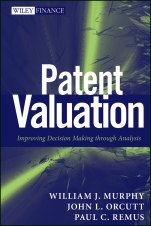
Patent Valuation: Improving Decision Making through Analysis
ISBN 9781118027349
Autor: William J. Murphy, John L. Orcutt, Paul C. Remus
Wydawca: Wiley
Dostępność: 3-6 tygodni
Cena: 401,10 zł
Przed złożeniem zamówienia prosimy o kontakt mailowy celem potwierdzenia ceny.
ISBN13: |
9781118027349 |
ISBN10: |
1118027345 |
Autor: |
William J. Murphy, John L. Orcutt, Paul C. Remus |
Oprawa: |
Hardback |
Rok Wydania: |
2012-05-22 |
Ilość stron: |
400 |
Wymiary: |
246x164 |
Tematy: |
KM |
Praise for Patent Valuation
"With no nonsense or intellectual posturing, the authors tell us what a patent valuation is really about . . . in real life. Readable, sound, and eminently useful, the authors have presented many new and practical insights about the valuation process and about the nature of patents as business assets. While focused on patents, their insights apply to any intellectual property and, in fact, to any valuation. Professionals, corporate managers, attorneys, and anyone else in the IP world will find themselves attached to this clearly written book." Gordon V. Smith, author of Trademark Valuation and Intellectual Property
"Innovation is the key to success for individuals, companies, and entire nations. Patents are the key to providing a marketplace for innovation. In Patent Valuation, Murphy, Orcutt, and Remus cut through the legal complexities of patents to help you figure out your bottom line what are they worth?" Jon Dudas, President of FIRST®, Under Secretary of Commerce for Intellectual Property, and Director of the United States Patent and Trademark Office, 2005 2009
"Effective management of IP assets is enhanced when decision making takes into consideration the value of the assets. This new work by William Murphy, John Orcutt, and Paul Remus presents a number of accepted models for calculating value and practical application of these models. I highly recommend Patent Valuation as a reference for those IP professionals who want to leverage greater value from their IP assets." David Koris, General Counsel, Head of Intellectual Property, Shell International BV, The Hague, Netherlands
"Going beyond the conventional primer, this book provides a practical framework that incorporates the art of defining a value proposition with the science of quantitative examples to drive a productive dialogue of patent valuation." Rajiv Patel, Partner, Fenwick & West LLP
Preface ix
Acknowledgments xiii
PART ONE Foundations for Patent Valuation and Decision Making 1
CHAPTER 1 Valuation Basics 3
What Is Value? 5
The Valuation Process 7
Identifying the Subject Matter of the Valuation 9
Valuation Misconceptions 12
The Three Basic Valuation Methodologies 16
Limitations on Rationality in Valuation and Decision–Making Exercises 20
References 20
Notes 21
CHAPTER 2 Patent Basics 23
What Is a Patent? 26
Anatomy of a Patent 32
Criteria for a Patent 33
Transferring Patent Rights 36
Nationality of a Patent 39
References 40
Notes 40
CHAPTER 3 Using Valuation Analysis to Improve Patent Decision Making 43
Patent Decisions 45
Maximizing, Optimizing, and Satisficing: How Much to Invest in Valuation Analysis 52
Preliminary Portfolio Valuation Audit: A Practical Valuation Technique 58
References 65
Notes 65
CHAPTER 4 Disassembly 67
Disassembly and Decision Trees 69
Using Disassembly to Develop Higher–Quality Data 75
Using Disassembly to Understand Data Better 84
References 86
Notes 87
PART TWO Patent Valuation Techniques 89
CHAPTER 5 Preparing for the Valuation 91
Understanding the Bundle of Legal Rights 91
Ownership Interest in the Patent 93
Description of the Patent Rights 99
Encumbrances on the Patent Rights 100
Understanding the Patent Rights Neighborhood 102
Exploiting the Patent Rights 103
References 117
Notes 119
CHAPTER 6 Income Methods: Discounted Future Economic Benefits Analysis 121
Basic Arithmetic of the Discounted Future Economic Benefits Analysis 124
Garbage In, Garbage Out: The Challenges Lay in the Inputs, Not the Math 131
Projecting Future Net Economic Benefits 133
Developing Projections from Analytical Analyses 143
Estimating the Discount Rate 151
References 159
Notes 160
CHAPTER 7 Advanced Income Methods: Incorporating the Value of Future Decision Opportunities 161
Option Contracts and Their Value 164
Real Options 168
Valuing Patents Using Option–Pricing Insights 170
Using Decision Trees to Incorporate the Value of a Patent s Future Decision Opportunities 174
References 185
Notes 186
CHAPTER 8 Market Methods 189
Markets and Patent Rights 191
Competitive Exchange 198
Comparable Transactions 205
Alternatives to the Core Market Methods 207
References 214
Notes 216
CHAPTER 9 Cost Methods 219
A Few Accounting Principles 220
Cost of Development: Questionable Valuation Tool 224
Cost of Reasonable Alternatives: Establishing a
Maximum Price 227
References 230
Notes 231
PART 3 Patent Valuation in Practice 233
CHAPTER 10 Pricing Patent Licenses 235
Payment Structures 236
Determining the Price for a License 246
Less Formal Valuation Techniques for Setting Royalty Rates 248
References 264
Notes 265
CHAPTER 11 Patent Infringement Damages 269
U.S. Legal Framework for Calculating Damages in Patent Infringement Cases 271
Lost Profits 275
Reasonable Royalty 285
Additional Patent Damages Matters 297
Answering the Sue or Settle Question 299
References 306
Notes 307
CHAPTER 12 Unlocking the Potential Value within Patents 313
Keeping Pace with Economic Changes 316
Patents as Collateral for Secured Loans 317
Securitizing Patents 325
References 333
Notes 334
CHAPTER 13 Valuation in Patent–Based Tax–Planning Strategies 337
Examples of Patent–Based Tax–Reduction Strategies 339
Transfer Pricing 344
Determining Transfer Prices for Patent Rights 348
References 358
Notes 359
About the Authors 363
Index 365
William J. Murphy is a Professor of Law and Chair of the Commerce and Technology Law Graduate Program at the University of New Hampshire School of Law (formerly the Franklin Pierce Law Center), one of the top schools of intellectual property in the country. Murphy cofounded UNH Law′s Intellectual Property Valuation Institute and currently serves as its director. He is the author of R&D Cooperation among Marketplace Competitors. Murphy earned a JD degree from Pennsylvania State University′s Dickinson School of Law, and he holds master and doctorate degrees from Harvard Business School.
John L. Orcutt is the Associate Dean for Faculty Research and a Professor of Law at the University of New Hampshire School of Law. Orcutt cofounded UNH Law′s Intellectual Property Valuation Institute and its International Technology Transfer Institute. Orcutt is the author of Shaping China′s Innovation Future: University Technology Transfer in Transition. Before coming to UNH Law, Orcutt worked as a Silicon Valley investment banker and a capital markets attorney. Orcutt earned a JD degree from the University of California, Berkeley.
Paul C. Remus is a shareholder of the law firm of Devine, Millimet & Branch, P.A., in Manchester, New Hampshire. Remus concentrates his intellectual property practice in prosecuting patent applications, drafting noninfringement opinions, and licensing technology. He also mediates disputes involving intellectual property and is on the U.S. District Court Mediation Panel List. Remus also represents both companies and venture capitalists in private placements and other financing involving intellectual property. Remus earned a JD degree from the University of Michigan.
Koszyk
Książek w koszyku: 0 szt.
Wartość zakupów: 0,00 zł
Informacje


Kontakt
Gambit
Centrum Oprogramowania
i Szkoleń Sp. z o.o.
Al. Pokoju 29b/22-24
31-564 Kraków
Siedziba Księgarni
ul. Kordylewskiego 1
31-542 Kraków
+48 12 410 5991
+48 12 410 5987
+48 12 410 5989
Subskrypcje
Administratorem danych osobowych jest firma Gambit COiS Sp. z o.o. Na podany adres będzie wysyłany wyłącznie biuletyn informacyjny.
Autoryzacja płatności

Informacje na temat autoryzacji płatności poprzez PayU.

© Copyright 2012: GAMBIT COiS Sp. z o.o. Wszelkie prawa zastrzeżone.
Projekt i wykonanie: Alchemia Studio Reklamy