


Wydawcy
Katalog tematyczny
- Archeologia (109)
- Ekonomia, finanse, business (13704)
- Filozofia (1445)
- Historia (3040)
- Języki i językoznawstwo (2356)
- Lifestyle, hobby i rozrywka (475)
- Medycyna (9704)
- Nauki humanistyczne (4)
- Nauki o Ziemi i środowisku (2638)
- Nauki ścisłe (20412)
- Nauki społeczne (8486)
- Edukacja (229)
- Kryminologia, opieka spełeczna (284)
- Obronność (10)
- Polityka (1389)
- Psychologia (777)
- Socjologia (410)
- Społeczeństwo i kultura (187)
- Nauki techniczne (13450)
- Prawo (1696)
- Publikacje informacyjne i interdyscyplinarne (1288)
- Religia i wierzenia (917)
- Technika komputerowa (4067)
- Zdrowie, relacje międzyludzkie i rozwój osobisty (657)





Informacje szczegółowe o książce
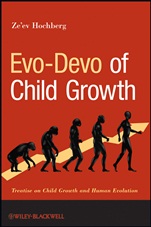
Evo–Devo of Child Growth: Treatise on Child Growth and Human Evolution
ISBN 9781118027165
Autor: Zeev Hochberg
Wydawca: Wiley
Dostępność: 3-6 tygodni
Cena: 729,75 zł
Przed złożeniem zamówienia prosimy o kontakt mailowy celem potwierdzenia ceny.
ISBN13: |
9781118027165 |
ISBN10: |
1118027167 |
Autor: |
Zeev Hochberg |
Oprawa: |
Hardback |
Rok Wydania: |
2012-02-20 |
Ilość stron: |
240 |
Wymiary: |
259x177 |
Tematy: |
JBK |
Working with principles from the fields of evolutionary anddevelopmental biology (evo–devo), this fascinating work offers anew approach to analyzing child growth and development, examiningeach stage and transition in detail, from fetal development topreadulthood. Based on the author′s in–depth review of the currentliterature and his own observations as a pediatric endocrinologist,the book demonstrates how the transitions between human lifehistory phases represent unique periods of evolutionary adaptiveresponse to the environment. In addition, the author explains whyan understanding of these transition periods enables us to betterunderstand the sequence and mechanisms of child growth as well asto better diagnose child growth disorders.
Logically organized and clearly written, Evo–Devo of ChildGrowth:
Sets a solid foundation of principles such as evolutionarythinking in medicine and child growth, life history theory, andheterochrony and allometry
Examines the relationship between child growth and the theory oflife history
Applies evo–devo theory to fetal growth, infancy, childhood,juvenility, adolescence, and preadulthood
Explores the trade–offs and adaptive phenotypic plasticityduring transition periods
Explains the role of life history theory in understanding anddiagnosing growth disorders such as Down syndrome, Noonan syndrome,and Silver–Russell syndrome
In addition to the author′s own analysis and observations, thisbook also features notes from leading clinicians and evolutionarybiologists, offering additional perspectives on the relationshipbetween evo–devo and child growth and development.
Evo–Devo of Child Growth provides a new perspective forevolutionary biologists to understand the phases and transitions ofchild growth. Moreover, it offers a new approach to help cliniciansto better understand and diagnose a broad range of child growthdisorders.
CONTENTS
I. Introduction
a. Evolutionary thinking in medicine
b. Evo–Devo
c. Life history theory
d. Evolutionary perspective in child growth and maturation
e. Child growth and the environment
f. Heterochrony and allometry
g. Adaptive plasticity in life–history
II. Child growth and the theory of life history
a. Life–history stages
b. Transitions between life–history stages
c. Developmental plasticity and adaptation
d. Cultural adaptation to the environment
e. Adaptive plasticity of attachment behaviors
f. Note by George Chrousos on stress in early life: a developmentaland evolutionary perspective
1. Stress concepts
2. Stress mechanisms
3. Pathological effects of stress
f. Note by Stefan Borenstein and Andreas Androutsellis–Theotokis onendogenous stem cells as components of plasticity andadaptation
1. The adult mammalian brain: Plastic or rigid?
2. Hidden plasticity potential in the brain
3. Neurogenic cell vs. neural stem cell
4. Does the role of neural stem cells change from the developingage to the adult?
5. The disconnect between neurogenesis and the presence of neuralstem cells
6. Fetal vs. adult neural stem cells
7. Signal transduction of stem cell regulation
8. Beyond the nervous system
9. Conclusions
III. Fetal growth
a. Endocrine and metabolic control of fetal growth
b. The role of the placenta
c. Developmental origins of health and adult disease (DOHaD)
d. Imprinted genes and intrauterine growth
e. Note by Alan Templeton on the evolutionary connection betweensenescence and childhood growth and development
1. An evolutionary theory of aging
2. Thrifty genotypes and antagonistic pleiotropy
3. Thrifty genotypes and heart disease
4. Why we grow old: the answer
IV. Infancy
a. The reproductive dilemma
b. The obstetrical dilemma
c. Growth of the infant
d. Endocrine aspects of infantile growth
e. Infancy – childhood transition: determination of adultstature
f. Weaning from breast–feeding
V. Childhood 146
a. The weanling′s dilemma
b. The grandmother theory
c. Growth of the child
d. Endocrine aspects of childhood growth
VI. Juvenility
a. The social/cognitive definition of juvenility
b. Paleo–anthropological juvenility and teeth eruption
c. Adrenarche
d. Juvenile body composition
e. Growth of the juvenile
f. Trade–offs for the timing of transition to juvenility
g. Precocious juvenility
h. The Pygmy paradigm for precocious juvenility
i. Evolutionary perspective in precocious juvenility
VII. Adolescence
a. Human evolution of adolescence
b. Transition from juvenility to adolescence
c. Pubertal growth
VIII Preadulthood
IX Evolutionary strategies for body size
a. The little people of Flores
b. Lessons from the great apes
c. The Handicap theory
d. Sexual dimorphism
e. The role of sex steroids
X Energy considerations
a. Endocrine control of energy expenditure
b. Weaning and growth in a malnourished environment
XI. Stage transitions: trade–offs and adaptive phenotypicplasticity
a. Trans–generational influences in life–stages transition
b. Epigenetics and life–history stage transitions
c. Note by Ken Ong on population genetics and child growth andmaturation
1. Genetic adaptation
2. The genetic epidemiology of child growth and maturation
3. Basic principles and heritability estimates from twinstudies
4. More complex heritability models
5. Heritability is dependent upon the setting
6. Essential genes for childhood growth and maturation
7. Common genetic variants for childhood growth andmaturation:
8. GWAS findings lead to new biology:
9. GWAS findings lead to new phenotypic understanding
10. Genetic adaptations for childhood growth and maturation
11. Conclusions
d. Note by Moshe Szyf on the DNA methylation pattern as a molecularlink between early childhood and adult health
1. Introduction
2. DNA methylation patterns and their roles in cellulardifferentiation and gene expression
3. DNA methylation as a genome adaptation mechanism
4. Epigenetic programming by the early life socialenvironment
5. Genome and system wide impact of early life adversity
6. Prospective and summary
XII. Life history theory in understanding growth disorders
a. Down syndrome
b. Noonan′s syndrome
c. Silver–Russell syndrome
d. Additional cases
XIII. When the packages disintegrate
XIV. Concluding remarks
References
It will be a valuable addition to the libraries ofmedical schools that have added evolutionary biology to theircurricula. (The Quarterly Review of Biology, 1June 2013)
You would certainly understand the process better afterreading this treatise, and maybe it may help you develop your ownconcepts of this fascinating phenomenon. (EuropeanSociety for Paediatric Endocrinology, 2012)
Koszyk
Książek w koszyku: 0 szt.
Wartość zakupów: 0,00 zł
Informacje


Kontakt
Gambit
Centrum Oprogramowania
i Szkoleń Sp. z o.o.
Al. Pokoju 29b/22-24
31-564 Kraków
Siedziba Księgarni
ul. Kordylewskiego 1
31-542 Kraków
+48 12 410 5991
+48 12 410 5987
+48 12 410 5989
Subskrypcje
Administratorem danych osobowych jest firma Gambit COiS Sp. z o.o. Na podany adres będzie wysyłany wyłącznie biuletyn informacyjny.
Autoryzacja płatności

Informacje na temat autoryzacji płatności poprzez PayU.

© Copyright 2012: GAMBIT COiS Sp. z o.o. Wszelkie prawa zastrzeżone.
Projekt i wykonanie: Alchemia Studio Reklamy