


Wydawcy
Katalog tematyczny
- Archeologia (109)
- Ekonomia, finanse, business (13704)
- Filozofia (1445)
- Historia (3040)
- Języki i językoznawstwo (2356)
- Lifestyle, hobby i rozrywka (475)
- Medycyna (9704)
- Nauki humanistyczne (4)
- Nauki o Ziemi i środowisku (2638)
- Nauki ścisłe (20412)
- Astronomia (294)
- Biologia (5119)
- Chemia (6540)
- Chemia analityczna (361)
- Chemia fizyczna (346)
- Chemia nieorganiczna (137)
- Chemia organiczna (535)
- Krystalografia (27)
- Minerologia (46)
- Fizyka (3309)
- Matematyka (4574)
- Nauki ścisłe, ogólnie (503)
- Nauki społeczne (8486)
- Nauki techniczne (13450)
- Prawo (1696)
- Publikacje informacyjne i interdyscyplinarne (1288)
- Religia i wierzenia (917)
- Technika komputerowa (4067)
- Zdrowie, relacje międzyludzkie i rozwój osobisty (657)





Informacje szczegółowe o książce
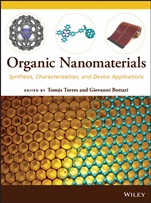
Organic Nanomaterials: Synthesis, Characterization, and Device Applications
ISBN 9781118016015
Autor: Tomas Torres, Giovanni Bottari
Wydawca: Wiley
Dostępność: 3-6 tygodni
Cena: 844,20 zł
Przed złożeniem zamówienia prosimy o kontakt mailowy celem potwierdzenia ceny.
ISBN13: |
9781118016015 |
ISBN10: |
1118016017 |
Autor: |
Tomas Torres, Giovanni Bottari |
Oprawa: |
Hardback |
Rok Wydania: |
2013-11-19 |
Ilość stron: |
624 |
Wymiary: |
285x217 |
Tematy: |
PN |
Discover a new generation of organic nanomaterials and their applications Recent developments in nanoscience and nanotechnology have given rise to a new generation of functional organic nanomaterials with controlled morphology and well-defined properties, which enable a broad range of useful applications. This book explores some of the most important of these organic nanomaterials, describing how they are synthesized and characterized. Moreover, the book explains how researchers have incorporated organic nanomaterials into devices for real-world applications. Featuring contributions from an international team of leading nanoscientists, Organic Nanomaterials is divided into five parts: Part One introduces the fundamentals of nanomaterials and self-assembled nanostructures Part Two examines carbon nanostructuresfrom fullerenes to carbon nanotubes to graphenereporting on properties, theoretical studies, and applications Part Three investigates key aspects of some inorganic materials, self-assembled monolayers, organic field effect transistors, and molecular self-assembly at solid surfaces Part Four explores topics that involve both biological aspects and nanomaterials such as biofunctionalized surfaces Part Five offers detailed examples of how organic nanomaterials enhance sensors and molecular photovoltaics Most of the chapters end with a summary highlighting the key points. References at the end of each chapter guide readers to the growing body of original research reports and reviews in the field. Reflecting the interdisciplinary nature of organic nanomaterials, this book is recommended for researchers in chemistry, physics, materials science, polymer science, and chemical and materials engineering. All readers will learn the principles of synthesizing and characterizing new organic nanomaterials in order to support a broad range of exciting new applications.
Preface vii Contributors ix 1 A Proposed Taxonomy and Classification Strategy for Well–Defined, Soft–Matter Nanoscale Building Blocks 1 Jørn B. Christensen and Donald A. Tomalia 2 On the Role of Hydrogen–Bonding in the Nanoscale Organization of π–Conjugated Materials 33 Albertus P. H. J. Schenning and David Gonzalez–Rodrýguez 3 Chiral Organic Nanomaterials 59 David B. Amabilino 4 Biochemical Nanomaterials based on Poly(ε–caprolactone) 79 Irakli Javakhishvili and Søren Hvilsted 5 Self–Assembled Porphyrin Nanostructures and their Potential Applications 103 John A. Shelnutt and Craig J. Medforth 6 Nanostructures and Electron–Transfer Functions of Nonplanar Porphyrins 131 Shunichi Fukuzumi and Takahiko Kojima 7 Tweezers and Macrocycles for the Molecular Recognition of Fullerenes 147 David Canevet, Emilio M. Perez, and Nazario Martýn 8 Covalent, Donor–Acceptor Ensembles based on Phthalocyanines and Carbon Nanostructures 163 Giovanni Bottari, Maxence Urbani, and Tomas Torres 9 Photoinduced Electron Transfer of Supramolecular Carbon Nanotube Materials Decorated with Photoactive Sensitizers 187 Francis D’Souza, Atula S. D. Sandanayaka, and Osamu Ito 10 Interfacing Porphyrins/Phthalocyanines with Carbon Nanotubes 205 Juergen Bartelmeß and Dirk M. Guldi 11 Organic Synthesis of Endohedral Fullerenes Encapsulating Helium, Dihydrogen, and Water 225 Michihisa Murata, Yasujiro Murata, and Koichi Komatsu 12 Fundamental and Applied Aspects of Endohedral Metallofullerenes as Promising Carbon Nanomaterials 241 Michio Yamada, Xing Lu, Lai Feng, Satoru Sato, Yuta Takano, Shigeru Nagase, and Takeshi Akasaka 13 An Update on Electrochemical Characterization and Potential Applications of Carbon Materials 259 Fang–Fang Li, Adri´an Villalta–Cerdas, Lourdes E. Echegoyen, and Luis Echegoyen 14 Solvating Insoluble Carbon Nanostructures by Molecular Dynamics 311 Matteo Calvaresi and Francesco Zerbetto 15 Inorganic Capsules: Redox–Active Guests in Metal Cages 331 Andrew Macdonell and Leroy Cronin 16 Stimuli–Responsive Monolayers 347 Francesca A. Scaramuzzo, Mario Barteri, Pascal Jonkheijm, and Jurriaan Huskens 17 Self–Assembled Monolayers as Model Biosurfaces 369 Anna Laromaine and Charles R. Mace 18 Low–Dimensionality Effects in Organic Field Effect Transistors 397 Stefano Casalini, Tobias Cramer, Francesca Leonardi, Massimiliano Cavallini, and Fabio Biscarini 19 The Growth of Organic Nanomaterials by Molecular Self–Assembly at Solid Surfaces 421 Jose M. Gallego, Roberto Otero, and Rodolfo Miranda 20 Biofunctionalized Surfaces 447 Marisela Velez 21 Carbon Nanotube Derivatives as Anticancer Drug Delivery Systems 469 Chiara Fabbro, Tatiana Da Ros, and Maurizio Prato 22 Porous Nanomaterials for Biomedical Applications 487 Henning Lulf, Andr´e Devaux, Eko Adi Prasetyanto, and Luisa De Cola 23 Dicationic Gemini Nanoparticle Design for Gene Therapy 509 Mahmoud Elsabahy, Ildiko Badea, Ronald Verrall, McDonald Donkuru, and Marianna Foldvari 24 Sensing Hg(II) Ions inWater: From Molecules to Nanostructured Molecular Materials 529 Imma Ratera, Alberto Tarraga, Pedro Molina, and Jaume Veciana 25 Organic Nanomaterials for Efficient Bulk Heterojunction Solar Cells 549 Pavel A. Troshin and Niyazi Serdar Sariciftci 26 Mesoscopic Dye–Sensitized Solar Cells 579 Mohammad Khaja Nazeeruddin, Jaejung Ko, and Michael Gratzel Index 599
Tomás Torres is Full Professor of Organic Chemistry at the Universidad Autónoma de Madrid and Associated Senior Scientist at IMDEA Nanoscience in Madrid. He has published 370 papers and reviews and holds forty patents. Giovanni Bottari is Associate Professor of Organic Chemistry at the Universidad Autónoma de Madrid and Associated Scientist at IMDEA Nanoscience in Madrid. He has published thirty-six papers and reviews and two book chapters.
Koszyk
Książek w koszyku: 0 szt.
Wartość zakupów: 0,00 zł
Informacje


Kontakt
Gambit
Centrum Oprogramowania
i Szkoleń Sp. z o.o.
Al. Pokoju 29b/22-24
31-564 Kraków
Siedziba Księgarni
ul. Kordylewskiego 1
31-542 Kraków
+48 12 410 5991
+48 12 410 5987
+48 12 410 5989
Subskrypcje
Administratorem danych osobowych jest firma Gambit COiS Sp. z o.o. Na podany adres będzie wysyłany wyłącznie biuletyn informacyjny.
Autoryzacja płatności

Informacje na temat autoryzacji płatności poprzez PayU.

© Copyright 2012: GAMBIT COiS Sp. z o.o. Wszelkie prawa zastrzeżone.
Projekt i wykonanie: Alchemia Studio Reklamy