


Wydawcy
Katalog tematyczny
- Archeologia (109)
- Ekonomia, finanse, business (13704)
- Filozofia (1445)
- Historia (3040)
- Języki i językoznawstwo (2356)
- Lifestyle, hobby i rozrywka (475)
- Medycyna (9704)
- Nauki humanistyczne (4)
- Nauki o Ziemi i środowisku (2638)
- Nauki ścisłe (20412)
- Nauki społeczne (8486)
- Nauki techniczne (13450)
- Budownictwo lądowe (1045)
- Chemia przemysłowa (2258)
- Elektronika i telekomunikacja (3287)
- Energetyka (1122)
- Inne nauki stosowane (363)
- Inżynieria biochemiczna (507)
- Inżynieria transportu (232)
- Mechanika i materiały (3316)
- Nauka o środowisku (321)
- Rolnictwo (507)
- Technika, ogólnie (475)
- Prawo (1696)
- Publikacje informacyjne i interdyscyplinarne (1288)
- Religia i wierzenia (917)
- Technika komputerowa (4067)
- Zdrowie, relacje międzyludzkie i rozwój osobisty (657)






Informacje szczegółowe o książce
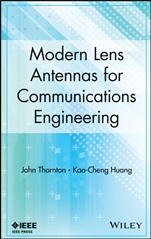
Modern Lens Antennas for Communications Engineering
ISBN 9781118010655
Autor: John Thornton, Kao–Cheng Huang
Wydawca: Wiley
Dostępność: 3-6 tygodni
Cena: 611,10 zł
Przed złożeniem zamówienia prosimy o kontakt mailowy celem potwierdzenia ceny.
ISBN13: |
9781118010655 |
ISBN10: |
1118010655 |
Autor: |
John Thornton, Kao–Cheng Huang |
Oprawa: |
Hardback |
Rok Wydania: |
2013-05-10 |
Ilość stron: |
284 |
Wymiary: |
244x164 |
Tematy: |
TJ |
Lens antennas why and how they should be used more oftenin modern communications systems
This remarkable work provides RF/microwave engineers withcomplete guidance on how to develop lens antennas, focusing onrecent advances in communications engineering where this oftenoverlooked technology is especially useful. It clearly demonstratesthe benefits of using lens antennas in modern communicationsystems, featuring numerous examples, measurement data, fabricationtechniques, and real–world applications.
Modern Lens Antennas for Communications Engineeringexplores many types of lens antennas in great detail, from polyrodsand low sidelobe antennas to the spherical lens and hemisphericallens–reflector scanning antennas. In addition to design principlesand computational techniques, readers will find a host of helpfultips on how to fabricate lens antennas in small batches forassessment, choose the right dielectric material, configuremeasurement campaigns, and tackle practical issues whenconstructing antennas and measuring their properties.
The book provides information on:
Economically coupling a millimeter–wave circuit into aradiating beam whose polarization and shape is tightlycontrolled Utilizing costly spectrum in cellular networks beamed to theground from platforms high in the upper atmosphere Tracking two different satellites from a single terminal on ahigh–speed trainModern Lens Antennas for Communications Engineering is anexcellent resource for RF/microwave engineers, designers, andresearchers in academia and industry, and anyone wishing to learnhow to take full advantage of lens antennas and their many usefuland interesting properties.
Preface ix
Acknowledgments xi
1 INTRODUCTION 1
John Thornton and Kao–Cheng Huang
1.1 Lens Antennas: An Overview 2
1.1.1 The Microwave Lens 2
1.1.2 Advantages of Lens Antennas 4
1.1.3 Materials for Lenses 5
1.1.4 Synthesis 6
1.2 Feeds for Lens Antennas 8
1.2.1 Microstrip Feeds 8
1.2.2 Horn Feeds 9
1.3 Luneburg and Spherical Lenses 10
1.4 Quasi Optics and Lens Antennas 14
1.5 Lens Antenna Design 18
1.6 Metamaterial Lens 26
1.7 Planar Lens or Phase–Shifting Surface 30
1.7.1 Refl ect Array 31
1.7.2 Planar Lens or Lens Array 33
1.8 Applications 36
1.9 Antenna Measurements 37
1.9.1 Radiation Pattern Measurement 37
1.9.2 Gain Measurement 38
1.9.3 Polarization Measurement 38
1.9.4 Anechoic Chambers and Ranges 38
2 REVIEW OF ELECTROMAGNETIC WAVES 49
Kao–Cheng Huang
2.1 Maxwell s Equations 49
2.1.1 Boundary Conditions 53
2.1.2 Equivalence Theorem 55
2.2 Antenna Parameters 56
2.2.1 Beam Solid Angle and Antenna Temperature 56
2.2.2 Directivity and Gain 58
2.2.3 Antenna Beamwidth 60
2.2.4 Aperture of a Lens 62
2.2.5 Phase Center 63
2.3 Polarization 64
2.4 Wave Propagation in Metamaterials 71
3 POLYROD ANTENNAS 77
Kao–Cheng Huang
3.1 Polyrods as Resonators 78
3.2 The Polyrod as a Radiator 83
3.2.1 Tapered Polyrod Antenna 85
3.3 Patch–Fed Circular Polyrod 90
3.4 Array of Polyrods 97
3.5 Multibeam Polyrod Array 105
4 MILLIMETER WAVE LENS ANTENNAS 113
Kao–Cheng Huang
4.1 Millimeter Wave Characteristics 114
4.1.1 Millimeter Wave Loss Factors 114
4.1.2 Ray–Tracing Propagation 117
4.2 Millimeter Wave Substrate Lens for Imaging 121
4.3 Millimeter Wave and Submillimeter Wave Lens 126
4.3.1 Extended Hemispherical Lens 128
4.3.2 Off–Axis Extended Hemispherical Lens 133
4.3.3 Submillimeter Wave Lens Antennas for Communications136
4.4 Analysis of Millimeter Wave Spherical Lens 139
4.5 Waveguide–Fed Millimeter Wave Integrated Lens 141
5 LENS ANTENNAS FOR COMMUNICATIONS FROM HIGH–ALTITUDEPLATFORMS 147
John Thornton
5.1 Introduction 147
5.2 The High–Altitude Platform Concept 148
5.2.1 Spectrum Reuse Using HAPs 150
5.2.2 Example Results: Cell Power and Interference 155
5.3 Advantages of Lenses over Reflector Antennas 159
5.3.1 Reflectors 160
5.3.2 Lenses 161
5.3.3 Commercial Lens Antennas 162
5.4 Development of a Shaped Beam Low–Sidelobe Lens Antenna withAsymmetric Pattern 164
5.4.1 Primary Feed 165
5.4.2 Symmetric 5° Beamwidth Antenna 166
5.4.3 Asymmetric Beam 166
5.4.4 Measurements 174
5.5 Lens Antenna Payload Model 177
5.6 Multifeed Lens 178
5.7 Multiple Beam Spherical Lens Antennas for HAP Payload181
6 SPHERICAL LENS ANTENNAS 187
John Thornton
6.1 Introduction 187
6.2 Spherical Lens Overview 192
6.3 Analytical Methods 195
6.3.1 Ray Tracing 195
6.3.2 SWE 197
6.3.3 Computational Method and Results 202
6.3.4 Generic Feed Pattern 206
6.3.5 Commercial Solvers 208
6.4 Spherical Lens Materials and Fabrication Methods 210
6.4.1 Machined Polymers 210
6.4.2 Molding 212
6.4.3 Polymer Foams 212
6.4.4 PU Dielectric Loss 214
6.4.5 Artifi cial Dielectrics 215
6.5 Revisiting the Constant–Index Lens 215
6.5.1 A Practical, Patch–Fed Hemispherical Constant–Index Lens219
6.5.2 Off–Axis Array–Fed Spherical Lens 219
6.6 Cross–Polarization Properties of Spherical Lenses 221
7 HEMISPHERICAL LENS–REFLECTOR SCANNING ANTENNAS225
John Thornton
7.1 Introduction 225
7.2 Candidate Scanning Antenna Technologies 226
7.3 Spherical and Hemispherical Lens Antenna 228
7.4 Hemispherical Lens Prototype 229
7.5 Evolution of a Two–Layer Stepped–Index Polymer Lens 232
7.6 A Hemispherical Lens–Reflector Antenna for SatelliteCommunications 238
7.6.1 Requirements 239
7.6.2 Lens Analysis 240
7.6.3 Three–Layer Lens Geometry 240
7.6.4 Lens Fabrication and Performance 243
7.6.5 Mechanical Tracking System 245
7.6.6 Ground Plane Effects 249
7.6.7 Aperture Blockage in Scanning Lens Reflector 251
7.7 A Low–Index Lens Reflector for Aircraft Communications(Contribution by D. Gray) 252
About the Authors 267
Index 268
JOHN THORNTON, PhD, has held research posts at theUniversity of Oxford and the University of York. In 2010, he joinedMDA Space and Robotics Ltd to lead their UK antennas program. Hehas published a number of technical papers, reports, and patentapplications, many in the field of antenna engineering.
KAO–CHENG HUANG, PhD, is a Fellow of the Institution ofEngineering and Technology (IET) UK, Vice President at the DharmaAcademy, and President of the Association of Vijnaptimatrata ofChina in Taiwan. Dr. Huang is the author of two previous books,including Millimeter Wave Communication Systems (Wiley–IEEEPress), and holds several patents in the area of millimeter waveantennas.
Koszyk
Książek w koszyku: 0 szt.
Wartość zakupów: 0,00 zł
Informacje


Kontakt
Gambit
Centrum Oprogramowania
i Szkoleń Sp. z o.o.
Al. Pokoju 29b/22-24
31-564 Kraków
Siedziba Księgarni
ul. Kordylewskiego 1
31-542 Kraków
+48 12 410 5991
+48 12 410 5987
+48 12 410 5989
Subskrypcje
Administratorem danych osobowych jest firma Gambit COiS Sp. z o.o. Na podany adres będzie wysyłany wyłącznie biuletyn informacyjny.
Autoryzacja płatności

Informacje na temat autoryzacji płatności poprzez PayU.

© Copyright 2012: GAMBIT COiS Sp. z o.o. Wszelkie prawa zastrzeżone.
Projekt i wykonanie: Alchemia Studio Reklamy