


Wydawcy
Katalog tematyczny
- Archeologia (109)
- Ekonomia, finanse, business (13704)
- Filozofia (1445)
- Historia (3040)
- Języki i językoznawstwo (2356)
- Lifestyle, hobby i rozrywka (475)
- Medycyna (9704)
- Nauki humanistyczne (4)
- Nauki o Ziemi i środowisku (2638)
- Nauki ścisłe (20412)
- Nauki społeczne (8486)
- Nauki techniczne (13450)
- Budownictwo lądowe (1045)
- Chemia przemysłowa (2258)
- Elektronika i telekomunikacja (3287)
- Energetyka (1122)
- Inne nauki stosowane (363)
- Inżynieria biochemiczna (507)
- Inżynieria transportu (232)
- Mechanika i materiały (3316)
- Nauka o środowisku (321)
- Rolnictwo (507)
- Technika, ogólnie (475)
- Prawo (1696)
- Publikacje informacyjne i interdyscyplinarne (1288)
- Religia i wierzenia (917)
- Technika komputerowa (4067)
- Zdrowie, relacje międzyludzkie i rozwój osobisty (657)





Informacje szczegółowe o książce
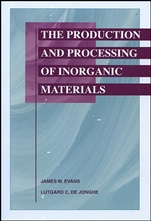
The Production and Processing of Inorganic Materials
ISBN 9780873395410
Autor: James W. Evans, Lutgard C. De Jonghe
Wydawca: Wiley
Dostępność: 3-6 tygodni
Cena: 502,95 zł
Przed złożeniem zamówienia prosimy o kontakt mailowy celem potwierdzenia ceny.
ISBN13: |
9780873395410 |
ISBN10: |
0873395417 |
Autor: |
James W. Evans, Lutgard C. De Jonghe |
Oprawa: |
Paperback |
Rok Wydania: |
2010-05-26 |
Ilość stron: |
548 |
Wymiary: |
227x157 |
Tematy: |
TG |
Guiding readers from the significance, history, and sources of materials to advanced materials and processes, this second edition textbook looks at the production and primary processing of inorganic materials, such as ceramics, metals, silicon, and some composite materials. The text encourages instructors to teach the production of all types of inorganic materials as one. While recognizing the differences between producing various types of materials, the authors focus on the commonality of thermodynamics, kinetics, transport phenomena, phase equilibria and transformation, process engineering, and surface chemistry to all inorganic materials.
The text focuses on fundamentals and how fundamentals can be applied to understand how the major inorganic materials are produced and the initial stages of their processing. Understanding of these fundamentals will equip students for engineering future processes for producing materials or for studying the processing of the many less common materials not examined in this text.
The text is intended for use in an undergraduate course at the junior or senior level, but will also serve as a useful introductory and reference work for graduate students and practicing scientists and engineers. A supplemental CD–ROM by Arthur E. Morris of the University of Missouri, Rolla, is included with the textbook. The CD–ROM contains thermodynamic data for approximately one hundred elements and compounds, including all those encountered in the problems, as well as sample solutions to the book′s problems and problems for further practice.
Spis treści:
Preface.
1 SIGNIFICANCE, HISTORY, AND SOURCES OF MATERIALS.
1.1 What materials are and their importance.
1.2 Historical summary.
1.3 Materials at present.
1.4 The earth as the source of materials.
1.5 Mining.
1.6 Mineral processing.
1.7 Concluding remarks.
2 CHEMICAL THERMODYNAMICS.
2.1 Introduction.
2.2 Rever
sibility (or otherwise) of changes.
2.3 Entropy.
2.4 Free energy.
2.5 Equilibrium.
2.6 Significance of Ellingham diagrams.
2.7 Predominance (Pourbaix) diagrams.
2.8 Physical equilibria.
2.9 Concluding remarks.
3 REACTION KINETICS.
3.1 Introduction and some definitions.
3.2 Rate equations.
3.3 Temperature effects.
3.4 Mass transport and heterogeneous reactions.
3.5 The case of the disappearing solid.
3.6 The case of the shrinking core.
3.7 Concluding remarks.
4 POWDERS AND PARTICLES
4.1 Introduction.
4.2 Characterization of particles.
4.3 Characterization of agglomerates and compacts.
4.4 Concluding remarks.
5 SURFACES AND COLLOIDS.
5.1 Significance of colloids in materials processing.
5.2 Surface structure.
5.3 Colloid interactions.
5.4 Concluding remarks.
6 FUNDAMENTALS OF HEAT TREATMENT AND SINTERING.
6.1 Introduction.
6.2 Transport of matter.
6.3 Phase equilibria.
6.4 Kinetics of phase changes.
6.5 Sintering: an introductionX.
6.6 Concluding remarks.
7 PROCESS ENGINEERING.
7.1 Introduction.
7.2 Material and enthalpy balances.
7.3 Recycles.
7.4 Staged operations.
7.5 Heat balances.
7.6 Supply of heat to unit operations.
7.7 Process control.
7.8 Concluding remarks.
8 HIGH–TEMPERATURE PROCESSING FOR THE PRODUCTION OF METALS AND GLASS.
8.1 Introduction.
8.2 Thermodynamic considerations.
8.3 Kinetic considerations and selectivity.
8.4 Roasting.
8.5 Reduction of oxides.
8.6 Smelting and converting of sulfides.
8.7 Steelmaking: preliminary refining technologies.
8.8 Glassmaking.
8.9 Concluding remarks.
9 HYDROMETALLURGY AND ELECTROMETALLURGY.
9.1 Introduction.
9.2 Leaching.
9.3 Solution purification.
9.4 Electrometallurgy.
9.5 Concluding remarks.
10 REFINING, SOLIDIFICATION, AND FINISHING OF METALS.
10.1 Refining and alloying of metal
s.
10.2 Solidification of metals.
10.3 Finishing operations.
10.4 Concluding remarks.
11 PRODUCTION OF POWDERS
11.1 Introduction.
11.2 Mechanical methods for powder production.
11.3 Production of powders from solutions.
11.4 Production of powders by solid–solid and gas–solid reactions.
11.5 Production of metal powder.
11.6 Production of other important ceramic powders.
11.7 Concluding remarks.
12 POWDER COMPACTION
12.1 Introduction.
12.2 Packing of particles.
12.3 Powder compaction.
12.4 Die compaction.
12.5 Isostatic compaction.
12.6 Casting methods.
12.7 Extrusion methods.
13 SINTERING OF POWDER COMPACTS.
13.1 Introduction.
13.2 The sintering process.
13.3 Sintering mechanisms.
13.4 Driving forces for sintering.
13.5 Densification by grain boundary diffusion.
13.6 Densification by volume diffusion.
13.7 Creep of porous solids and the shape factor F.
13.8 Interrelation of various transport mechanisms: sintering maps.
13.9 Densification of heterogeneous powder compacts: differential densification.
13.10 Liquid–phase sintering.
13.11 Concluding remarks.
14 MICROSTRUCTURE DEVELOPMENT DURING SINTERING.
14.1 Introduction.
14.2 Grain growth.
14.3 Pore evaluation during densification.
14.4 Pore movement and pore breakaway.
14.5 Concluding remarks.
15 DENSIFICATION TECHNOLOGY.
15.1 Introduction.
15.2 Free sintering or pressureless sintering.
15.3 Pressure assisted sintering.
15.4 Concluding remarks.
16 ADVANCED MATERIALS AND PROCESSES.
16.1 Introduction.
16.2 Rapid solidification.
16.3 Production of silicon.
16.4 Zone refining.
16.5 Chemical vapor deposition.
16.6 Preparation of composite materials from liquid metals.
16.7 Surface modification processes.
APPENDIX.
INDEX.
Koszyk
Książek w koszyku: 0 szt.
Wartość zakupów: 0,00 zł
Informacje


Kontakt
Gambit
Centrum Oprogramowania
i Szkoleń Sp. z o.o.
Al. Pokoju 29b/22-24
31-564 Kraków
Siedziba Księgarni
ul. Kordylewskiego 1
31-542 Kraków
+48 12 410 5991
+48 12 410 5987
+48 12 410 5989
Subskrypcje
Administratorem danych osobowych jest firma Gambit COiS Sp. z o.o. Na podany adres będzie wysyłany wyłącznie biuletyn informacyjny.
Autoryzacja płatności

Informacje na temat autoryzacji płatności poprzez PayU.

© Copyright 2012: GAMBIT COiS Sp. z o.o. Wszelkie prawa zastrzeżone.
Projekt i wykonanie: Alchemia Studio Reklamy