


Wydawcy
Katalog tematyczny
- Archeologia (109)
- Ekonomia, finanse, business (13704)
- Filozofia (1445)
- Historia (3040)
- Języki i językoznawstwo (2356)
- Lifestyle, hobby i rozrywka (475)
- Medycyna (9704)
- Nauki humanistyczne (4)
- Nauki o Ziemi i środowisku (2638)
- Nauki ścisłe (20412)
- Nauki społeczne (8486)
- Nauki techniczne (13450)
- Budownictwo lądowe (1045)
- Chemia przemysłowa (2258)
- Elektronika i telekomunikacja (3287)
- Energetyka (1122)
- Inne nauki stosowane (363)
- Inżynieria biochemiczna (507)
- Inżynieria transportu (232)
- Mechanika i materiały (3316)
- Nauka o środowisku (321)
- Rolnictwo (507)
- Technika, ogólnie (475)
- Prawo (1696)
- Publikacje informacyjne i interdyscyplinarne (1288)
- Religia i wierzenia (917)
- Technika komputerowa (4067)
- Zdrowie, relacje międzyludzkie i rozwój osobisty (657)





Informacje szczegółowe o książce
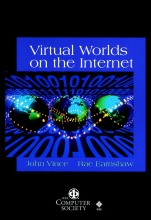
Virtual Worlds on the Internet
ISBN 9780818687006
Autor: John Vince, Rae Earnshaw
Wydawca: Wiley
Dostępność: 3-6 tygodni
Cena: 573,30 zł
Przed złożeniem zamówienia prosimy o kontakt mailowy celem potwierdzenia ceny.
ISBN13: |
9780818687006 |
ISBN10: |
0818687002 |
Autor: |
John Vince, Rae Earnshaw |
Oprawa: |
Paperback |
Rok Wydania: |
1998-12-27 |
Ilość stron: |
360 |
Wymiary: |
254x181 |
Tematy: |
TJ |
In recent years, computer graphics has evolved into the major disciplines of computer animation, image processing, visualization, and virtual reality. Today these technologies are converging into one seamless digital medium resulting in various tools that will transform the way we will work in the next century.
Virtual Worlds on the Internet examines how the latest developments in virtual environments, computer animation, communication networks, and the Internet are being configured to create revolutionary tools and systems.
Vince and Earnshaw include twenty papers that will influence computer systems of the twenty–first century. Topics include: a toolkit for the development of virtual environment applications fort education and researchbehavior descriptions used in expansive virtual environmentsdifferent uses of VRML in information system interfacesan examination of research in virtual reality environment interfacesfive approaches to supporting changes in virtual environmentsthe transmission of vector graphics and animations over narrow–band transmission channelsan exploration of an implicit modeling system including an interactive editor for building modelsa description of the advantages of 3D environments for shopping applications on the Internetthe prototype of a software tool that automatically generates 3D models of virtual supermarketsa "VR workbench" that displays strategic information viewable by a user groupan overview of a VR display system describing its workbench technology and its applicationshow to separate the functionality of a multi–user 3D modeling system into functional tools with interface specifications
Spis treści:
Introduction
Chapter 1: Data Flow Languages for Immersive Virtual Environments (Anthony Steed, Department of Computer Science, University College London).
Chapter 2: VRML Interfaces to Information Systems (Christine C
lark and Adrian F. Clark, VASE Laboratory, University of Essex).
Chapter 3: VRML: A Designer′s View (Stephen Boyd Davis, Centre for Electronic Arts, Middlesex University;
Helena Athoussaki, BT Laboratories).
Chapter 4: Ulysse: An Interactive Spoken Dialogue Interface to Navigate in Virtual Worlds (Christopher Godereaux, Pierre–Olivier El Guedj, Frederic Revolta, and Pierre Nugues, Institut des Sciences de la Matiere et du Rayonnement).
Chapter 5: Information Drill–Down Using Web Tools (Mikael Jern, AVS/UNIRAS).
Chapter 6: Generic Uses of Real World Data in Virtual Environments (M.W. Wright, G.C. Watson, and R.L. Middleton, Edinburgh Virtual Environment Centre, University of Edinburgh).
Chapter 7: A Generic Functional Architecture for the Development of Multiuser 3–D Environments (Tao Lin and Kevin Smith, CSIRO Mathematical and Information Sciences).
Chapter 8: Strategies for Mutability in Virtual Environments (Ben Anderson and Andrew McGrath, BT Laboratories).
Chapter 9: Bringing the MBone to Web Users (Adrian F. Clark, VASE Laboratory, University of Essex).
Chapter 10: Handling of Dynamic 2–D/3–D Graphics in Narrow–Band Mobile Services (C. Belz, H. Jung, L. Santos, and R. Strack, Computer Graphics Center (ZGDV);
P. Latva–Rasku, Nokia Research Center (NRC).
Chapter 11: Realistic Avatars and Autonomous Virtual Humans in VLNET Networked Virtual Environments (Tolga K. Capin and Daniel Thalmann, Computer Graphics Laboratory, Swiss Federal Institute of Technology;
Igor Sunday Pandzic and Nadia Magnenat Thalmann, MIRALab, University of Geneva).
Chapter 12: Interactive Cloth Simulation: Problems and Solutions (Pascal Volino and Nadia Magnenat Thalmann, MIRALab, University of Geneva).
Chapter 13: The Blob Tree: Implicit Modelling and VRML (Brian Wyvill and Andrew Guy, Department of Computer Science, University of Calgary).
Chapter 14: Automatic Generation of Virtual Worlds for Elec
tronic Commerce Application on the Internet (Klaus M. Bauer, Computer Graphics Center (ZGDV e.V.).
Chapter 15: A Case Study in the Use of VRML 2.0 for Marketing a Product (Nick D. Burton, Alistair C. Kilgour, and Hamish Taylor, Department of Computing and Electrical Engineering, Heriot–Watt University).
Chapter 16: A Virtual Environment for Collaborative Administration (D. England, Connect Centre, University of Liverpool;
W. Prinz, GMD FIT–CSCW Institute;
K. Simarian and O. St?hl, Swedish Institute for Computer Science).
Chapter 17: Collaborative Theatre Set Design across Networks (Ian J. Palmer and Carlton M. Reeve, EIMCU, University of Bradford).
Chapter 18: Moving the Museum onto the Internet: The Use of Virtual Environments in Education about Ancient Egypt (William L. Mitchell, Department of Computing, Manchester Metropolitan University).
Chapter 19: The Virtual Reality Responsive Workbench: Applications and Experiences (Lawrence Rosenblum, James Durbin, Robert Doyle, and David Tate, Virtual Reality Lab, Naval Research Laboratory).
Chapter 20: Inner Space: The Final Frontier (David Leevers, Multimedia Communications, BICC Group).
Figures in Color
Index.
Okładka tylna:
In recent years, computer graphics has evolved into the major disciplines of computer animation, image processing, visualization, and virtual reality. Today these technologies are converging into one seamless digital medium resulting in various tools that will transform the way we will work in the next century.
Virtual Worlds on the Internet examines how the latest developments in virtual environments, computer animation, communication networks, and the Internet are being configured to create revolutionary tools and systems.
Vince and Earnshaw include twenty papers that will influence computer systems of the twenty–first century. Topics include: a toolkit for the development of virtual environment applicatio
ns fort education and researchbehavior descriptions used in expansive virtual environmentsdifferent uses of VRML in information system interfacesan examination of research in virtual reality environment interfacesfive approaches to supporting changes in virtual environmentsthe transmission of vector graphics and animations over narrow–band transmission channelsan exploration of an implicit modeling system including an interactive editor for building modelsa description of the advantages of 3D environments for shopping applications on the Internetthe prototype of a software tool that automatically generates 3D models of virtual supermarketsa "VR workbench" that displays strategic information viewable by a user groupan overview of a VR display system describing its workbench technology and its applicationshow to separate the functionality of a multi–user 3D modeling system into functional tools with interface specifications
Koszyk
Książek w koszyku: 0 szt.
Wartość zakupów: 0,00 zł
Informacje


Kontakt
Gambit
Centrum Oprogramowania
i Szkoleń Sp. z o.o.
Al. Pokoju 29b/22-24
31-564 Kraków
Siedziba Księgarni
ul. Kordylewskiego 1
31-542 Kraków
+48 12 410 5991
+48 12 410 5987
+48 12 410 5989
Subskrypcje
Administratorem danych osobowych jest firma Gambit COiS Sp. z o.o. Na podany adres będzie wysyłany wyłącznie biuletyn informacyjny.
Autoryzacja płatności

Informacje na temat autoryzacji płatności poprzez PayU.

© Copyright 2012: GAMBIT COiS Sp. z o.o. Wszelkie prawa zastrzeżone.
Projekt i wykonanie: Alchemia Studio Reklamy