


Wydawcy
Katalog tematyczny
- Archeologia (109)
- Ekonomia, finanse, business (13704)
- Filozofia (1445)
- Historia (3040)
- Języki i językoznawstwo (2356)
- Lifestyle, hobby i rozrywka (475)
- Medycyna (9704)
- Nauki humanistyczne (4)
- Nauki o Ziemi i środowisku (2638)
- Nauki ścisłe (20412)
- Astronomia (294)
- Biologia (5119)
- Chemia (6540)
- Chemia analityczna (361)
- Chemia fizyczna (346)
- Chemia nieorganiczna (137)
- Chemia organiczna (535)
- Krystalografia (27)
- Minerologia (46)
- Fizyka (3309)
- Matematyka (4574)
- Nauki ścisłe, ogólnie (503)
- Nauki społeczne (8486)
- Nauki techniczne (13450)
- Prawo (1696)
- Publikacje informacyjne i interdyscyplinarne (1288)
- Religia i wierzenia (917)
- Technika komputerowa (4067)
- Zdrowie, relacje międzyludzkie i rozwój osobisty (657)





Informacje szczegółowe o książce
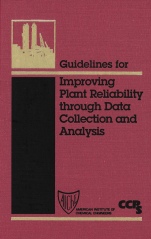
Guidelines for Improving Plant Reliability Through Data Collection and Analysis
ISBN 9780816907519
Autor: CCPS (Center for Chemical Process Safety)
Wydawca: Wiley
Dostępność: 3-6 tygodni
Cena: 947,10 zł
Przed złożeniem zamówienia prosimy o kontakt mailowy celem potwierdzenia ceny.
ISBN13: |
9780816907519 |
ISBN10: |
081690751X |
Autor: |
CCPS (Center for Chemical Process Safety) |
Oprawa: |
Hardback |
Rok Wydania: |
1998-06-01 |
Ilość stron: |
208 |
Wymiary: |
234x162 |
Tematy: |
PN |
Written by reliability data experts, the book gives plant managers and supervisors the guidance they need to collect, and use with confidence, process equipment reliability data for risk–based decisions. Focusing on the process industries, it provides the protocol and techniques to collect and organize high quality plant performance, maintenance, and repair data from your own operations, and includes methods and examples on how the data can be converted into useful information for engineering, maintenance, safety, and loss prevention. This data can be used for: facility reliability/availability assessments; making decisions on the need for redundant systems; improving equipment designs; selecting the best equipment for specific tasks; estimating required work force; benchmarking current efforts both frequency and time; integrating predictive and preventive maintenance effort; integrating shutdowns with production needs; quantifying risks; and minimizing human reliability issues.
Spis treści:
Preface.
Acknowledgments.
Chapter 1. Introduction.
1.1. Background.
1.2. Taxonomy.
1.3. Data Aggregation/Sharing.
Chapter 2. Definitions.
2.1. Introduction.
2.2. Discussion of Key Reliability Terms.
2.3. Glossary of Terms.
Chapter 3. Method of Analysis.
3.1. Introduction.
3.2. Basic Concepts of Data Analysis.
3.2.1. Failure Data.
3.2.2. Need for Correct Failure Modes.
3.2.3. Types of Systems–Repairable or Nonrepairable.
3.2.4. Reliability versus Availability.
3.2.5. Types of Data–Censoring.
3.2.6. Definitions.
3.2.7. Dealing with Censored Data.
3.2.8. Common Cause Failures.
3.2.9. Predictive versus Descriptive Methods.
3.3. Data Manipulation Examples.
3.3.1. Methods of Analysis.
3.4. Cyclical Service.
3.5. Batch Service.
3.6. Standby Service.
3.7. Failures Following a Repair.
3.8. Selecting an Operating Mode.
3.9. Analysis Based on Statistical Inf
erences.
3.9.1. Modeling Reliability Parameters for the Population.
3.9.2. The Weibull Distribution.
3.9.3. Graphical Method for Estimating the Weibull Parameters.
3.9.4. The Exponential Distribution.
3.9.5. Confidence Limits for Reliability Parameters.
References.
Chapter 4. Example Applications.
4.1. Introduction.
4.2. Conducting a Reliability Analysis–Pump Example.
4.3. Right–Censoring.
4.4. MTTF by Numerical Integration.
4.5. Reliability Calculations for Repaired Items.
4.6. Calculation of MTTR by Numerical Integration.
4.7. Fitting a Weibull Distribution.
4.8. Combinations of Failure Distributions.
4.9. System Performance–Compressor Example.
4.10. Life–Cycle Costs–Compressor example (continued).
4.11. Maintenance Budgeting–Compressor Example (continued).
4.12. Throughput Targets–Compressor Example(continued).
4.13. Summary.
References.
Chapter 5. Data Structure.
5.1. Data Structure Overview.
5.2. General Taxonomy.
5.2.1. Taxonomy Levels 1–4 (Industry, Site, Plant, Process Units).
5.2.2. Taxonomy Levels 5–7 (System, Component, Part).
5.2.3. Treatment of Subordinate Systems in the CCPS Database.
5.3. Database Structure.
5.3.1. Inventory Tables.
5.3.2. Event Tables.
5.3.3. Failure Logic Data.
Chapter 6. Quality Assurance of Data.
6.1. Introduction.
6.2. Basic Principles of Quality as Applied to Equipment Reliability Data.
6.3. Quality Management.
6.4. Quality Principles.
6.5. Verification of Data Quality.
6.5.1. Quality Plan for Database Administrator (DA).
6.5.2. Quality Plan for Data Subscribers.
6.5.3. Certification of Data Subscribers.
6.5.4. Internal Verification of Data Quality.
6.5.5. Verification of Data Prior to Acceptance.
6.5.6. Recertification of Data Contributors.
6.5.7. Appeal Process.
6.5.8. Audits of Work Process.
Appendix I. Guidelines for Data Collection an
d Submission.
I.1. Introduction.
I.1.1. Data Types.
I.1.2. Subscriber Data.
I.1.3. Inventory Data.
I.1.4. Event Data.
I.1.5. Data Analysis.
I.1.6. Database Limitations.
I.1.7. Goals of the Equipment Reliability Process.
I.1.8. Certification of a Subscriber.
I.2. Data Definitions and Descriptions.
I.2.1. Introduction.
I.2.2. Inventory Descriptions and Data Sheets.
I.2.3. Event Descriptions and Data Sheets.
I.3. Data Flow.
I.4. Internal Quality Assurance of Data.
I.4.1. Data Input Organization.
I.4.2. Quality Plan.
I.4.3. deviation Reporting.
I.5. Data Submission Procedure.
I.5.1. User Software Requirements.
I.5.2. Data Submission Protocol.
I.5.3. Format of Data Submission.
I.5.4. Availability of New Data.
I.6. External Quality Assurance of Data.
I.6.1. Field Verification.
I.6.2. Spot Checks.
I.6.3. Receipt and Logging.
I.6.4. Validation.
I.6.5. Procedures for Nonconformities.
I.7. Data Contribution and Data Distribution.
I.7.1. Data Contribution.
I.7.2. Data Distribution.
Appendix II. Sample Pick Lists for Data Fields.
II.1. Pick Lists Related to Upper Level Taxonomy.
II.2. Pick Lists Related to Plant Inventory and Events.
II.3. Pick Lists Related to General Equipment Information.
II.4. Pick Lists Related to Relief Devices.
II.5. Tables Related to Compressors.
II.6. Pick Lists Relate to Heat Exchangers.
Appendix III. Procedure for Developing System–Level Taxonomies.
III.1. Background and Theory.
III.1.1. Objective.
III.1.2. Overview of the Taxonomy Development Process.
III.2. Procedure.
III.2.1. Define the System.
III.2.2. Analyze Functional Characteristics.
III.2.3. Specify the Inventory Data.
III.2.4. Specify the Event Data.
References.
Index.
Koszyk
Książek w koszyku: 0 szt.
Wartość zakupów: 0,00 zł
Informacje


Kontakt
Gambit
Centrum Oprogramowania
i Szkoleń Sp. z o.o.
Al. Pokoju 29b/22-24
31-564 Kraków
Siedziba Księgarni
ul. Kordylewskiego 1
31-542 Kraków
+48 12 410 5991
+48 12 410 5987
+48 12 410 5989
Subskrypcje
Administratorem danych osobowych jest firma Gambit COiS Sp. z o.o. Na podany adres będzie wysyłany wyłącznie biuletyn informacyjny.
Autoryzacja płatności

Informacje na temat autoryzacji płatności poprzez PayU.

© Copyright 2012: GAMBIT COiS Sp. z o.o. Wszelkie prawa zastrzeżone.
Projekt i wykonanie: Alchemia Studio Reklamy