


Wydawcy
Katalog tematyczny
- Archeologia (109)
- Ekonomia, finanse, business (13704)
- Filozofia (1445)
- Historia (3040)
- Języki i językoznawstwo (2356)
- Lifestyle, hobby i rozrywka (475)
- Medycyna (9704)
- Nauki humanistyczne (4)
- Nauki o Ziemi i środowisku (2638)
- Nauki ścisłe (20412)
- Astronomia (294)
- Biologia (5119)
- Chemia (6540)
- Chemia analityczna (361)
- Chemia fizyczna (346)
- Chemia nieorganiczna (137)
- Chemia organiczna (535)
- Krystalografia (27)
- Minerologia (46)
- Fizyka (3309)
- Matematyka (4574)
- Nauki ścisłe, ogólnie (503)
- Nauki społeczne (8486)
- Nauki techniczne (13450)
- Prawo (1696)
- Publikacje informacyjne i interdyscyplinarne (1288)
- Religia i wierzenia (917)
- Technika komputerowa (4067)
- Zdrowie, relacje międzyludzkie i rozwój osobisty (657)





Informacje szczegółowe o książce
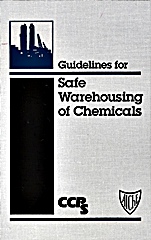
Guidelines for Safe Warehousing of Chemicals
ISBN 9780816906598
Autor: CCPS (Center for Chemical Process Safety)
Wydawca: Wiley
Dostępność: 3-6 tygodni
Cena: 617,40 zł
Przed złożeniem zamówienia prosimy o kontakt mailowy celem potwierdzenia ceny.
ISBN13: |
9780816906598 |
ISBN10: |
0816906599 |
Autor: |
CCPS (Center for Chemical Process Safety) |
Oprawa: |
Hardback |
Rok Wydania: |
1998-06-01 |
Ilość stron: |
192 |
Wymiary: |
236x164 |
Tematy: |
PN |
A comprehensive understanding of the potential dangers inherent in warehousing chemicals is the first step in managing the associated risks. Written by industry professionals for warehouse operators, designers, and all who are concerned with the safe warehousing of chemicals, this book offers a performance–based approach to such hazards as health effects, environmental pollution, fire, and explosion, and presents practical means to minimize the risk of these hazards to employees, the surrounding population, the environment, property, and business operations. These basic precepts can be used to evaluate the risks in initial or existing designs for warehousing facilities on a manufacturing site, for freestanding offsite buildings, and for strictly chemical or mixed–use storage. Each of the book’s ten chapters has a list of references and suggestions for further reading. The numerous topics covered make this book invaluable for warehousing designers and operators.
Spis treści:
Preface.
Acknowledgment.
Acronyms.
Chapter 1. Introduction.
1.1. Background.
1.2. Scope.
1.3. Purpose.
Chapter 2. Commodity Hazards.
2.1. Synopsis.
2.2. Identification of Chemicals.
2.3. Properties and Hazard Identification of Chemicals.
2.4. Systems for Commodity Classification.
2.4.1. Environmental Protection Agency.
2.4.2. National Fire Protection Association.
2.4.3. National Paint and Coating s Association′s Hazardous Materials Identification System.
2.4.4. United nations (UN) and Department of Transportation (DOT) Hazardous Materials Classes.
2.5. Container and Packaging Systems.
2.6. Commodity Compatibility and Separation.
References.
Additional Reading.
Chapter 3. Administrative Controls.
3.1. Synopsis.
3.2. Safety and Risk Management Policies.
3.3. Hazard and Risk Management.
3.4. Control of Ignition Sources.
3.5. Regulatory Compliance.
3.6. Risk Management Organiza
tion.
3.7. Employee Hiring, Training and Operations.
3.7.1. Employee Hiring.
3.7.2. Training.
3.7.3. Operations.
3.8. Housekeeping.
3.9. Inventory Management.
3.10. Management of Change.
References.
Additional Reading.
Chapter 4. Employee Safety and Health.
4.1. Synopsis.
4.2. Policy.
4.3. Administrative and Engineering Controls.
4.3.1. Administrative Controls.
4.3.2. Engineering Controls.
4.4. Hazard Communication.
4.4.1. Labels.
4.4.2. Material Safety Data Sheets.
4.4.3. Employee Information and Training.
4.5. Personal Protective Equipment.
4.5.1. Implementing a PPE Program.
4.5.2. Selecting PPE Program.
4.5.3. Chemical Protective Clothing.
4.5.4. Foot Protection.
4.5.5. Head Protection.
4.5.6. Eye and Face Protection.
4.5.7. Hand Protection.
4.5.8. Respirators.
4.5.9. Respirator Selection.
4.5.10. Respirator Usage.
4.5.11. Training.
4.5.12. Maintenance and Inspection.
4.6. Safety Equipment.
4.7. Emergency Response Training.
4.7.1. Emergency Spill Response.
4.7.2. Manual Fire Fighting.
4.7.3. First Aid.
References.
Additional Reading.
Chapter 5. Site Considerations.
5.1. Synopsis.
5.2. Health and Environmental Exposure.
5.2.1. Baseline Environmental Assessment.
5.2.2. Population Proximity, Density, and Sensitivity.
5.2.3. Warehouse Truck Traffic.
5.2.4. Highly Sensitive Environments.
5.2.5. Surface Water, Ground water, and Soil Permeability.
5.3. Natural Peril Exposures.
5.3.1. Earthquake.
5.3.2. Flood.
5.3.3. Hurricanes.
5.3.4. Tornadoes.
5.3.5. Lightning.
5.3.6. Arctic Freeze.
5.4. Exposures from Surrounding Activities.
5.4.1. Adjacent Facilities, Airports, Highways, and Railroads.
5.4.2. High Pressure Flammable Gas and Liquid Transmission Lines.
5.4.3. Riot and Civil Commotion.
5.5. Emergency Responders.
5.6. Adequacy and Reliability of Public Utilities.
References.
Additional
Reading.
Chapter 6. Design and Construction.
6.1. Synopsis.
6.2. Construction Documents–Approvals and Permits.
6.3. Means of Egress.
6.3.1. travel Distance.
6.4. Environmental Protection.
6.4.1. Containment and Drainage Capacity Considerations.
6.4.2. Warehouse Floor System.
6.4.3. Concrete Criteria.
6.4.4. Surface Preparation.
6.4.5. Coating and Sealers.
6.4.6. Maintenance and Repair of the Floor.
6.4.7. Airborne Effluent.
6.5. Fire Mitigation Construction Features.
6.5.1. Fire–Rated Separations.
6.5.2. Protection of Openings and Penetrations.
6.5.3. Through–Penetrations.
6.5.4. Heat and Smoke Venting.
6.5.5. Powered Ventilation Systems.
6.5.6. Emergency and Standby Power Systems.
6.6. Deflagration Prevention and Mitigation.
6.1.1. Temperature Control.
6.6.2. Gas and Vapor Control.
6.6.3. Sources of Ignition.
6.6.4. Spatial Separation.
6.6.5. Damage Limiting Construction.
6.7. Natural Peril Mitigation.
6.7.1. Earthquake.
6.7.2. Flood.
6.7.3. Lightning.
6.7.4. Windstorm, Hurricane, and Tornado.
6.8. Security Features.
6.9. Outdoor Storage.
References.
Additional Reading.
Chapter 7. Fire Protection Systems.
7.1. Synopsis.
7.2. Storage Considerations.
7.3. Fire Control, Suppression, and Extinguishing Systems.
7.3.1. Fire Control.
7.3.2. Fire Suppression.
7.3.3. Fire Extinguishment.
7.3.4. Fire Extinguishers.
7.4. Fire Detection and Alarm Systems.
References.
Additional Reading.
Chapter 8. Inspection, Testing, and Maintenance Programs.
8.1. Synopsis.
8.2. Inspection and Test Programs.
8.2.1. Program Objectives.
8.2.2. Critical Equi9pment and Construction Features.
8.2.3. Inspection and Test Program Elements.
8.2.5. Maintenance Procedures.
References.
Additional Reading.
Chapter 9. Emergency Planning.
9.1. Synopsis.
9.2. Loss Scenarios.
9.3. Plan Objectives.
9.3.1. Empl
oyees.
9.3.2. Surrounding Population.
9.3.3. Environment.
9.3.4. Property Protection and Business Interruption.
9.4. Plan Development.
9.5. Plan Elements.
9.5.1. Policy Statement.
9.5.2. Scope and Objectives.
9.5.3. Pre–Incident Planning.
9.5.4. Incident Response.
9.6. Emergency Spill Response.
9.6.1. Planning.
9.6.2. Responding to a Hazardous Material Spill.
9.6.3. Cleanup.
9.6.4. Reporting.
9.6.5. Public Response.
9.7. Regulations and Resources.
9.7.1. U.S. Regulations.
9.7.2. CMA Responsible Care Program.
References.
Additional Reading.
Chapter 10. Selected research and Discussion Topics.
10.1. Synopsis.
10.2. Commodity Hazards and Fire Protection Systems.
10.3. Design and Construction.
Appendix A. Summary of NFPA 704 Marking System.
Appendix B. Summary of HMIS.
Appendix C. United Nations and U.S. Department of Transportation Hazardous Materials Classes.
Appendix D. Additional Resources.
Glossary of Terms.
Index.
Koszyk
Książek w koszyku: 0 szt.
Wartość zakupów: 0,00 zł
Informacje


Kontakt
Gambit
Centrum Oprogramowania
i Szkoleń Sp. z o.o.
Al. Pokoju 29b/22-24
31-564 Kraków
Siedziba Księgarni
ul. Kordylewskiego 1
31-542 Kraków
+48 12 410 5991
+48 12 410 5987
+48 12 410 5989
Subskrypcje
Administratorem danych osobowych jest firma Gambit COiS Sp. z o.o. Na podany adres będzie wysyłany wyłącznie biuletyn informacyjny.
Autoryzacja płatności

Informacje na temat autoryzacji płatności poprzez PayU.

© Copyright 2012: GAMBIT COiS Sp. z o.o. Wszelkie prawa zastrzeżone.
Projekt i wykonanie: Alchemia Studio Reklamy