


Wydawcy
Katalog tematyczny
- Archeologia (109)
- Ekonomia, finanse, business (13704)
- Filozofia (1445)
- Historia (3040)
- Języki i językoznawstwo (2356)
- Lifestyle, hobby i rozrywka (475)
- Medycyna (9704)
- Nauki humanistyczne (4)
- Nauki o Ziemi i środowisku (2638)
- Nauki ścisłe (20412)
- Astronomia (294)
- Biologia (5119)
- Chemia (6540)
- Chemia analityczna (361)
- Chemia fizyczna (346)
- Chemia nieorganiczna (137)
- Chemia organiczna (535)
- Krystalografia (27)
- Minerologia (46)
- Fizyka (3309)
- Matematyka (4574)
- Nauki ścisłe, ogólnie (503)
- Nauki społeczne (8486)
- Nauki techniczne (13450)
- Prawo (1696)
- Publikacje informacyjne i interdyscyplinarne (1288)
- Religia i wierzenia (917)
- Technika komputerowa (4067)
- Zdrowie, relacje międzyludzkie i rozwój osobisty (657)





Informacje szczegółowe o książce
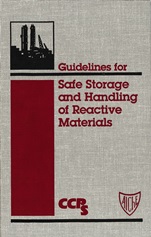
Guidelines for Safe Storage and Handling of Reactive Materials
ISBN 9780816906291
Autor: CCPS (Center for Chemical Process Safety)
Wydawca: Wiley
Dostępność: 3-6 tygodni
Cena: 871,50 zł
Przed złożeniem zamówienia prosimy o kontakt mailowy celem potwierdzenia ceny.
ISBN13: |
9780816906291 |
ISBN10: |
0816906297 |
Autor: |
CCPS (Center for Chemical Process Safety) |
Oprawa: |
Hardback |
Rok Wydania: |
1995-09-01 |
Ilość stron: |
386 |
Wymiary: |
238x156 |
Tematy: |
PN |
With new and growing interest in dealing with the hazards of reactive chemicals, this book offers guidelines that can significantly reduce the risk or mitigate the severity of accidents associated with storing and handling reactive materials. Necessary elements of a reliable system to prevent equipment or human failures that might lead to a reactive chemical incident are sound and responsible management policies, together with a combination of superior siting, design, fabrication, erection, inspection, monitoring, maintenance, operations and maintenance of facilities. These Guidelines deal with all of these elements with emphasis on design considerations.
Spis treści:
Preface.
Acknowledgments.
Acronyms.
Introduction.
1. Chemical Reactivity Hazards.
1.1 Framework for Understanding Reactivity Hazards.
1.1.1 Grouping of Reactivity Hazards into General Categories.
1.1.2 Key Parameters That Drive Reactions.
1.1.3 Types of Runaway Reactions.
1.1.4 How Reactive Chemical Storage and Handling Accidents Are Initiated.
1.2 Self–Reactive Polymerizing Chemicals.
1.2.1 Thermal Instability.
1.2.2 Induction Time.
1.2.3 Example.
1.3 Self–Reactive Decomposing Chemicals.
1.3.1 Peroxides.
1.3.2 Self–Accelerating Decomposition Temperature.
1.3.3 Predicting Instability Potential.
1.3.4 Deflagration and Detonation of Pure Material.
1.3.5 Slow Gas–Forming Reactions.
1.3.6 Heat of Compression.
1.3.7 Minimum Pressure for Vapor Decomposition.
1.3.8 Shock Sensitivity.
1.3.9 Examples of Shock Sensitivity.
1.4 Self–Reactive Rearranging Chemicals.
1.4.1 Isomerization.
1.4.2 Disproportionation.
1.5 Reactivity with Oxygen.
1.5.1 Spontaneous Ignition and Pyrophoricity.
1.5.2 Pyrophoricity versus Hypergolic Properties.
1.5.3 Accumulation and Explosion of Pyrophoric Materials.
1.5.4 Competition between Air and Atmosphere Moisture.
1.5.5 Peroxide Fo
rmation.
1.6 Reactivity with Water.
1.6.1 Water Reactivity: Fast and Slow Reactions.
1.6.2 Water–Reactive Structures.
1.7 Reactivity with Other Common Substances.
1.7.1 Reactions with Metals.
1.7.2 Surface Area Effects.
1.7.3 Catalyst Deactivation and Surface Passivation.
1.8 Reactive with Other Chemicals Incompatibility.
1.8.1 Oxidizing and Reducing Properties.
1.8.2 Acidic and basic Properties.
1.8.3 Formation of Unstable Materials.
1.8.4 Thermite–Type Reactions.
1.8.5 Incompatibility with Heat Transfer Fluids and Refrigerants.
1.8.6 Adsorbents.
References.
2. Chemical Reactivity Classifications.
2.1 NFPA Reactivity Hazard Signal.
2.1.1 NFPA 704 Rating System for Overall Reactivity.
2.1.2 Definitions for Reactivity Signal Ratings.
2.1.3 Reactivity Hazards Not Identified by NFPA 704.
2.1.4 NFPA Reactivity Ratings for Specific Chemicals.
2.2 NPCA Hazardous Materials Identification System.
2.3 Classifications of Organic Peroxides.
2.3.1 SPI 19A Classification of Organic Peroxides.
2.3.2 NFPA 43B Classification of Organic Peroxides.
2.4 Classification of Materials That Form Peroxides.
2.5 Classification of Water–Reactive Materials.
2.5.1 Materials That React Violently with Water.
2.5.2 Materials That React Slowly with Water.
References.
3. Materials Assessment.
3.1 Prior Experience Review.
3.1.1 Common Knowledge.
3.1.2 Analogy.
3.1.3 Safety Data and Literature.
3.2 Theoretical Evaluations.
3.2.1 Unstable Atomic Groups.
3.2.2 Oxygen Balance.
3.2.3 Thermodynamics: Heat of
3.2.4 Thermodynamics: Heats of Reaction and Self–Reaction.
3.2.5 Thermodynamics: Equilibrium Considerations.
3.2.6 CHETAH.
3.2.7 Example Evaluation.
3.3 Expert Determination.
3.3.1 Expert Committees.
3.3.2 Kinetics Determination Factors.
3.4 Reactivity Screening Tests.
3.4.1 Thermal Stability Screening Tests.
3.4.2 Shoc
k Sensitivity Screening.
3.4.3 Pyrophoricity Screening.
3.4.4 Water Reactivity Screening.
3.4.5 Peroxide Formation Screening.
3.4.6 Compatibility Screening.
References.
4. Consequence Analysis.
4.1 Identifying Potential Accident Scenarios.
4.1.1 Process Hazard Analysis.
4.1.2 Checklist of Potentially Hazardous Events.
4.1.3 Chemical Interaction Matrix.
4.1.4 Industry Experience.
4.1.5 Local Size Experience.
4.2 Severity Testing.
4.2.1 Calorimetric Testing for Consequence Analysis.
4.2.2 Self–Accelerating Decomposition Temperature.
4.2.3 Isoperibolic Calorimetry.
4.2.4 Assessment of Maximum Pressure and Temperature.
4.3 Where to Find Methods for Estimating Immediate Consequences.
4.3.1 Reactive Chemical Explosions.
4.3.2 Reactive Chemical Fires.
4.3.3 Toxic Releases.
4.4 Where to Find Methods for Estimating Immediate Impact.
4.4.1 Explosion Effect Models.
4.4.2 Thermal Effect Models.
4.4.3 Toxic Gas Effect Models.
4.4.4 Modeling Systems.
4.4.5 Caveats.
4.5 Applications of Consequence Analysis.
4.5.1 Selection of Size, Quantity, and Location of Facilities.
4.5.2 Selection of Dedicated Safeguard Systems.
4.5.3 Basis for Emergency Response Systems and Planning.
4.5.4 Better Understanding of the Hazard and the Consequences.
4.5.5 Significant Step toward a Well–Managed Operating Facility.
References.
5. General Design Considerations.
5.1 Summary of General Design Strategies.
5.1.1 Reduce the Inherent Hazards.
5.1.2 Build Reliable Safety Layers.
5.1.3 Conduct In–Depth Reviews.
5.1.4 Use Previous Experience.
5.2 Compatibility.
5.2.1 Identifying Potential Incompatibility Problems.
5.2.2 Compatibility with Process Materials/Reagents.
5.2.3 Compatibility with Impurities.
5.2.4 Compatibility with Heat Transfer Fluids.
5.2.5 Compatibility with Materials of Construction and Corrosion Products.
5.2.6 Compatibi
lity with Insulation.
5.2.7 Compatibility with Fire–Extinguishing Agents.
5.2.8 Compatibility with Other Materials.
5.2.9 Other Compatibility–Related Practices.
5.3 Storage Time and Shelf Life.
5.3.1 Storage Time Limitations.
5.3.2 Practices for Increasing Shelf Life.
5.3.3 Handling and Disposal of Too–Old Material.
5.4 Storage Quantity and Configuration.
5.4.1 Determining Maximum Inventory.
5.4.2 Storage Configurations.
5.4.3 Top versus Bottom Discharge.
5.4.4 Facility Siting.
5.4.5 Restrictions on Container Shape or Configuration.
5.4.6 Mixing and Recirculation.
5.5 Air and Moisture Exclusion.
5.5.1 Air Exclusion Practices.
5.5.2 Moisture Exclusion Practices.
5.6 Monitoring and Control.
5.6.1 Oxygen Concentration Monitoring.
5.6.2 Humidity/Moisture Content Monitoring.
5.6.3 Pressure Monitoring.
5.6.4 Temperature Monitoring.
5.6.5 Temperature Control.
5.7 Handling and Transfer.
5.7.2 Piping Specifications and Layout.
5.7.3 Fittings and Connections.
5.7.4 Pumps and Pump Seals.
5.7.5 Valves.
5.7.6 Drain Systems.
5.7.7 Cleaning Equipment.
5.7.8 Transfer Systems Operating and Maintenance Practices.
5.8 Last–Resort Safety Features.
5.8.1 Inhibitor Injection.
5.8.2 Quench System.
5.8.3 Dump System.
5.8.4 Depressuring System.
5.8.5 Emergency Relief Configuration.
5.8.6 Emergency Relief Sizing Basis.
5.8.7 Emergency Relief Headers.
5.8.8 Emergency Relief Treatment Systems.
5.8.9 Explosion Suppression.
5.9 Passive Mitigation.
5.9.1 Flow–Limiting Orifices.
5.9.2 Fire–Resistant/Explosion–Resistant Construction.
5.9.3 Weak Seams and Explosion Venting.
5.9.4 Bunkers, Blast Walls and Barricades.
5.9.5 Secondary Containment.
5.9.6 Separation Distances.
5.10 Detections, Warning and Isolation.
5.10.1 Release Detection.
5.10.2 Release Warning.
5.10.3 Release Isolation.
5.11 Fire Preve
Koszyk
Książek w koszyku: 0 szt.
Wartość zakupów: 0,00 zł
Informacje


Kontakt
Gambit
Centrum Oprogramowania
i Szkoleń Sp. z o.o.
Al. Pokoju 29b/22-24
31-564 Kraków
Siedziba Księgarni
ul. Kordylewskiego 1
31-542 Kraków
+48 12 410 5991
+48 12 410 5987
+48 12 410 5989
Subskrypcje
Administratorem danych osobowych jest firma Gambit COiS Sp. z o.o. Na podany adres będzie wysyłany wyłącznie biuletyn informacyjny.
Autoryzacja płatności

Informacje na temat autoryzacji płatności poprzez PayU.

© Copyright 2012: GAMBIT COiS Sp. z o.o. Wszelkie prawa zastrzeżone.
Projekt i wykonanie: Alchemia Studio Reklamy