


Wydawcy
Katalog tematyczny
- Archeologia (109)
- Ekonomia, finanse, business (13704)
- Filozofia (1445)
- Historia (3040)
- Języki i językoznawstwo (2356)
- Lifestyle, hobby i rozrywka (475)
- Medycyna (9704)
- Nauki humanistyczne (4)
- Nauki o Ziemi i środowisku (2638)
- Nauki ścisłe (20412)
- Astronomia (294)
- Biologia (5119)
- Chemia (6540)
- Chemia analityczna (361)
- Chemia fizyczna (346)
- Chemia nieorganiczna (137)
- Chemia organiczna (535)
- Krystalografia (27)
- Minerologia (46)
- Fizyka (3309)
- Matematyka (4574)
- Nauki ścisłe, ogólnie (503)
- Nauki społeczne (8486)
- Nauki techniczne (13450)
- Prawo (1696)
- Publikacje informacyjne i interdyscyplinarne (1288)
- Religia i wierzenia (917)
- Technika komputerowa (4067)
- Zdrowie, relacje międzyludzkie i rozwój osobisty (657)





Informacje szczegółowe o książce
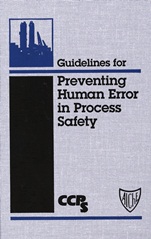
Guidelines for Preventing Human Error in Process Safety
ISBN 9780816904617
Autor: CCPS (Center for Chemical Process Safety)
Wydawca: Wiley
Dostępność: 3-6 tygodni
Cena: 730,80 zł
Przed złożeniem zamówienia prosimy o kontakt mailowy celem potwierdzenia ceny.
ISBN13: |
9780816904617 |
ISBN10: |
0816904618 |
Autor: |
CCPS (Center for Chemical Process Safety) |
Oprawa: |
Hardback |
Rok Wydania: |
2004-08-01 |
Ilość stron: |
416 |
Wymiary: |
240x160 |
Tematy: |
PN |
Almost all the major accident investigations––Texas City, Piper Alpha, the Phillips 66 explosion, Feyzin, Mexico City––show human error as the principal cause, either in design, operations, maintenance, or the management of safety. This book provides practical advice that can substantially reduce human error at all levels. In eight chapters––packed with case studies and examples of simple and advanced techniques for new and existing systems––the book challenges the assumption that human error is "unavoidable." Instead, it suggests a systems perspective. This view sees error as a consequence of a mismatch between human capabilities and demands and inappropriate organizational culture. This makes error a manageable factor and, therefore, avoidable.
Spis treści:
List of Figures and Tables.
Preface.
Glossary and Acronyms.
1. Introduction: The Role of Human Error in Chemical Process Safety.
1.1 Introduction.
1.2 The Role of Human Error in System Accidents.
1.3 Why Is Human Error Neglected in the CPI?
1.4 Benefits of Improved Human Performance.
1.5 The Traditional and System–induced Error Approach.
1.6 A Demand–Resource Mismatch View of Error.
1.7 A Case Study Illustrating the System–Induced Error Approach.
1.8 From Theory to Practice.
1.9 Appendix Case Studies.
2. Understanding Human Performance and Error.
2.1 Purpose of the Chapter.
2.2 Concepts of Human Error.
2.3 An Overview of the Four Perspective on Human Error.
2.4 The Traditional Safety Engineering Approach to Accidents and Human Error.
2.5 The Human Factors Engineering and Ergonomics Approach (HF/E).
2.6 The Cognitive Engineering Perspective.
2.7 The Sociotechnical Perspective.
2.8 Summary.
2.9 Appendix 2A. Process Plant Example of the Stepladder Model.
2.10 Appendix 2B. Flowcharts for Using the Rasmussen Sequential Model for Incident Analysis
(Petersen, 1985).
2.11 Appendix 2C. Case Study Illustrating the Use of the Sequential Model.
3. Factors Affecting Human Performance in the Chemical Industry.
3.1 Introduction.
3.2 Applications of Performance–Influencing Factors.
3.3 A Classification Structure for Performance–Influencing Factors.
3.4 Operating Environment.
3.5 Task Characteristics.
3.6 Operator Characteristics.
3.7 Organizational and Social Factors.
3.8 Interaction of Performance–Influencing Factors.
3.9 Variability of Human Performance during Normal and Emergency Situations.
3.10 Summary.
4. Analytical Methods for Predicting and Reducing Human Error.
4.1 Introduction.
4.2 Data Acquisition Techniques.
4.3 Task Analysis.
4.4 Human Error Analysis Techniques.
4.5 Ergonomics Checklists.
4.6 Summary.
5. Qualitative and Quantitative Prediction of Human Error in Risk Assessment.
5.1 Introduction.
5.2 The Role of Human Reliability in Risk Assessment.
5.3 System for Predictive Error Analysis and Reduction (SPEAR).
5.4 Critical Task Identification and Screening Analysis.
5.5 Qualitative Human Error Analysis.
5.6 Representation.
5.7 Quantification.
5.8 Summary.
5.9 Appendix 5A. Influence Diagram Calculations.
6. Data Collection and Incident Analysis Methods.
6.1 Introduction.
6.2 An Overview of Data Collection Systems.
6.3 Types of Data Collection Systems.
6.4 Organizational and Cultural Aspects of Data Collection.
6.5 Types of Data Collected.
6.6 Methods of Data Collection, Storage, and Retrieval.
6.7 Data Interpretation.
6.8 Root Cause Analysis Techniques.
6.9 Implementing and Monitoring the Effectiveness of Error Reduction Measures.
6.10 Setting Up a Data Collection System in a Chemical Plant.
6.11 Summary.
7. Case Studies.
7.1 Introduction.
7.2 Case Study 1: Incident Analysis of Hydrocarbon Leak from Pipe.
7.3 Case Study 2: Inci
dent Investigation: Mischarging of Solvent in a Batch Plant.
7.4 Case Study 3: Design of Standard Operating Procedures for Task in Case Study 2.
7.5 Case Study 4: Design of Visual Display Units for Computer–Controlled Plant.
7.6 Case Study 5: Audit of Offshore Emergency Blowdown Operations.
8. Implementing an Integrated Error and Process Safety Management System at the Plant.
8.1 Introduction.
8.2 Managing Human Error by Design.
8.3 Setting Up an Error Management System in an Existing Plant.
8.4 Summary.
References.
Bibliography.
Index.
Koszyk
Książek w koszyku: 0 szt.
Wartość zakupów: 0,00 zł
Informacje


Kontakt
Gambit
Centrum Oprogramowania
i Szkoleń Sp. z o.o.
Al. Pokoju 29b/22-24
31-564 Kraków
Siedziba Księgarni
ul. Kordylewskiego 1
31-542 Kraków
+48 12 410 5991
+48 12 410 5987
+48 12 410 5989
Subskrypcje
Administratorem danych osobowych jest firma Gambit COiS Sp. z o.o. Na podany adres będzie wysyłany wyłącznie biuletyn informacyjny.
Autoryzacja płatności

Informacje na temat autoryzacji płatności poprzez PayU.

© Copyright 2012: GAMBIT COiS Sp. z o.o. Wszelkie prawa zastrzeżone.
Projekt i wykonanie: Alchemia Studio Reklamy