


Wydawcy
Katalog tematyczny
- Archeologia (109)
- Ekonomia, finanse, business (13704)
- Filozofia (1445)
- Historia (3040)
- Języki i językoznawstwo (2356)
- Lifestyle, hobby i rozrywka (475)
- Medycyna (9704)
- Nauki humanistyczne (4)
- Nauki o Ziemi i środowisku (2638)
- Nauki ścisłe (20412)
- Nauki społeczne (8486)
- Nauki techniczne (13450)
- Prawo (1696)
- Publikacje informacyjne i interdyscyplinarne (1288)
- Religia i wierzenia (917)
- Technika komputerowa (4067)
- Zdrowie, relacje międzyludzkie i rozwój osobisty (657)





Informacje szczegółowe o książce
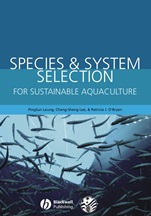
Species and System Selection for Sustainable Aquaculture
ISBN 9780813826912
Autor: PingSun Leung, Cheng–Sheng Lee, Patricia J. OBryen
Wydawca: Wiley
Dostępność: 3-6 tygodni
Cena: 1 239,00 zł
Przed złożeniem zamówienia prosimy o kontakt mailowy celem potwierdzenia ceny.
ISBN13: |
9780813826912 |
ISBN10: |
0813826918 |
Autor: |
PingSun Leung, Cheng–Sheng Lee, Patricia J. OBryen |
Oprawa: |
Hardback |
Rok Wydania: |
2007-07-30 |
Ilość stron: |
528 |
Wymiary: |
264x182 |
Tematy: |
KC |
Published in Cooperation with THE UNITED STATES AQUACULTURE SOCIETY
The aquaculture industry continues to be one of the fastest growing sectors of animal production in the world. As aquaculture production continues to expand there is a continuous search for new species to culture to meet the demands of new national and international markets. Selecting species for aquaculture development often poses an enormous challenge for decision makers responsible for deciding which culture technologies to support with public resources.
Species and System Selection for Sustainable Aquaculture brings together contributions from international experts in socioeconomics who draw on their experiences to make suggestions for meeting the challenges of identifying potential species and production systems for sustainable aquaculture. The emphasis of this book is on the socioeconomic perspective and its contents are divided into three sections: Principles, Practices, and Species–Specific Public Policies for Sustainable Development. This volume is the outgrowth of a workshop held by the Oceanic Institute’s Aquaculture Interchange Program with examples from around the globe.
Species and System Selection for Sustainable Aquaculture will be an important reference for all researchers, professionals, economists, and policy makers involved in selecting appropriate culture systems and species for the development of a sustainable aquaculture industry.
Spis treści:
Contributors.
Preface.
1. Introduction: PingSun Leung, Cheng–Sheng Lee, and Patricia J. O’Bryen.
Section 1: Principles.
2. Sustainable Aquaculture: What Does It Mean and how Do We Get there?: James L. Anderson.
3. Policies and the Role of Government in Achieving Aquaculture Development: Colin E. Nash and William T. Fairgrieve.
4. A Review of Comparative Advantage Assessment Approaches in Relation to Aquaculture Development: Junning Cai and Pin
gSun Leung.
5. The Environment and the Selection of Aquaculture Species and Systems: An Economic Analysis: Clem Tisdell.
6. Investment and Farm Modeling: Carole R. Engle.
Section 2: Practices.
7. The Role of Species and Systems in the Development and Growth of Aquaculture in Asia: Needs and Prospects: Mahfuzuddin Ahmed, Madan Mohan Dey, and Yolanda T. Garcia.
8. Aquaculture in Africa: Reasons for Failures and Ingredients for Success: Nathanael Hishamunda.
9. Aquaculture in the U.S. Affiliated Pacific Islands: A Case Study of Robert Reimers Enterprises: C.L. Cheshire.
10. Aquaculture in China: Xiang–guo Zhang.
11. Achievements and Problems of Aquaculture in Japan: Masahiko Ariji, Yoshihito Senda, and Atsushi Takahara.
12. Taiwanese Aquaculture at the Crossroad: I Chiu Liao and Nai–Hsien Chao.
13. The Evolutionary Role of Federal Policies and Actions to Support the Sustainable Development of Aquaculture in the United States: Gary L. Jensen.
14. Hawaii Aquaculture Development: Twenty–Five Years and Counting, Lessons Learned: John S. Corbin.
15. Socioeconomic Aspects of Species and System Selection for Sustainable Aquaculture Development in Mexico: Historic Overview and Current General Trends: Francisco J. Martinez–Cordero.
Section 3: Species–Specific Public Policy for Sustainable Development.
16. Public Policies for Sustainable Development of Shrimp Aquaculture in Taiwan: David S. Liao.
17. Shrimp Culture and Public Policy for Sustainable Development in Thailand: Ruangrai Tokrisna.
18. Development Trends and Future Prospects of Shrimp Culture in China: Weimin Miao and Yongming Yuan.
19. The Development and Sustainability of Shrimp Culture in Viet Nam: Quyen Le Cao.
20. Sustainable Development of Eel Aquaculture Industries in Taiwan and Mainland China: Yu–Hui Chen, Wu–Chang Lee, and I Chiu Liao.
21. Species–Specific Public Policy for Sustainable Develo
pment: The U.S. Catfish Industry: Carole R. Engle.
22. Issues Related to Sustainable Farming of Catfish (Pangasius spp.) in Viet Nam: Le Xuan Sinh.
23. Public Policy for Sustainable Development of Milkfish (Chanos chanos) Aquaculture in Indonesia: Ketut Sugama.
24. Genetics–Based Technologies for Sustainable Development in Philippine Aquaculture: The Case of Tilapia: Ruben C. Sevilleja.
25. The Carp Farming Industry in China – An Overview: Weimin Miao and Xinhua Yuan.
26. Carp Farming in Central and Eastern Europe and a Case Study in Multifunctional Aquaculture: Istvan Szücs, Laszlo Stundi, and Laszlo Váradi.
27. Salmon Farming Development in Chile: History, Policies, and Development Strategies: Carlos F. Wurmann.
28. Evaluation of the Sea Bass and Sea Bream Industry in the Mediterranean, with Emphasis on Turkey: Ferit Rad.
29. Public Policy for Sustainable Grouper Aquaculture Development in Southeast Asia: Robert Pomeroy.
30. Discussion Summary: “Socioeconomic Aspects of Species and Systems Selection for Sustainable Aquaculture”: Patricia J. O’Bryen and Cheng–Sheng Lee.
Nota biograficzna:
PingSun Leung is a Professor at the College of Tropical Agriculture and Human Resources at the University of Hawaii, Manoa.
Cheng–Sheng Lee is the Director of Aquaculture Interchange Program at the Oceanic Institute in Waimanalo, Hawaii.
Patricia J. O′Bryen is a Project Manager at the Oceanic Institute in Waimanalo, Hawaii.
Okładka tylna:
Published in Cooperation with THE UNITED STATES AQUACULTURE SOCIETY
The aquaculture industry continues to be one of the fastest growing sectors of animal production in the world. As aquaculture production continues to expand there is a continuous search for new species to culture to meet the demands of new national and international markets. Selecting species for aquaculture development of
ten poses an enormous challenge for decision makers responsible for deciding which culture technologies to support with public resources.
Species and System Selection for Sustainable Aquaculture brings together contributions from international experts in socioeconomics who draw on their experiences to make suggestions for meeting the challenges of identifying potential species and production systems for sustainable aquaculture. The emphasis of this book is on the socioeconomic perspective and its contents are divided into three sections: Principles, Practices, and Species–Specific Public Policies for Sustainable Development. This volume is the outgrowth of a workshop held by the Oceanic Institute’s Aquaculture Interchange Program with examples from around the globe.
Species and System Selection for Sustainable Aquaculture will be an important reference for all researchers, professionals, economists, and policy makers involved in selecting appropriate culture systems and species for the development of a sustainable aquaculture industry.
Koszyk
Książek w koszyku: 0 szt.
Wartość zakupów: 0,00 zł
Informacje


Kontakt
Gambit
Centrum Oprogramowania
i Szkoleń Sp. z o.o.
Al. Pokoju 29b/22-24
31-564 Kraków
Siedziba Księgarni
ul. Kordylewskiego 1
31-542 Kraków
+48 12 410 5991
+48 12 410 5987
+48 12 410 5989
Subskrypcje
Administratorem danych osobowych jest firma Gambit COiS Sp. z o.o. Na podany adres będzie wysyłany wyłącznie biuletyn informacyjny.
Autoryzacja płatności

Informacje na temat autoryzacji płatności poprzez PayU.

© Copyright 2012: GAMBIT COiS Sp. z o.o. Wszelkie prawa zastrzeżone.
Projekt i wykonanie: Alchemia Studio Reklamy