


Wydawcy
Katalog tematyczny
- Archeologia (109)
- Ekonomia, finanse, business (13704)
- Filozofia (1445)
- Historia (3040)
- Języki i językoznawstwo (2356)
- Lifestyle, hobby i rozrywka (475)
- Medycyna (9704)
- Nauki humanistyczne (4)
- Nauki o Ziemi i środowisku (2638)
- Nauki ścisłe (20412)
- Astronomia (294)
- Biologia (5119)
- Chemia (6540)
- Chemia analityczna (361)
- Chemia fizyczna (346)
- Chemia nieorganiczna (137)
- Chemia organiczna (535)
- Krystalografia (27)
- Minerologia (46)
- Fizyka (3309)
- Matematyka (4574)
- Nauki ścisłe, ogólnie (503)
- Nauki społeczne (8486)
- Nauki techniczne (13450)
- Prawo (1696)
- Publikacje informacyjne i interdyscyplinarne (1288)
- Religia i wierzenia (917)
- Technika komputerowa (4067)
- Zdrowie, relacje międzyludzkie i rozwój osobisty (657)





Informacje szczegółowe o książce
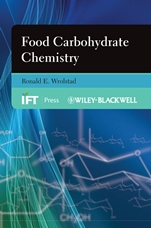
Food Carbohydrate Chemistry
ISBN 9780813826653
Autor: Ronald E. Wrolstad
Wydawca: Wiley
Dostępność: 3-6 tygodni
Cena: 487,20 zł
Przed złożeniem zamówienia prosimy o kontakt mailowy celem potwierdzenia ceny.
ISBN13: |
9780813826653 |
ISBN10: |
0813826659 |
Autor: |
Ronald E. Wrolstad |
Oprawa: |
Paperback |
Rok Wydania: |
2012-01-06 |
Ilość stron: |
240 |
Wymiary: |
228x151 |
Tematy: |
PN |
Not since Sugar Chemistry by Shallenberger and Birch(1975) has a text clearly presented and applied basic carbohydratechemistry to the quality attributes and functional properties offoods. Now in
Food Carbohydrate Chemistry, author Wrolstademphasizes the application of carbohydrate chemistry tounderstanding the chemistry, physical and functional properties offood carbohydrates. Structure and nomenclature of sugars and sugarderivatives are covered, focusing on those derivatives that existnaturally in foods or are used as food additives. Chemicalreactions emphasize those that have an impact on food quality andoccur under processing and storage conditions. Coverage includes:how chemical and physical properties of sugars and polysaccharidesaffect the functional properties of foods; taste properties andnon–enzymic browning reactions; the nutritional roles ofcarbohydrates from a food chemist′s perspective; basic principles,advantages, and limitations of selected carbohydrate analyticalmethods. An appendix includes descriptions of proven laboratoryexercises and demonstrations. Applications are emphasized, andanecdotal examples and case studies are presented. Laboratoryunits, homework exercises, and lecture demonstrations are includedin the appendix. In addition to a complete list of citedreferences, a listing of key references is included with briefannotations describing their important features.
Students and professionals alike will benefit from this latestaddition to the IFT Press book series. In FoodCarbohydrate Chemistry, upper undergraduate and graduatestudents will find a clear explanation of how basic principles ofcarbohydrate chemistry can account for and predict functionalproperties such as sweetness, browning potential, and solubilityproperties. Professionals working in product development andtechnical sales will value Food Carbohydrate Chemistry as aneeded resource to help them understand the functionality ofcarbohydrate ingredients. And persons in research and qualityassurance will rely upon Food Carbohydrate Chemistry forunderstanding the principles of carbohydrate analytical methods andthe physical and chemical properties of sugars andpolysaccharides.
Contributors xv
Acknowledgments xvii
Introduction xix
1 Classifying, Identifying, Naming, and Drawing Sugars andSugar Derivatives 1
Structure and Nomenclature of Monosaccharides 2
Aldoses and Ketoses 2
Configurations of Aldose Sugars 3
D– vs. L–Sugars 3
Different Ways of Depicting Sugar Structures 5
Fischer, Haworth, Mills, and Conformational Structures 5
Classifying Sugars by Compound Class Hemiacetals,Hemiketals, Acetals, and Ketals 7
Structure and Nomenclature of Disacchaarides 8
Structure and Optical Activity 10
A Systematic Procedure for Determining Conformation (C–1 or1–C), Chiral Family (D or L), and Anomeric Form (or ) of SugarPyranoid Ring Structures 13
Structure and Nomenclature of Sugar Derivatives with Relevanceto Food Chemistry 14
Glycols (Alditols) 14
Glyconic, Glycuronic, and Glycaric Acids 15
Deoxy Sugars 17
Amino Sugars and Glycosyl Amines 17
Glycosides 18
Sugar Ethers and Sugar Esters 19
Vocabulary 20
References 21
2 Sugar Composition of Foods 23
Introduction 23
Sugar Content of Foods 24
Composition of Sweeteners 24
Cane and Beet Sugar 24
Honey 26
Starch–Derived Sweeteners 27
Inulin Syrup 28
Sugar Composition of Fruits and Fruit Juices 28
Vocabulary 31
References 31
3 Reactions of Sugars 35
Introduction 35
Mutarotation 35
Oxidation of Sugars 39
Glycoside Formation 40
Acid Catalyzed Sugar Reactions 42
Alkaline–Catalyzed Sugar Reactions 43
Summary 45
Vocabulary 47
References 47
4 Browning Reactions 49
Introduction 50
Key Reactions in Maillard Browning 51
Introductory Comments 51
Sugar–Amino Condensation 51
The Amadori and Heyn s Rearrangements 53
Dehydration, Enolization, and Rearrangement Reactions 54
The Strecker Degradation 55
Final Stages: Condensation and Polymerization 58
An Alternate Free–Radical Mechanism for Nonenzymatic Browning58
Measurement of Maillard Browning 59
Control of Maillard Browning 60
Introductory Comments 60
Water Activity 60
The Importance of pH 61
Nature of Reactants 62
Temperature 65
Oxygen 68
Chemical Inhibitors 68
Other Browning Reactions 68
Caramelization 68
Ascorbic Acid Browning 69
Enzymatic Browning 69
Assessing Contributing Factors to Nonenzymatic Browning 70
Vocabulary 72
References 72
5 Functional Properties of Sugars 77
Introduction 77
Taste Properties of Sugars 78
The Shallenberger Acree Theory for Sweetness Perception80
Sugar Solubility 83
Crystallinity of Sugars 85
Hygroscopicity 86
Humectancy 87
Viscosity 87
Freezing Point Depression and Boiling Point Elevation 87
Osmotic Effects 88
Vocabulary 88
References 88
6 Analytical Methods 91
Introduction 91
Physical Methods 92
Refractometry 92
Density 94
Polarimetry 95
Colorimetric Methods 95
Total Sugars by Phenol–Sulfuric Acid 95
Reducing Sugar Methods 96
Chromatographic Methods 96
Paper and Thin–Layer Chromatography 96
Gas Liquid Chromatography 97
HPLC 100
Enzymic Methods 102
Carbon Stable–Isotopic Ratio Analysis (SIRA) 103
References 104
7 Starch in Foods 107
Introduction 108
Sources of Starch 108
Molecular Structure of Starch 109
Starch Granules 112
Gelatinization and Pasting: The Cooking of Starch 113
Retrogradation and Gelation: The Cooling of Cooked Starch115
Monitoring Starch Transitions 118
Microscopy 118
Viscometric Methods 118
Differential Scanning Calorimetry 119
Starch Hydrolytic Enzymes 120
–Amylase 121
–Amylase 122
Modified Starches 122
Physical Modifications 123
Chemical Modifications 125
Resistant Starch 127
Concluding Remarks 129
Vocabulary 129
References 131
8 Plant CellWall Polysaccharides 135
Introduction: Why Plant Cell Walls are Important 135
Cellulose 137
Hemicelluloses 139
Xyloglucans 139
Heteroxylans 140
(1 3),(1 4)––D–Glucans 140
Mannans 141
Pectic Polysaccharides 141
Interactions Between Polysaccharides and Cellulose 143
The Plant Cell Wall Structure 144
Vocabulary 145
References 145
9 Nutritional Roles of Carbohydrates 147
Introduction 147
The Digestive Process: From the Bucchal Cavity through the SmallIntestine 148
Absorption of Sugars 149
Sugar Metabolism 152
The Large Intestine and the Digestive Process 153
The Colon 153
Intestinal Microflora 153
Fate of Nonabsorbed Monosaccharides, Sugar Derivatives, andOligosaccharides 155
Dietary Fiber 158
Carbohydrate Nutrition and Human Health 159
Vocabulary 162
References 163
Appendices 165
Unit 1. Laboratory/Homework Exercise Building MolecularModels of Sugar Molecules 167
Unit 2. Homework Exercise Recognizing Hemiacetal,Hemiketal, Acetal, and Ketal Functional Groups 171
Unit 3. Laboratory/Homework Exercise Specification ofConformation (C–1 or 1–C), Chiral Family (D or L), and AnomericForm (or ) of Sugar Pyranoid Ring Structures 175
Unit 4. Demonstration of the Existence of Plane–Polarized Lightand the Ability of Sugar Solutions to Rotate Plane–Polarized Light181
Unit 5. Laboratory Exercise Sugar Polarimetry 183
Unit 6. Laboratory Exercise or Lecture Demonstration TheFehling s Test for Reducing Sugars 187
Unit 7. Laboratory Exercise Student–Designed MaillardBrowning Experiments 189
Unit 8. Laboratory Exercise or LectureDemonstration Microscopic Examination of Starch 193
Unit 9. Names and Structures of Oligosaccharides 197
Index 211
RONALD E. WROLSTAD, Ph.D. is Distinguished Professor of Food Science & Technology, Emeritus in the Department of Food Science & Technology, Oregon State University, Corvallis, OR. Dr. Wrolstad has authored over 150 professional publications, including 115 papers in refereed journals and 17 books or book chapters. He has served on the editorial boards of numerous scientific journals including Food Chemistry, Journal of Food Processing and Preservation, and Journal of Food Science Education, and has served as chair of the Food Chemistry Division and Fruit & Vegetable Division of the Institute of Food Technologists.
Koszyk
Książek w koszyku: 0 szt.
Wartość zakupów: 0,00 zł
Informacje


Kontakt
Gambit
Centrum Oprogramowania
i Szkoleń Sp. z o.o.
Al. Pokoju 29b/22-24
31-564 Kraków
Siedziba Księgarni
ul. Kordylewskiego 1
31-542 Kraków
+48 12 410 5991
+48 12 410 5987
+48 12 410 5989
Subskrypcje
Administratorem danych osobowych jest firma Gambit COiS Sp. z o.o. Na podany adres będzie wysyłany wyłącznie biuletyn informacyjny.
Autoryzacja płatności

Informacje na temat autoryzacji płatności poprzez PayU.

© Copyright 2012: GAMBIT COiS Sp. z o.o. Wszelkie prawa zastrzeżone.
Projekt i wykonanie: Alchemia Studio Reklamy