


Wydawcy
Katalog tematyczny
- Archeologia (109)
- Ekonomia, finanse, business (13704)
- Filozofia (1445)
- Historia (3040)
- Języki i językoznawstwo (2356)
- Lifestyle, hobby i rozrywka (475)
- Medycyna (9704)
- Nauki humanistyczne (4)
- Nauki o Ziemi i środowisku (2638)
- Nauki ścisłe (20412)
- Nauki społeczne (8486)
- Nauki techniczne (13450)
- Budownictwo lądowe (1045)
- Chemia przemysłowa (2258)
- Elektronika i telekomunikacja (3287)
- Energetyka (1122)
- Inne nauki stosowane (363)
- Inżynieria dźwięku (22)
- Materiały wybuchowe (3)
- Optyka stosowana (106)
- Przestrzeń kosmiczna (22)
- Technika morska (44)
- Technologia górnicza (9)
- Inżynieria biochemiczna (507)
- Inżynieria transportu (232)
- Mechanika i materiały (3316)
- Nauka o środowisku (321)
- Rolnictwo (507)
- Technika, ogólnie (475)
- Prawo (1696)
- Publikacje informacyjne i interdyscyplinarne (1288)
- Religia i wierzenia (917)
- Technika komputerowa (4067)
- Zdrowie, relacje międzyludzkie i rozwój osobisty (657)





Informacje szczegółowe o książce
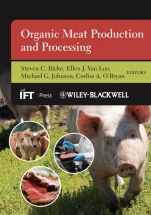
Organic Meat Production and Processing
ISBN 9780813821269
Autor: Steven C. Ricke, Ellen J. Van Loo, Michael G. Johnson, Corliss A. OBryan
Wydawca: Wiley
Dostępność: 3-6 tygodni
Cena: 990,15 zł
Przed złożeniem zamówienia prosimy o kontakt mailowy celem potwierdzenia ceny.
ISBN13: |
9780813821269 |
ISBN10: |
0813821266 |
Autor: |
Steven C. Ricke, Ellen J. Van Loo, Michael G. Johnson, Corliss A. OBryan |
Oprawa: |
Hardback |
Rok Wydania: |
2012-03-27 |
Ilość stron: |
464 |
Wymiary: |
251x177 |
Tematy: |
TT |
Consumers purchase organic meats for what they perceive as superiortaste, better nutritional value, long–term health benefits, orenhanced product freshness. Many consumers also believe organicmeat is safer than conventional, perhaps containing lesser amountsof pesticides or foodborne human pathogens. Organic livestockfarming, which is reputed to be environmentally friendly andsustains animals in good health resulting in high quality products,has a defined standard with a greater attention to animal welfareand requiring at least 80 percent of feed grown without pesticidesor artificial fertilizers. The higher guarantee of the absence ofresidue is certain, but the effect of organic farming onqualitative characteristics of the products is unknown. Substantialgrowth in organic food sales of all categories has occurred inrecent years and certified organic food production has evolved intoa highly regulated industry in the European Union, the UnitedStates, Canada, Japan and many other countries.
Organic Meat Production and Processing examines in detailthe challenges of production, processing and food safety of organicmeat. The editors and an international collection of authorsexplore the trends in organic meats and how the meat industry isimpacted. Commencing with chapters on the economics, market andregulatory aspects of organic meats, coverage then extends tomanagement issues for organically raised and processed meatanimals. Processing, sensory and human health aspects are coveredin detail, as are incidences of food borne pathogens in organicbeef, swine, poultry, and other organic meat species. The bookconcludes by describing pre–harvest control measures for assuringthe safety of organic meats. This book serves as a unique resourcefor fully understanding the current and potential issues associatedwith organic meats.
List of Contributors xv
1 Historical and Current Perspectives on Organic MeatProduction 1
Ellen J. Van Loo, Steven C. Ricke, Corliss A. O Bryan,and Michael G. Johnson
1.1 What is organic definition 1
1.2 History and development of the modern organic food industry1
1.3 Organic food labels 3
1.4 Organic meat and objectives of this book 8
Acknowledgment 8
References 8
SECTION I: ECONOMICS, MARKET, AND REGULATORY ISSUES11
2 Organic Meat Operations in the United States 13
Corliss A. O Bryan, Ellen J. Van Loo, Steven C. Ricke,and Philip G. Crandall
2.1 Introduction 13
2.2 The market for organic meat in the United States 14
2.3 Production and supply of organic meat in the United States14
2.4 Future of the US organic meat industry 20
References 20
3 Regulatory Issues in Domestically Raised and ImportedOrganic Meats in the United States 23
Harrison M. Pittman, Kerri C. Boling, and Shannon J.Mirus
3.1 Introduction 23
3.2 The national organic program 24
3.3 Future directions and conclusions 50
References 51
4 Organic Meat Production in Europe: Market and Regulation53
Simona Naspetti and Raffaele Zanoli
4.1 Introduction 53
4.2 The regulatory framework 53
4.3 Organic animal production: salient features of the new EUregulation 55
4.4 Characteristics of the organic meat industry 56
4.5 Consumer issues 61
4.6 Conclusions 65
References 66
5 Organic Meat Marketing 67
Ellen J. Van Loo, Vincenzina Caputo, Rodolfo M. Nayga, Jr.,Maurizio Canavari, and Steven C. Ricke
5.1 Introduction 67
5.2 Consumers purchasing drivers and deterrents 67
5.3 Economics and price premium 75
5.4 An analysis across organic buyer types and sociodemographicdimensions 78
5.5 Conclusions 80
Acknowledgment 81
References 81
SECTION II: MANAGEMENT ISSUES FOR ORGANICALLY RAISED ANDPROCESSED MEAT ANIMALS 87
6 Health and Welfare of Organic Livestock and Its Challenges89
Albert Sundrum
6.1 Introduction 89
6.2 Characteristics of organic livestock farming 90
6.3 Implications of living conditions on animal health andwelfare 91
6.4 Heterogeneity of living conditions between organic farms96
6.5 Status of animal health and welfare in organic farming97
6.6 Different perspectives 98
6.7 Inconsistencies and cognitive dissonances 102
6.8 Challenges 105
6.9 New approach 107
References 108
7 Environmental Impacts and Life Cycle Analysis of OrganicMeat Production and Processing 113
Cesare Castellini, Antonio Boggia, Luisa Paolotti, Greg J.Thoma, and Dae–soo Kim
7.1 Organic meat and environmental impacts 113
7.2 The life cycle assessment method 114
7.3 Case study environmental impact evaluation of poultryproduction systems, by means of LCA: comparison among conventional,organic, and organic–plus 119
7.4 Case study national scan–level carbon footprint for USswine production 128
7.5 Conclusions 134
References 134
8 Genetics of Poultry Meat Production in Organic Systems137
Poul Sørensen
8.1 Introduction 137
8.2 The growth 139
8.3 Adaptation to outdoor facilities 140
8.4 Concentration and/or quality of nutrients fed to theorganically grown chicken 141
8.5 The parent stock should be organically kept perhaps?142
8.6 Where to buy genetic material, or is it necessary to breedfor organically grown chickens? 142
8.7 Dual purpose or specialised breeds 143
8.8 Conclusion 143
References 144
9 Organic Meat By–Products for Affiliated Food Industries147
Claudia S. Dunkley, Dave Carter, and KingsleyDunkley
9.1 Introduction 147
9.2 Meat by–products 148
9.3 Marketing organic by–products 150
9.4 Current regulations regarding the pet–food industry 151
9.5 Organic product and by–product use in the pet–food industry152
9.6 Where do we go from here? 154
9.7 Other uses of organic by–products 154
9.8 Conclusions 155
References 155
10 Organic Animal Nutrition and Feed Supplementations157
Vesela I. Chalova and Steven C. Ricke
10.1 Introduction 157
10.2 Organic animal nutrition: general considerations 158
10.3 Proteins 160
10.4 Mineral and vitamin supplementations 167
10.5 Conclusions and perspectives 169
Acknowledgment 169
References 169
11 Production of Forage Crops Suitable for FeedingOrganically Raised Meat Animals 177
Ivan Manolov and Christina Yancheva
11.1 Introduction 177
11.2 Crop rotations 178
11.3 Intercropping 180
11.4 Green manure and cover crops 180
11.5 Undersowing 181
11.6 Weed management 182
11.7 Soil fertility 183
11.8 Cereal crops 185
11.9 Fodder crops 186
11.10 Pastures 190
11.11 Conclusion 192
References 192
SECTION III: PROCESSING, SENSORY, AND HUMAN HEALTH ASPECTS OFORGANIC MEATS 199
12 Slaughter Options for Organic Meat Producers in the UnitedStates 201
Corliss A. O Bryan, Kristen E. Gibson, Philip G.Crandall, and Steven C. Ricke
12.1 Introduction 201
12.2 Fixed facilities 201
12.3 Mobile slaughter units 203
12.4 On–farm poultry processing 205
12.5 Waste management 206
12.6 Conclusions 208
Acknowledgment 208
References 208
List of resources 208
13 Alternatives to Traditional Antimicrobials for OrganicallyProcessed Meat and Poultry 211
T. Matthew Taylor, Rolf Joerger, Enrique Palou, AurelioLópez–Malo, Rául Avila–Sosa, and ThelmaCalix–Lara
13.1 Introduction 211
13.2 Weak organic acids and associated salts 214
13.3 Chlorine and the oxidizing antimicrobials 221
13.4 Antimicrobial polypeptides and biopreservation 225
13.5 Concluding remarks 229
References 230
14 Nutritional Value of Organic Meat and Potential HumanHealth Response 239
Ewa Rembia kowska and Maciej Badowski
14.1 Introduction 239
14.2 Beef 242
14.3 Mutton and lamb 243
14.4 Pork 244
14.5 Poultry 247
14.6 Rabbit meat 247
14.7 Summary 249
References 252
15 Sensory Assessment of Organic Meats 257
Lydia J. Rice and Jean–François Meullenet
15.1 Introduction 257
15.2 Types of sensory testing 258
15.3 Sensory research on organic meat 263
15.4 Conclusions 269
References 270
Appendix A Minimum number of assessment in a triangle test273
Appendix B Critical number of correct response in a triangletest (entries are xa,n) 274
16 Chemical Residues in Organic Meats Compared toConventional Meats 275
Sergio Ghidini, Emanuela Zanardi, Mauro Conter, and AdrianaIanieri
16.1 Introduction 275
16.2 Inorganic residues and contaminants 276
16.3 Organic residues and contaminants 279
16.4 Pesticides 280
16.5 Polycyclic aromatic hydrocarbons (PAHs) 280
16.6 Veterinary drugs 281
16.7 Conclusions 282
References 283
SECTION IV: THE CURRENT FOOD SAFETY STATUS OF ORGANIC MEATS285
17 Prevalence of Food–Borne Pathogens in Organic Beef287
Megan E. Jacob, J. Trent Fox, and T. G. Nagaraja
17.1 Introduction 287
17.2 E. coli O157 and non–O157 STEC 290
17.3 Salmonella 292
17.4 Campylobacter 293
17.5 Listeria monocytogenes 294
17.6 Conclusions 294
References 296
18 Incidence of Food–Borne Pathogens in Organic Swine301
Marcos H. Rostagno and Paul D. Ebner
18.1 Introduction 301
18.2 Incidence of bacterial food–borne pathogens 303
18.3 Antimicrobial resistance in conventional versus organicpork production 305
18.4 Incidence of parasites 308
18.5 Conclusions 309
References 310
19 Food–borne Pathogen Occurrence in Organically andNaturally Raised Poultry 315
Ellen J. Van Loo, Sherry N. Melendez, Irene B. Hanning, andSteven C. Ricke
19.1 Introduction 315
19.2 Broiler production in the United States 316
19.3 Prevalence of food–borne pathogens in pasture andorganically raised poultry 318
19.4 Antibiotic resistance 321
19.5 Conclusions 324
Acknowledgment 324
References 324
SECTION V: PREHARVEST CONTROL MEASURES FOR ASSURING THESAFETY OF ORGANIC MEATS 329
20 Probiotics as Pathogen Control Agents for Organic MeatProduction 331
Gregory R. Siragusa and Steven C. Ricke
20.1 Introduction 331
20.2 Antibiotics in food animal production 332
20.3 Development of probiotics 333
20.4 Probiotics and the GI tract 334
20.5 Probiotics and mechanisms of protection 336
20.6 Company–specific inoculant 340
20.7 Conclusions 341
Acknowledgment 342
References 343
21 Gut Health and Organic Acids, Antimicrobial Peptides, andBotanicals as Natural Feed Additives 351
Jacqueline Jacob and Anthony Pescatore
21.1 Introduction 351
21.2 Gut health and microbial population 353
21.3 Organic acids 355
21.4 Antimicrobial peptides 359
21.5 Phytogenic compounds/botanicals 362
21.6 Conclusions 369
References 370
22 Prebiotics 379
Jacqueline Jacob and Anthony Pescatore
22.1 Introduction 379
22.2 Fructo–oligosaccharides 383
22.3 Mannanoligosaccharides (MOS) 384
22.4 Other oligosaccharides 389
22.5 Inulin 390
22.6 Combinations of feed additives 392
22.7 Conclusions 399
References 399
23 Bacteriophages for Potential Food Safety Applications inOrganic Meat Production 407
Steven C. Ricke, Paul Hererra, and Debabrata Biswas
23.1 Introduction 407
23.2 Bacteriophage biology 408
23.3 Postharvest application of bacteriophage in meat processing409
23.4 Preharvest phage therapy 411
23.5 Bacteriophage and animal host response 412
23.6 Overcoming barriers to bacteriophage GI tract therapy414
23.7 Optimizing phage sources for therapeutic application417
23.8 Conclusions 418
Acknowledgment 419
References 419
24 The Future of Organic Meats 425
Ellen J. Van Loo, Steven C. Ricke, Corliss A. O Bryan,and Michael G. Johnson
24.1 Synopsis of the different sections 425
24.2 Future of the organic meat industry 427
Acknowledgment 429
References 429
Index 431
Steven C. Ricke, Professor and Wray Endowed Chair in FoodSafety and Director of the Center for Food Safety, Food ScienceDepartment, Division of Agriculture, University of Arkansas,Fayetteville, USA
Ellen J. Van Loo, Doctoral Researcher, Department ofAgricultural Economics, Ghent University, Ghent, Belgium
Michael G. Johnson, Emeritus Professor, Food Microbiology& Safety, Food Science Department, Division of Agriculture,University of Arkansas
Corliss A. O Bryan, Post Doctoral ResearchAssociate, Food Science Department, Division of Agriculture,University of Arkansas
Koszyk
Książek w koszyku: 0 szt.
Wartość zakupów: 0,00 zł
Informacje


Kontakt
Gambit
Centrum Oprogramowania
i Szkoleń Sp. z o.o.
Al. Pokoju 29b/22-24
31-564 Kraków
Siedziba Księgarni
ul. Kordylewskiego 1
31-542 Kraków
+48 12 410 5991
+48 12 410 5987
+48 12 410 5989
Subskrypcje
Administratorem danych osobowych jest firma Gambit COiS Sp. z o.o. Na podany adres będzie wysyłany wyłącznie biuletyn informacyjny.
Autoryzacja płatności

Informacje na temat autoryzacji płatności poprzez PayU.

© Copyright 2012: GAMBIT COiS Sp. z o.o. Wszelkie prawa zastrzeżone.
Projekt i wykonanie: Alchemia Studio Reklamy