


Wydawcy
Katalog tematyczny
- Archeologia (109)
- Ekonomia, finanse, business (13704)
- Filozofia (1445)
- Historia (3040)
- Języki i językoznawstwo (2356)
- Lifestyle, hobby i rozrywka (475)
- Medycyna (9704)
- Nauki humanistyczne (4)
- Nauki o Ziemi i środowisku (2638)
- Nauki ścisłe (20412)
- Nauki społeczne (8486)
- Nauki techniczne (13450)
- Budownictwo lądowe (1045)
- Chemia przemysłowa (2258)
- Elektronika i telekomunikacja (3287)
- Energetyka (1122)
- Inne nauki stosowane (363)
- Inżynieria dźwięku (22)
- Materiały wybuchowe (3)
- Optyka stosowana (106)
- Przestrzeń kosmiczna (22)
- Technika morska (44)
- Technologia górnicza (9)
- Inżynieria biochemiczna (507)
- Inżynieria transportu (232)
- Mechanika i materiały (3316)
- Nauka o środowisku (321)
- Rolnictwo (507)
- Technika, ogólnie (475)
- Prawo (1696)
- Publikacje informacyjne i interdyscyplinarne (1288)
- Religia i wierzenia (917)
- Technika komputerowa (4067)
- Zdrowie, relacje międzyludzkie i rozwój osobisty (657)





Informacje szczegółowe o książce
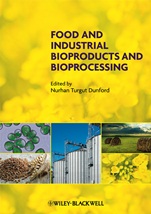
Food and Industrial Bioproducts and Bioprocessing
ISBN 9780813821054
Autor: Nurhan Turgut Dunford
Wydawca: Wiley
Dostępność: 3-6 tygodni
Cena: 1 033,20 zł
Przed złożeniem zamówienia prosimy o kontakt mailowy celem potwierdzenia ceny.
ISBN13: |
9780813821054 |
ISBN10: |
0813821053 |
Autor: |
Nurhan Turgut Dunford |
Oprawa: |
Hardback |
Rok Wydania: |
2012-03-16 |
Ilość stron: |
392 |
Wymiary: |
249x176 |
Tematy: |
TT |
Petroleum–derived products have dominated world manufacturingindustries for decades but diminishing petroleum resources,volatile political environments in some of the major petroleumproducing countries and environmental concerns have caused aparadigm shift. Today, significant resources are dedicated to thedevelopment of bioproducts from renewable sources. Research anddevelopment efforts to harness the unique chemical and physicalproperties of plants and microorganisms to produce ecologicallybenign products that outperform their non–renewable counterpartshave accelerated. Current and potential
markets for bioproducts are broad and include food ingredients,polymers, lubricants, solvents, adhesives, herbicides, cosmeticsand pharmaceuticals. Ever–increasing consumer demand for chemical free , healthy and natural foods have forced the food industry inparticular to re–evaluate its use of conventional food ingredientsand processing techniques and to adapt new and advanced productionsystems.
Food and Industrial Bioproducts and Bioprocessingprovides a comprehensive review of the latest developments in foodand industrial bioproducts and bioprocessing techniques. Althoughit is an important topic, biofuels are not covered in the book.Subjects covered over 14 chapters include starch–based bioproducts;protein processing; oil and oilseed processing; food–grademicroemulsions; fermentation; fungal cell factories; microalgae andbiopolymers. Additional chapters address recent developments innon–thermal processing and the role of enzymes as biocatalysts.
This volume is designed as a reference source for scientists,students and government and industry personnel who are interestedin the recent developments and future opportunities in food andindustrial bioproducts, and relevant bioprocessing techniques.
Preface xi
Contributors xiii
Abbreviations xvii
1 Traditional and Emerging Feedstocks for Food and IndustrialBioproduct Manufacturing 1
Nurhan Turgut Dunford
1.1 Introduction 1
1.2 Grain crops 2
1.3 Oil and oilseeds 13
1.4 Lignocellulosic biomass 24
1.5 Conclusions 25
2 Recent Processing Methods for Preparing Starch–basedBioproducts 37
George F. Fanta, Frederick C. Felker and Randal L.Shogren
2.1 Introduction 37
2.2 Annealing and heat moisture treatment 40
2.3 High–pressure treatment 41
2.4 Microwave processing 46
2.5 Processes using ultrasound 50
2.6 Processing using supercritical fluids 56
2.7 Extrusion processing 63
2.8 Processing by steam jet cooking 67
2.9 Conclusions 71
3 Protein Processing in Food and Bioproduct Manufacturing andTechniques for Analysis 85
Joyce Irene Boye and Chockry Barbana
3.1 Introduction 85
3.2 General properties of proteins 86
3.3 Protein separation processes in food and bioproductmanufacturing 87
3.4 Calculating protein yields and recovery 101
3.5 Processing effects on yield and protein quality 101
3.6 Conclusion 108
4 Advancements in Oil and Oilseed Processing 115
Nurhan Turgut Dunford
4.1 Introduction 115
4.2 Oilseed pretreatment 116
4.3 Oil extraction 119
4.4 Oil refining 127
4.5 Conclusions 137
5 Food–grade Microemulsions As Nano–scale Controlled DeliveryVehicles 145
Natasha Berry, Rickey Yada and Dérick Rousseau
5.1 Introduction 145
5.2 Winsor classification/phase behavior 146
5.3 Theories of microemulsion formation 147
5.4 What makes microemulsions thermodynamically stable? 148
5.5 Methods of microemulsion formation 148
5.6 Polydispersity 149
5.7 Composition 149
5.8 Factors affecting phase behavior 151
5.9 Parameters that modify microemulsion structure 152
5.10 Characterization techniques 154
5.11 Applications 158
5.12 Conclusions 160
6 Emulsions, Nanoemulsions and Solid Lipid Nanoparticles asDelivery Systems in Foods 167
Umut Yucel, Ryan J. Elias and John N. Coupland
6.1 Delivery systems in foods 167
6.2 Structure of emulsions 168
6.3 Localization of BLI in emulsions 169
6.4 Emulsions as delivery systems 172
6.5 Crystallization in emulsions 174
6.6 Localization of BLI in solid lipid nanoparticles 178
6.7 Conclusions 180
7 Fermentation 185
Mark R. Wilkins and Hasan Atiyeh
7.1 Introduction 185
7.2 Fermentative pathways 186
7.3 Microbial growth 188
7.4 Reactor design 189
7.5 Fermentation schemes 194
7.6 Fermentation Products 195
7.7 Separation 199
7.8 Future application areas and emerging developments 200
8 Fungal Cell Factories 205
Sue A. Karagiosis and Scott E. Baker
8.1 Fungi and fungal biotechnology 205
8.2 Historical perspective 206
8.3 Industry 208
8.4 Genomics and the future 213
8.5 Conclusions 215
9 Microalgae: A Renewable Source of Bioproducts 221
Susan I. Blackburn and John K. Volkman
9.1 Introduction 221
9.2 Microalgae and their global importance 221
9.3 Cultured microalgae 223
9.4 Algal culture collections 224
9.5 Microalgal production systems 225
9.6 Historical natural foods 228
9.7 Live feedstocks for aquaculture 228
9.8 Bioproducts 229
9.9 Pharmaceuticals 235
9.10 Microalgae in cosmetics and skin care 236
9.11 Microalgae bioproducts: Future potential 236
10 Bioprocessing Approaches to Synthesize Bio–basedSurfactants and Detergents 243
Douglas G. Hayes
10.1 Bio–based surfactants: Overview 243
10.2 Feedstocks for bio–based surfactants 244
10.3 Industrial bio–based surfactants 246
10.4 Advantages of bioprocessing to prepare bio–based non–ionicsurfactants 248
10.5 Preparation of bio–based surfactants via enzymes innon–aqueous media 249
10.6 Preparation of biosurfactants via fermentation 258
10.7 Conclusions 261
11 Biopolymers 267
Oguz Turünc and Michael A. R. Meier
11.1 Introduction 267
11.2 Carbohydrate–based polymers 267
11.3 Fat– and oil–based polymers 277
11.4 Conclusion 286
12 Lignocellulosic Biomass Processing 293
Fei Yu and Jonathan Y. Chen
12.1 Introduction 293
12.2 Availability of lignocellulosic biomass 293
12.3 Processing 297
13 Recent Developments in Non–thermal Processess 313
Fernando Sampedro and Howard Q. Zhang
13.1 Introduction 313
13.2 Recent advances in non–thermal technologies 314
13.3 Future trends 325
14 Enzymes as Biocatalysts for Lipid–based BioproductsProcessing 333
Ling–Zhi Cheong, Zheng Guo, Sergey N. Fedosov, Bena–MarieLue, Ram C.R. Jala, Gündüz Güzel, and XuebingXu
14.1 Introduction 333
14.2 Enzyme characteristics 333
14.3 Enzyme kinetics in industrial applications 334
14.4 Enzymes in industrial applications 338
14.5 Conclusions and future trends 351
References 353
Index 359
A color plate section falls between pages 222 and 223
Professor Nurhan Turgut Dunford is based at the Department of Biosystems and Agricultural Engineering, Oklahoma State University, Stillwater, USA.
Koszyk
Książek w koszyku: 0 szt.
Wartość zakupów: 0,00 zł
Informacje


Kontakt
Gambit
Centrum Oprogramowania
i Szkoleń Sp. z o.o.
Al. Pokoju 29b/22-24
31-564 Kraków
Siedziba Księgarni
ul. Kordylewskiego 1
31-542 Kraków
+48 12 410 5991
+48 12 410 5987
+48 12 410 5989
Subskrypcje
Administratorem danych osobowych jest firma Gambit COiS Sp. z o.o. Na podany adres będzie wysyłany wyłącznie biuletyn informacyjny.
Autoryzacja płatności

Informacje na temat autoryzacji płatności poprzez PayU.

© Copyright 2012: GAMBIT COiS Sp. z o.o. Wszelkie prawa zastrzeżone.
Projekt i wykonanie: Alchemia Studio Reklamy