


Wydawcy
Katalog tematyczny
- Archeologia (109)
- Ekonomia, finanse, business (13704)
- Filozofia (1445)
- Historia (3040)
- Języki i językoznawstwo (2356)
- Lifestyle, hobby i rozrywka (475)
- Medycyna (9704)
- Nauki humanistyczne (4)
- Nauki o Ziemi i środowisku (2638)
- Nauki ścisłe (20412)
- Nauki społeczne (8486)
- Nauki techniczne (13450)
- Prawo (1696)
- Publikacje informacyjne i interdyscyplinarne (1288)
- Religia i wierzenia (917)
- Technika komputerowa (4067)
- Zdrowie, relacje międzyludzkie i rozwój osobisty (657)





Informacje szczegółowe o książce
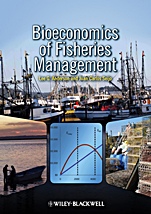
Bioeconomics of Fisheries Management
ISBN 9780813817323
Autor: Lee G. Anderson, Juan Carlos Seijo
Wydawca: Wiley
Dostępność: 3-6 tygodni
Cena: 668,85 zł
Przed złożeniem zamówienia prosimy o kontakt mailowy celem potwierdzenia ceny.
ISBN13: |
9780813817323 |
ISBN10: |
0813817323 |
Autor: |
Lee G. Anderson, Juan Carlos Seijo |
Oprawa: |
Hardback |
Rok Wydania: |
2010-04-23 |
Ilość stron: |
320 |
Wymiary: |
251x172 |
Tematy: |
KC |
Fisheries Economics has always been an interdisciplinary field of study with economic analysis based on stock population dynamics, but many published works have focused mainly on theoretical economic issues without much focus on biological details. For the most part, age structured models have been ignored. Bioeconomics of Fisheries Management is a valuable reference text that presents the economic aspects of fisheries management in a broad bioeconomic framework.
The book is broken into two parts. Part I covers the traditional areas of fisheries economics, covering topics such as open access, optimal and managed fisheries utilization that is analyzed through a traditional one stock/one fleet model. It also presents the basic results in terms of an age structured model. Part II covers material related to more recent work on bioeconomic models when more rigorous biological components became more prevalent, and views fisheries management with an ecosystems–based approach. Accompanying the book is a user–friendly CD with exercises and examples that aids the reader in applying theoretical principles of population dynamics and fisheries management and regulation. Bioeconomics of Fisheries Management will be a valuable text for researchers, fisheries economists, professionals, and students alike.
Key Features:Presents the economic aspects of fisheries management in appropriate biological contextCovers traditional fisheries economic principles as well as results from more recent bioeconomic researchProvides a detailed analysis of fisheries management and regulation in a bioeconomic frameworkLooks at fisheries management and regulation using an ecosystems approachAccompanying CD provides valuable simulation models to aid in applying theoretical principles
Spis treści:
Preface.
Acknowledgments.
1 Introduction.
1.1 Why is fishe
ries management and regulation needed?
1.2 The social trap and free rider behavior in fisheries.
1.3 Stock fluctuations due to natural causes.
1.4 Fisheries bioeconomics.
References.
2 Fundamentals of fisheries bioeconomics.
2.1 Introduction.
2.2 The Schaefer logistic growth model.
2.3 Schaeffer logistic growth with harvest.
2.4 A more formal analysis of commercial harvest.
2.5 The basic bioeconomic model.
2.6 Deriving revenue and cost functions.
2.7 Static maximum economic yield.
2.8 Open access utilization of a fishery.
2.9 Postscript on structural change under open access.
References.
3 Open access dynamics.
3.1 Introduction.
3.2 Bioeconomic equilibrium.
3.3 The process of obtaining an equilibrium.
3.4 Bioeconomic equilibrium in a disaggregated model.
Suggested Readings.
4 Optimal dynamic utilization.
4.1 Introduction.
4.2 The general model with nonlinear yield functions.
4.3 Formal analysis of optimal dynamic utilization.
4.4 Interpretation of the Golden Rule.
References.
5 Age–structured bioeconomic model.
5.1 Introduction.
5.2 The age–class bioeconomic model.
5.3 The details of the age–class bioeconomic model.
5.4 Biological analysis with age class model.
5.5 Population dynamics in age–class models.
5.6 Bioeconomic analysis with age–class models.
References.
6 The fisheries management process.
6.1 Introduction.
6.2 The paradigm of modern fisheries management.
6.3 Historical perspective on the development of the paradigm.
6.4 The specification of harvest control rules.
6.5 Limit and target harvests.
6.6 Monte Carlo results with scientific uncertainty.
6.7 Monte Carlo results with scientific and implementation uncertainty.
References.
7 Economic analysis of fishery regulation.
7.1 Introduction.
7.2 Introduction of regulation discussion.
7.3 Input co
ntrols.
7.4 Output controls.
7.5 Lessons learned.
7.6 Sequential regulation.
7.7 The relationship between regulation programs and fleet capacity.
7.8 Limited–access regulation.
7.9 Concluding remarks.
7.10 Limited access permits.
References.
8 Bioeconomics of ecosystem interdependencies.
8.1 Current challenges of the ecosystems approach to fisheries.
References.
9 Ecological and technological interdependencies.
9.1 Implicit form equations.
9.2 Growth functions of ecologically interdependent species.
9.3 Case 1: competition – the Lotka–Volterra model.
9.4 Case 2: bioeconomics of predator–prey interdependencies.
9.5 Case 3: fleets with heterogeneous fishing power and unit costs of effort competing for a stock.
9.6 Case 4: multispecies and multifleet fishery – a fleet harvesting incidentally target species of another fishery.
9.7 Case 5: sequential technological interdependencies of small–scale and industrial fleets – an age–structured model
9.8 An age–structured sequential bioeconomic model.
References.
10 Spatial management of fisheries.
10.1 Spatially distributed population of a single stock.
10.2 Distance from port to alternative fishing sites.
10.3 Spatial fishing behavior.
10.4 Spatial management of fisheries.
10.5 A metapopulation with source–sink configuration.
10.6 A bioeconomic model for source–sink configurations.
10.7 Migration in spatial models of fisheries.
10.8 Final remarks.
References.
11 Seasonality and long–term fluctuating stock.
11.1 Introduction.
11.2 Modeling recruitment seasonality.
11.3 Optimum allocation of seasonal effort.
11.4 Long–term patterns in small pelagic fisheries.
11.5 Long–term pattern of fluctuating environmentally driven recruitment.
References.
12 Dealing with risk and uncertainty.
12.1 Cimate
change increases uncertainty in marine fisheries.
12.2 Indicators, reference points, and control law.
12.3 Case 1: selecting adequate vessel size for a stock fluctuating fishery.
12.4 Bayesian criterion.
12.5 Decision criteria without mathematical probabilities.
12.6 Case 2: stock recovery strategies of a multifleet fishery with alternative biomass LRPs.
12.7 Probability of exceeding a spawning stock LRP in the stock recovery process.
References.
Appendices.
A. Spatial dynamics of the fishery for three possible strategies of spatial behavior of fishers.
B. Modelling recruitment seasonality.
C. Summary of model equations and bioeconomic sets.
Index.
CD Material.
Nota biograficzna:
Lee G. Anderson is Maxwell P. and Mildred H. Harrington Professor of Marine Policy in the College of Earth, Ocean, and Environment and Professor of Economics at the University of Delaware.
Juan Carlos Seijo is Director of Research and Professor of the School of Natural Resources at Universidad Marista de Merida.
Okładka tylna:
Fisheries Economics has always been an interdisciplinary field of study with economic analysis based on stock population dynamics, but many published works have focused mainly on theoretical economic issues without much focus on biological details. For the most part, age structured models have been ignored. Bioeconomics of Fisheries Management is a valuable reference text that presents the economic aspects of fisheries management in a broad bioeconomic framework.
The book is broken into two parts. Part I covers the traditional areas of fisheries economics, covering topics such as open access, optimal and managed fisheries utilization that is analyzed through a traditional one stock/one fleet model. It also presents the basic results in terms of an age structured model. Part II covers material related to m
ore recent work on bioeconomic models when more rigorous biological components became more prevalent, and views fisheries management with an ecosystems–based approach. Accompanying the book is a user–friendly CD with exercises and examples that aids the reader in applying theoretical principles of population dynamics and fisheries management and regulation. Bioeconomics of Fisheries Management will be a valuable text for researchers, fisheries economists, professionals, and students alike.
Key Features:Presents the economic aspects of fisheries management in appropriate biological contextCovers traditional fisheries economic principles as well as results from more recent bioeconomic researchProvides a detailed analysis of fisheries management and regulation in a bioeconomic frameworkLooks at fisheries management and regulation using an ecosystems approachAccompanying CD provides valuable simulation models to aid in applying theoretical principles
Koszyk
Książek w koszyku: 0 szt.
Wartość zakupów: 0,00 zł
Informacje


Kontakt
Gambit
Centrum Oprogramowania
i Szkoleń Sp. z o.o.
Al. Pokoju 29b/22-24
31-564 Kraków
Siedziba Księgarni
ul. Kordylewskiego 1
31-542 Kraków
+48 12 410 5991
+48 12 410 5987
+48 12 410 5989
Subskrypcje
Administratorem danych osobowych jest firma Gambit COiS Sp. z o.o. Na podany adres będzie wysyłany wyłącznie biuletyn informacyjny.
Autoryzacja płatności

Informacje na temat autoryzacji płatności poprzez PayU.

© Copyright 2012: GAMBIT COiS Sp. z o.o. Wszelkie prawa zastrzeżone.
Projekt i wykonanie: Alchemia Studio Reklamy