


Wydawcy
Katalog tematyczny
- Archeologia (109)
- Ekonomia, finanse, business (13704)
- Filozofia (1445)
- Historia (3040)
- Języki i językoznawstwo (2356)
- Lifestyle, hobby i rozrywka (475)
- Medycyna (9704)
- Nauki humanistyczne (4)
- Nauki o Ziemi i środowisku (2638)
- Nauki ścisłe (20412)
- Astronomia (294)
- Biologia (5119)
- Chemia (6540)
- Chemia analityczna (361)
- Chemia fizyczna (346)
- Chemia nieorganiczna (137)
- Chemia organiczna (535)
- Krystalografia (27)
- Minerologia (46)
- Fizyka (3309)
- Matematyka (4574)
- Nauki ścisłe, ogólnie (503)
- Nauki społeczne (8486)
- Nauki techniczne (13450)
- Prawo (1696)
- Publikacje informacyjne i interdyscyplinarne (1288)
- Religia i wierzenia (917)
- Technika komputerowa (4067)
- Zdrowie, relacje międzyludzkie i rozwój osobisty (657)





Informacje szczegółowe o książce
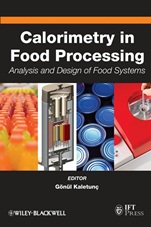
Calorimetry in Food Processing: Analysis and Design of Food Systems
ISBN 9780813814834
Autor: Gönül Kaletunç
Wydawca: Wiley
Dostępność: 3-6 tygodni
Cena: 1 125,60 zł
Przed złożeniem zamówienia prosimy o kontakt mailowy celem potwierdzenia ceny.
ISBN13: |
9780813814834 |
ISBN10: |
0813814839 |
Autor: |
Gönül Kaletunç |
Oprawa: |
Hardback |
Rok Wydania: |
2009-10-02 |
Ilość stron: |
412 |
Wymiary: |
234x164 |
Tematy: |
PN |
Calorimetry in Food Processing: Analysis and Design of Food Systems introduces the basic principles of calorimetry and highlights various applications to characterize temperature–induced changes including starch gelatinization and crystallization, lipid transitions, protein denaturation, and inactivation of microorganisms in a variety of food and biological materials. These changes are known to affect the storage stability and shelf–life of food materials. Coverage addresses important issues in the use of calorimetry in food systems, focusing on data collection, interpretation of the resultant data, and the use of these data for process optimization and product development. Emphasis is given to the use of calorimetry as a tool for evaluation of processing requirements in order to assess the efficacy of food processing and for characterization of the effects of changes in formulation and processing conditions. Calorimetry in Food Processing is intended primarily as a reference book for practicing scientists in academia and industry, as a resource for beginners in the field, and as potential supplemental text at the graduate level.
Special Features:Covers the use of differential scanning calorimetry (DSC) to detect, monitor, and characterize thermal processes in food materials as well as to evaluate the effects of nonthermal treatmentsFocuses on applications of calorimetry in analyzing and designing food systemsExplains design of calorimeters for use under extreme conditions of high pressure and in combination with x–ray diffractionBrings together an international collection of distinguished experts as chapter contributors
Spis treści:
Preface
Contributor List
Part 1 Analysis of Food and Biological Materials by Calorimetry
Chapter 1 Calorimetric Methods as Applied to Food: An Overview (Gönül Kaletunç).
Chapter 2<
/b> Methods and Applications of Microcalorimetry in Food (Pierre Le Parlouër and Luc Benoist).
Chapter 3 High–Pressure Differential Scanning Calorimetry (Günther W.H. Höhne and Gönül Kaletunç).
Chapter 4 Calorimetry of Proteins in Dilute Solution (G. Eric Plum).
Chapter 5 Thermal Analysis of Denaturation and Aggregation of Proteins and Protein Interactions in a Real Food System (Valerij Y. Grinberg, Tatiana V. Burova, and Vladimir B. Tolstoguzov).
Chapter 6 Heat–Induced Phase Transformations of Protein Solutions and Fat Droplets in Oil–in–Water Emulsions: A Thermodynamic and Kinetic Study (Perla Relkin).
Chapter 7 Analysis of Foodborne Bacteria by Differential Scanning Calorimetry (Michael H. Tunick, John S. Novak, Darrell O. Bayles, Jaesung Lee, and Gönül Kaletunç).
Chapter 8 Coupling of Differential Scanning Calorimetry and X–Ray Diffraction to Study the Crystallization Properties and Polymorphism of Triacyglycerols (Christelle Lopez, Daniel J.E. Kalnin, and Michel R. Ollivon).
Part 2 Calorimetry as a Tool for Process Design
Chapter 9 Overview of Calorimetry as a Tool for Efficient and Safe Food–Processing Design (Alois Raemy, Corinne Appolonia Nouzille, Pierre Lambelet, and Alejandro Marabi).
Chapter 10 Shelf Life Prediction of Complex Food Systems by Quantitative Interpretation of Isothermal Calorimetric Data (Simon Gaisford, Michael A.A. O’Neill, and Anthony E. Beezer).
Chapter 11 Use of Thermal Analysis to Design and Monitor Cereal Processing (Alberto Schiraldi, Dimitrios Fessas, and Marco Signorelli).
Chapter 12 Importance of Calorimetry in Understanding Food Dehydration and Stability (Yrjö H. Roos).
Chapter 13 High–Pressure Calorimetry and Transitiom
etry (Stanislaw L. Randzio and Alain Le Bail).
Chapter 14 Calorimetric Analysis of Starch Gelatinization by High–Pressure Processing (Kelley Lowe and Gönül Kaletunç).
Chapter 15 Use of Calorimetry to Evaluate Safety of Processing (Hans Fierz).
Index.
Nota biograficzna:
Gönül Kaletunç, Ph.D., is Associate Professor in the Department of Food, Agricultural, and Biological Engineering at The Ohio State University, Columbus, OH. She is the author or coauthor of numerous professional publications. Her research focuses on application of calorimetry to food and biological materials. She is a member of the American Association of Cereal Chemists and the Institute of Food Technologists. Dr. Kaletunç has served as an associate editor of Cereal Chemistry and currently serves as an editorial board member of Food Engineering Reviews. She received her BS and MS degrees in chemical engineering from the Middle East Technical University, Ankara, Turkey, and a PhD degree in food engineering from the University of Massachusetts, Amherst.
Okładka tylna:
Calorimetry in Food Processing: Analysis and Design of Food Systems introduces the basic principles of calorimetry and highlights various applications to characterize temperature–induced changes including starch gelatinization and crystallization, lipid transitions, protein denaturation, and inactivation of microorganisms in a variety of food and biological materials. These changes are known to affect the storage stability and shelf–life of food materials. Coverage addresses important issues in the use of calorimetry in food systems, focusing on data collection, interpretation of the resultant data, and the use of these data for process optimization and product development. Emphasis is given to the use of calorimetry as a tool for evaluation of processing requirements in orde
r to assess the efficacy of food processing and for characterization of the effects of changes in formulation and processing conditions. Calorimetry in Food Processing is intended primarily as a reference book for practicing scientists in academia and industry, as a resource for beginners in the field, and as potential supplemental text at the graduate level.
Special Features:Covers the use of differential scanning calorimetry (DSC) to detect, monitor, and characterize thermal processes in food materials as well as to evaluate the effects of nonthermal treatmentsFocuses on applications of calorimetry in analyzing and designing food systemsExplains design of calorimeters for use under extreme conditions of high pressure and in combination with x–ray diffractionBrings together an international collection of distinguished experts as chapter contributors
Koszyk
Książek w koszyku: 0 szt.
Wartość zakupów: 0,00 zł
Informacje


Kontakt
Gambit
Centrum Oprogramowania
i Szkoleń Sp. z o.o.
Al. Pokoju 29b/22-24
31-564 Kraków
Siedziba Księgarni
ul. Kordylewskiego 1
31-542 Kraków
+48 12 410 5991
+48 12 410 5987
+48 12 410 5989
Subskrypcje
Administratorem danych osobowych jest firma Gambit COiS Sp. z o.o. Na podany adres będzie wysyłany wyłącznie biuletyn informacyjny.
Autoryzacja płatności

Informacje na temat autoryzacji płatności poprzez PayU.

© Copyright 2012: GAMBIT COiS Sp. z o.o. Wszelkie prawa zastrzeżone.
Projekt i wykonanie: Alchemia Studio Reklamy